
Commercial Building Exterior Painting in Riverside: Elevation by Elevation
Riverside Expert Painting provides commercial building exterior painting in Riverside, CA for property managers, owners and general contractors, from single-tenant retail pads to multi-story offices and mixed-use buildings. Each bid starts from a measured takeoff of every elevation, and the work is phased so entries stay open and tenants keep trading.
- Takeoff of every elevation
- Phased around tenant hours
- Bids from plans or a site walk
Request a commercial bid
About our commercial exterior painting
A commercial exterior repaint is won or lost on access and sequence, not on the paint. We measure every elevation, price each one on its own line, and set the order of work around deliveries, business hours and the entrances your customers actually use. Stucco, concrete panel, block, metal and wood trim are counted separately, because each takes its own prep and primer.
Serving Riverside, Norco and Eastvale, we repaint the facades that face the 91, the 60 and the 215 every day, along with the office parks, strip centers and mixed-use buildings tucked behind them. The person who walks the building with you is the person who answers for the finished job.
Why Riverside Expert Painting
How We Work
No salesperson hands you to a stranger. The person who measures the job answers for it.
Buildings We Repaint
The scope changes with the structure and with who is inside it, so each building type below is bid on its own terms.
- Single-tenant retail and restaurants: storefront and full-elevation repaints timed to keep the entrance and patio usable.
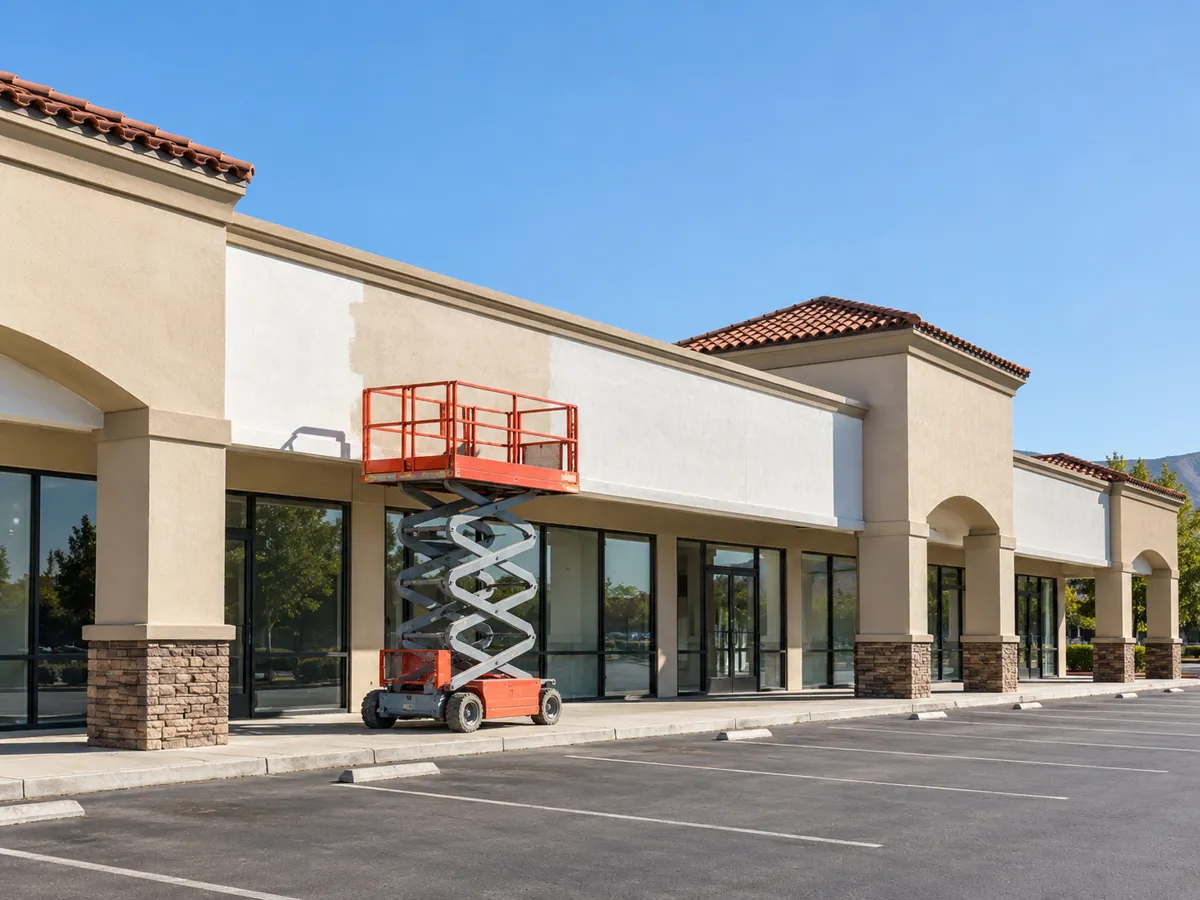
- Strip centers and plazas: multi-tenant fronts, covered walkways and shared sign bands, one tenant run at a time.
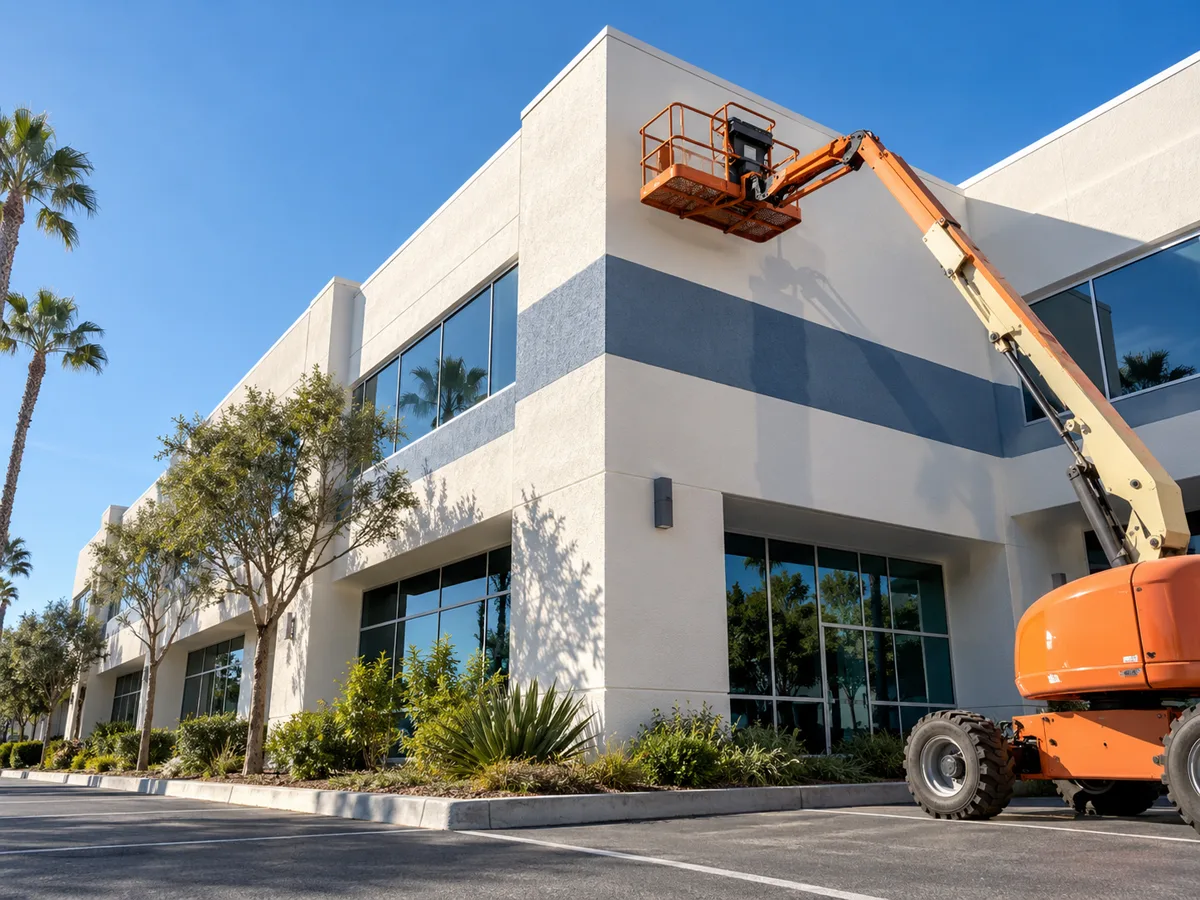
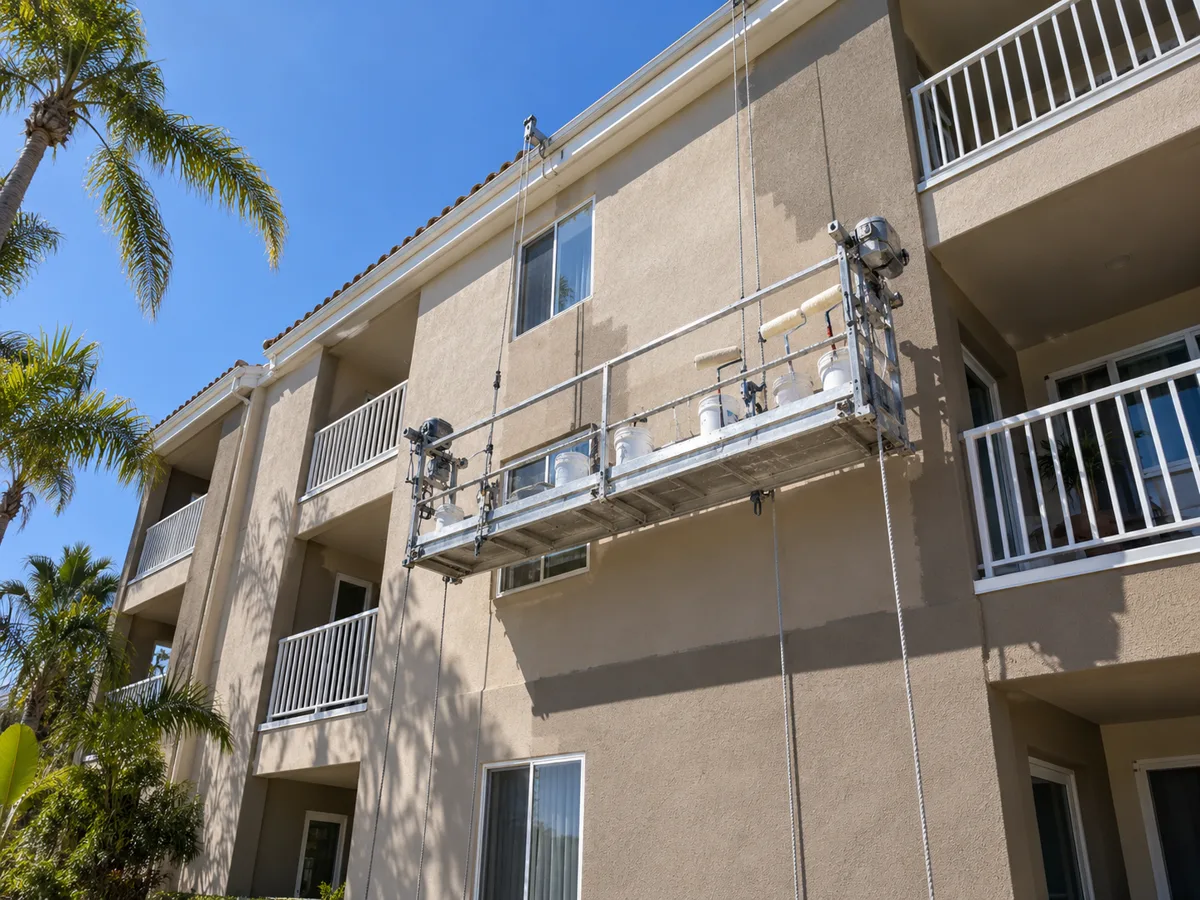
- Low-rise offices: full envelope repaints with lift access, plus canopies, railings and trim.
- Medical and professional suites: elevations scheduled around patient arrivals and quiet hours.
- Mixed-use over retail: street-level storefronts and upper floors sequenced separately.
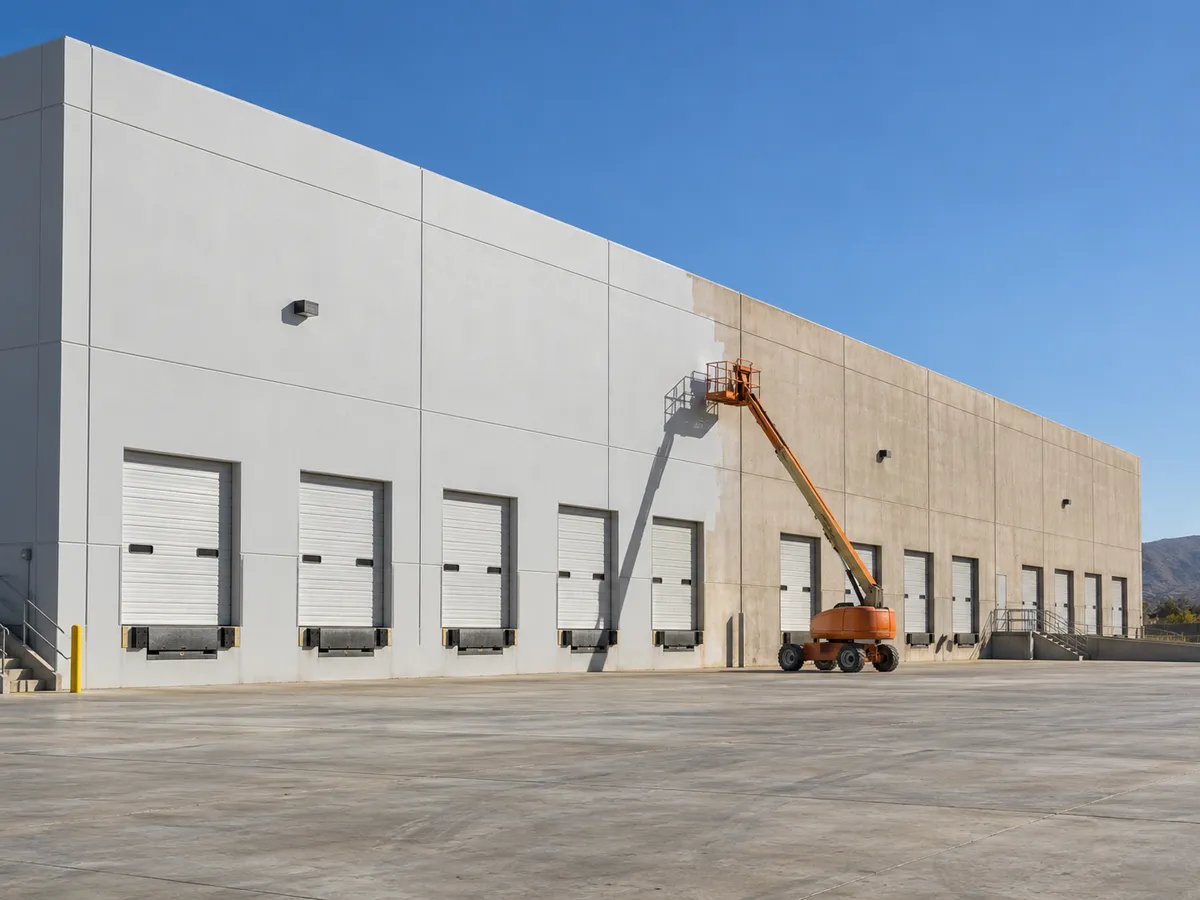
- Industrial and flex space: tilt-up panels, roll-up doors and steel, worked on the schedule of the shift inside.
Why Riverside Facades Chalk and Crack
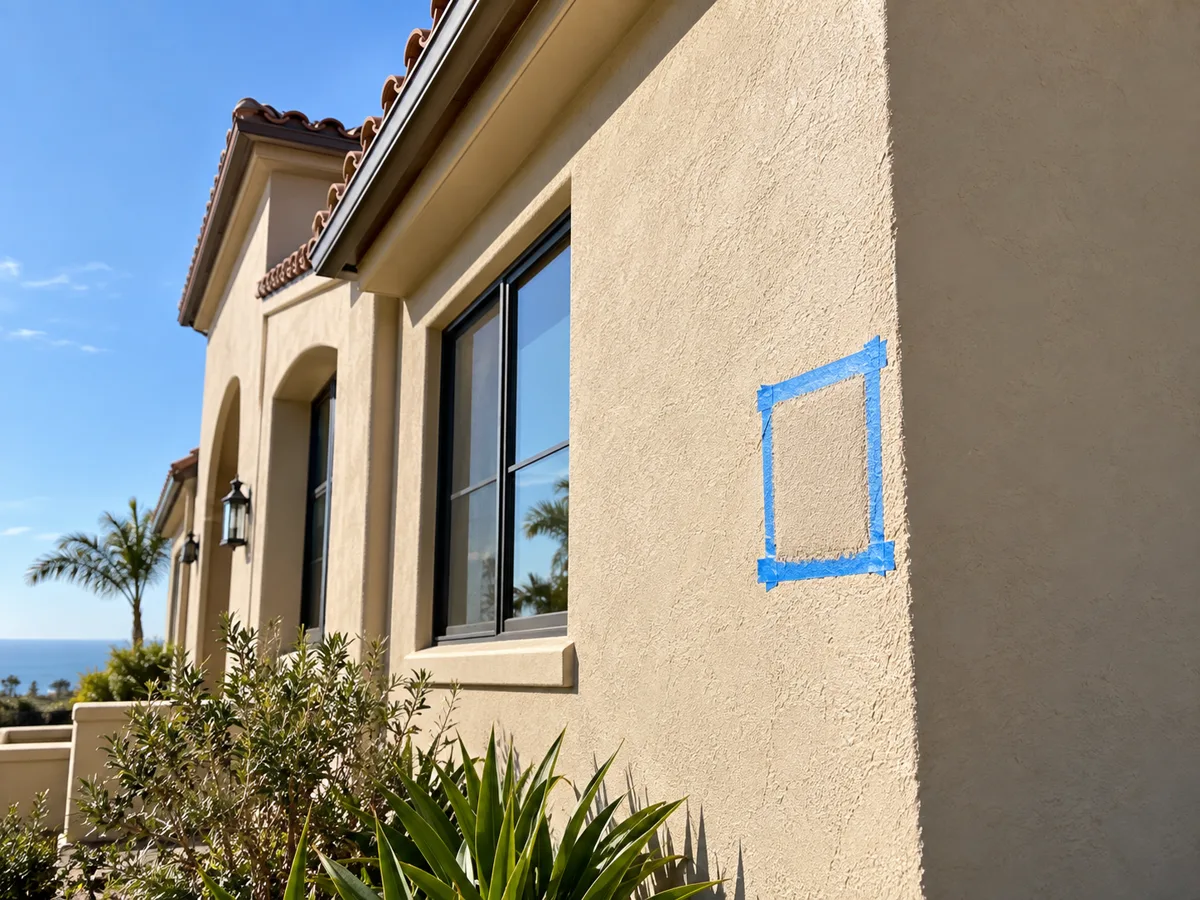
Riverside facades fail from the sun first. Summer afternoons here regularly pass 100 degrees, and the dry inland air pulls the life out of old coatings, so south and west walls chalk and fade years before the north side does. We rub a wall with a damp cloth: if color comes off on it, the coating is chalking and needs washing and a bonding primer before anything new goes on.
Stucco cracks are the second problem. Hairline cracks open as walls swing between cool nights and hot afternoons, and water finds them in the few hard rains the Inland Empire gets. We route and patch them to match the existing texture, then use a flexible coating that can bridge the small movement that remains.
Wind is the third. Santa Ana winds carry grit that scours exposed corners and make spraying unreliable, so we spray elevations on calm mornings and switch to brush and roller when the wind is up.
How a Commercial Exterior Bid Is Built
Our bid lists each elevation separately so you can compare it line by line with any other proposal. A property manager can approve the street side this year and hold the back of the building for the next budget cycle without asking for a new number.
The walk and the takeoff
We walk every side of the building, measure the walls and note the substrate and the condition of the existing coating. Fascia, soffits, rails, doors, downspouts and rooftop screens are counted too, since they are where bids usually go wrong.
What moves the number
Height and access decide how much lift or scaffold time the job needs. Surface condition decides how much washing, patching and priming sits ahead of the finish coats. The number of tenants, the hours they can be disturbed and the number of phases decide how often the crew has to mobilize. The proposal states each of these, and the written bid sets the final figure after the walk.
Exclusions in writing
Sign removal, roof work, glazing repair and tenant fixtures are listed as included or excluded, so nobody finds a gap halfway through a phase.
Working Around Tenants and Customers
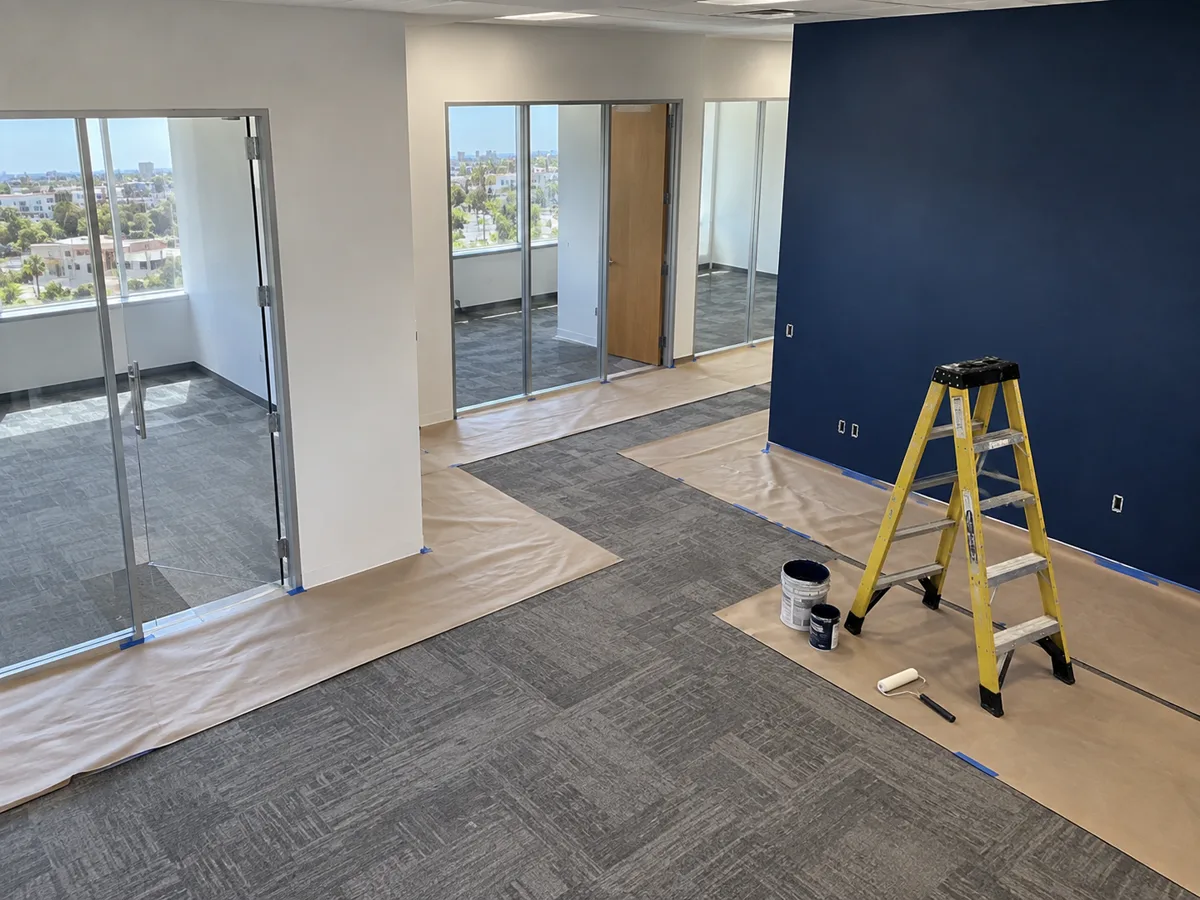
Most commercial exteriors are painted while the building is open, and we plan for that from the first walk. We phase the elevations so front doors, accessible routes and loading docks stay usable, and we schedule the noisy and dusty work, such as pressure washing and scraping, for hours that suit each tenant.
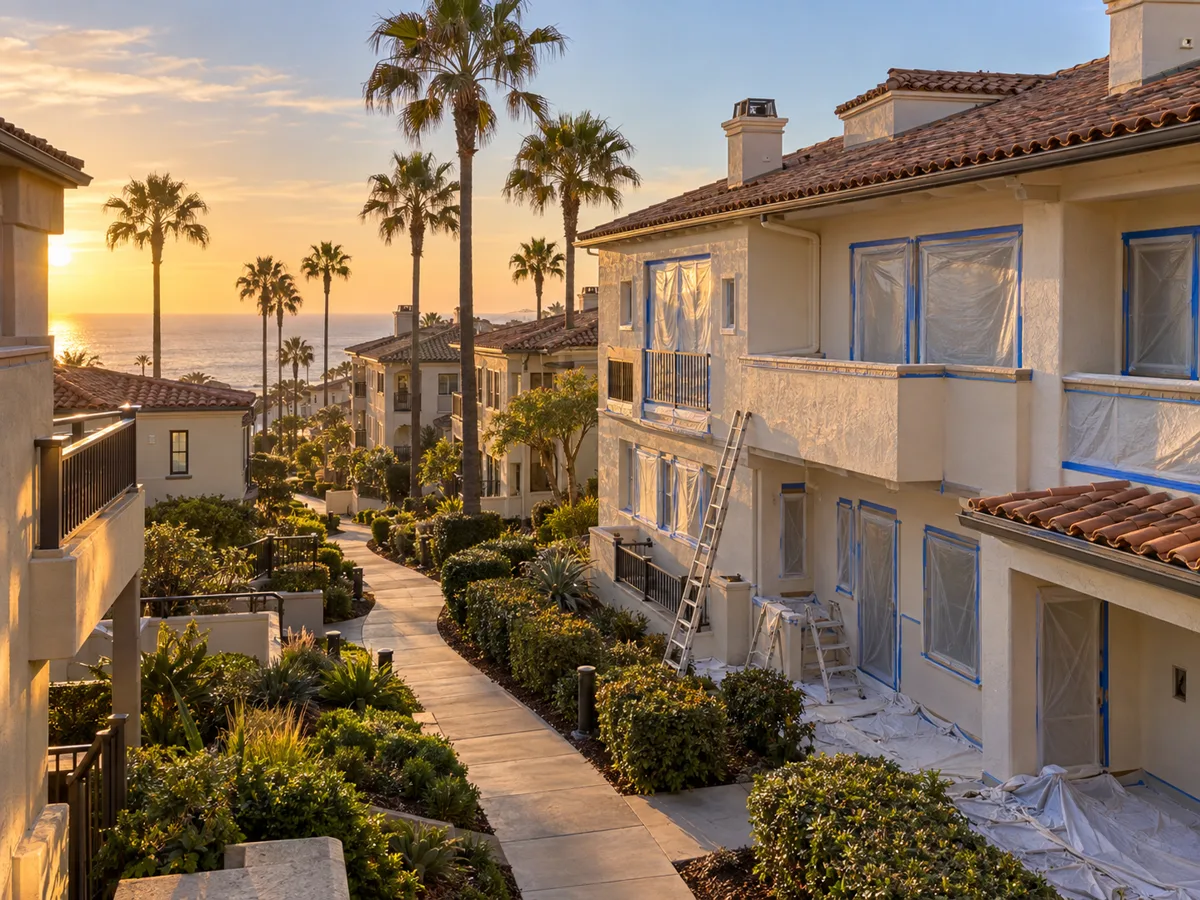
Tenants get a written notice before their area is touched, naming the dates, what will be masked and what needs to be moved. Signs, glass, awnings, planters and parked vehicles are protected before any washing or spraying starts, because overspray on glass is slow to remove.
Early mornings, evenings and weekends are all possible for restaurants, clinics and retail centers that cannot give up daytime frontage. At the end of each phase we walk the area with the manager, write a punch list and close the phase only when the list is clear.
Coatings, Color Approval and Paperwork
The coating system is chosen from the wall, not from a catalog. Elastomeric coatings suit cracked stucco because they bridge hairline movement while still letting moisture out. Masonry and block get breathable coatings, and metal gets a rust-inhibiting primer under the finish. Every coating we apply in the South Coast air district meets the VOC limits in Rule 1113, which also keeps odor down around occupied suites.
Before work starts you receive product data sheets, a color schedule and a painted sample area on the building itself for the owner, landlord or architect to approve. The approved patch stays on the wall as the reference for every elevation that follows.
A certificate of insurance and references go out with the bid, and additional insured wording is arranged when a lease or management agreement calls for it. On buildings that predate 1978, lead-safe work practices apply wherever painted surfaces in housing or child-occupied space are disturbed, and we write that into the scope.
Colors and Finishes
The process
How a Commercial Exterior Job Runs
Five steps, and no elevation is committed until the sample is approved.
Site walk
We walk every side of the building, measure each elevation and note the surface, the old coating and the access.
Written bid
You receive a line-item proposal covering prep, products, coats, access, phasing and exclusions.
Samples and approval
A painted sample goes on the wall for sign-off before any full elevation is started.
Phased painting
We wash, repair, prime and coat one elevation at a time, with entries and tenants protected.
Punch list and closeout
We walk each phase with you, correct every item and leave a record of the products and colors used.
Questions
Commercial Exterior Painting: Common Questions
Can you work while my tenants stay open?
Yes. We phase the elevations so entries, walkways and loading areas stay usable, and tenants get a written notice before their area is touched. Disruptive prep such as washing and scraping is scheduled for hours that suit each business.
Do you bid from plans or a specification?
Yes. Where plans or a paint specification exist we price exactly what they call for, so every proposal covers the same scope. Where they do not, our takeoff documents each elevation and the condition we found.
How do you handle signs, glass and awnings?
They are masked and protected before any washing or spraying. If a sign has to come off so we can coat behind it, the proposal says so in advance rather than leaving it for the day of the work.
What paperwork comes with the bid?
Product data sheets, a color schedule, a certificate of insurance and references. Additional insured wording can be arranged when a lease or management agreement requires it.
Can the work be split across budget years?
Yes. Each elevation is priced on its own line, so a manager can approve one side of the building now and schedule the rest later without a new walk.
Do you paint at night or on weekends?
Where a restaurant, clinic or retail center needs it, yes. The bid shows which phases fall outside normal hours so that time is accounted for.
When is the best season for an exterior repaint in Riverside?
Spring and fall give the steadiest conditions. Midsummer heat makes coatings dry too fast on sun-struck walls, so we work shaded elevations first and move around the building through the day.
What do you need to start a bid?
The address, the rough building size and number of floors, any existing plans, and the hours the property cannot be disturbed. We schedule the walk and return a written proposal.
Talk to us about your building exterior
Send the address, the floor count and any plans you have. We walk the building and return a written, elevation-by-elevation bid.
Licensed, insured and bonded · License #585047. Calls only, we do not receive text messages.