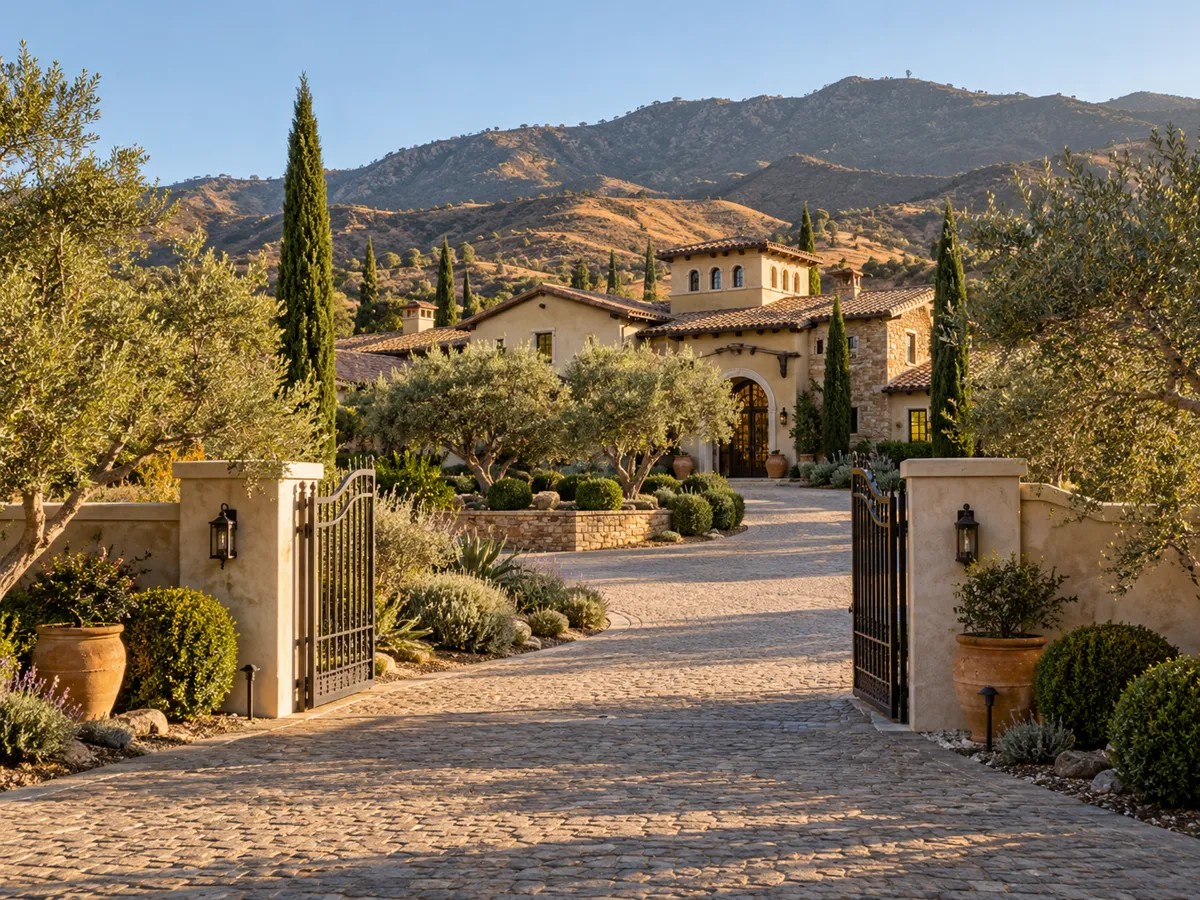
Hairline cracks
Fine cracks are cleaned out and then either bridged by an elastomeric coating or filled with a flexible patching compound under ordinary paint.

Riverside Expert Painting offers stucco painting in Riverside, CA, as a leading Riverside County painting specialist for cement plaster walls, specializing in hairline crack repair, patch texture matching and elastomeric wall coatings. We offer breathable masonry paint and efflorescence treatment.
Get a free painting estimate
Or call (951) 631-9482. Calls only, we do not receive text messages.
Our team provides a wash and primer on chalky or patched stucco, delivering a finish that stays bonded through hot, dry summers for both residential and commercial projects. We sample both the elastomeric and the masonry paint on your own wall, and the written scope says which one each elevation gets, how many coats it takes and why, before the painting begins.
From grinding out a settlement crack and floating the patch to a sand finish to recoating every stucco wall on the lot, our team handles every detail. Serving Riverside, El Sobrante, Eastvale and Yorba Linda, we match the texture first and choose the coating second.
Why Riverside Expert Painting
No salesperson hands you to a stranger. The person who measures the job answers for it.
Every stucco repaint in Riverside starts with the cracks, because paint alone hides very little. Portland cement stucco is hard and brittle and can crack and separate when the base under it moves, so most houses here show a mix of fine lines across the open wall and wider cracks at window corners, door heads and where two walls meet.
Fine cracks are cleaned out and then either bridged by an elastomeric coating or filled with a flexible patching compound under ordinary paint.
A crack too wide for a coating to bridge is opened up, filled with a compatible stucco patch and left to cure before anything covers it. One elastomeric maker's data sheet rules out bridging any crack wider than 1/32 inch, which is why wider cracks are repaired rather than painted over.
A stucco finish coat may be troweled smooth, hand-textured, floated to a sand finish or sprayed, and each patch has to copy the texture around it. A smooth patch in a sand-finish wall shows through every coat of paint, however close the color.
Elastomeric coating suits a stucco wall with many hairline cracks and no moisture working through it from behind; a breathable masonry paint suits a wall that needs to dry out. The choice is made wall by wall after the walk, and the reason goes into the scope.
An elastomer is a rubber-like polymer that stretches and recovers, and elastomeric wall coatings use that property to flex over fine cracks as the wall moves. They go on far thicker than paint, and one manufacturer recommends two coats to reach full elastomeric performance. The same data sheets set firm limits: not where moisture can migrate from the back of the wall or rising damp is present, not on horizontal surfaces, and not over cracks above a stated width until they are repaired.
A conventional exterior acrylic masonry paint is thinner and lets the wall release vapor more easily. That suits older stucco, walls behind planters and sprinkler heads, and any wall where trapped water would blister a thick film. Older lime-based stucco in particular is valued for its permeability. Masonry paint does not bridge cracks, so the patching under it has to be better.
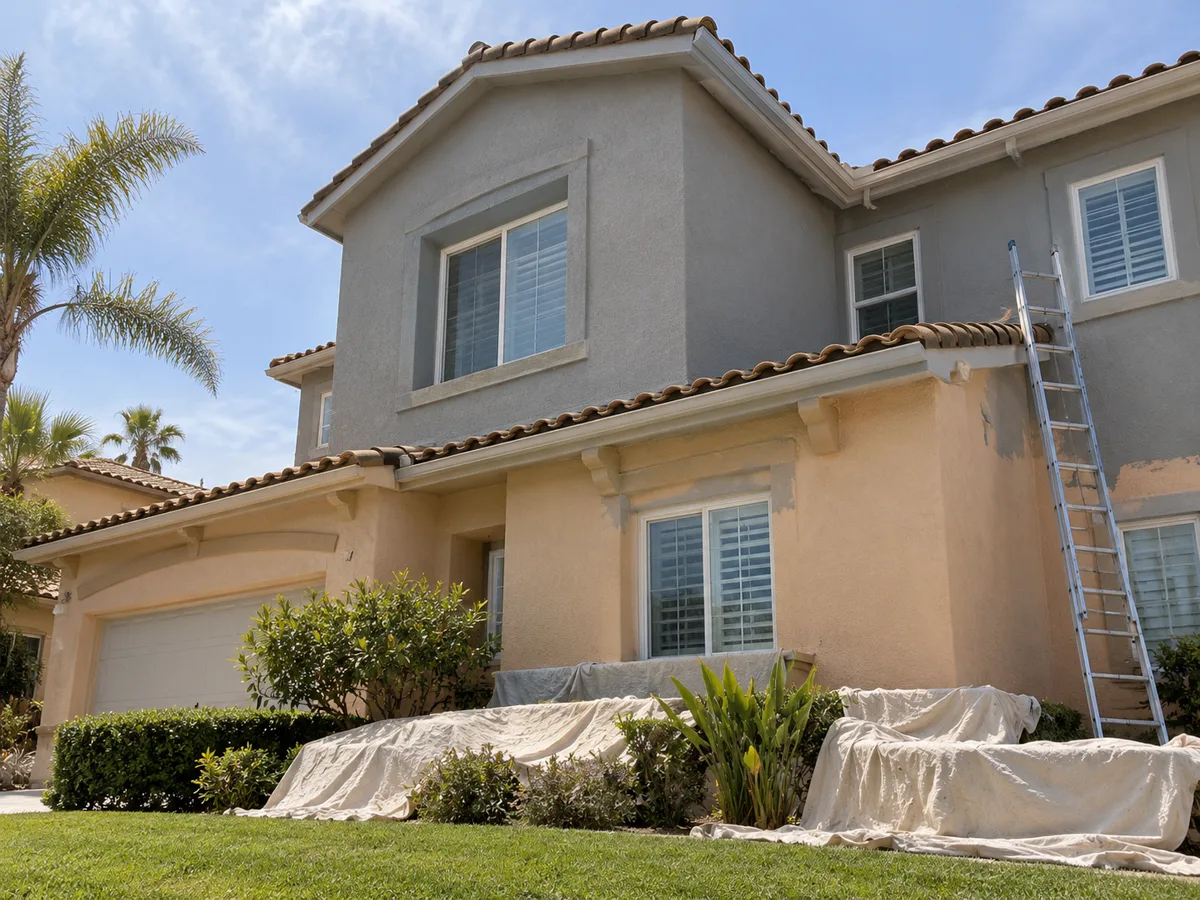
Chalky stucco is washed and primed before a new coat goes on, because fresh paint over chalk grips the powder instead of the wall and peels. A south or west wall that leaves color on your palm when you wipe it has chalked, and coating makers require the surface to be free of chalk before their product is applied.
Efflorescence is the white, fluffy salt deposit that forms when water moves through a cement-based wall and evaporates at the face, leaving the salt behind. It often shows below sprinkler lines, along the weep screed at the base of the wall and under downspouts. Coating manufacturers state that their products neither cause nor prevent it and that the wall must be free of it before coating, so the deposit is brushed and washed off, and the water feeding it is pointed out so it can be stopped.
Loose and peeling paint is scraped back to a sound edge, mildew is treated, and bare patches get a primer chosen for the alkalinity and absorption of fresh cement. Wall cracks around windows are left for the caulk and coating system named in your scope rather than smeared over.
Many Riverside stucco houses have never been painted at all: the color was mixed into the finish coat when the wall was plastered. Painting integral-color stucco for the first time is a one-way change, because from then on it is a painted wall that will need repainting.
Once a wall is painted, the color choice matters more than it does on wood trim. A coating on a large, flat, sun-facing surface is fully exposed, and color formulas that depend on organic colorants are prone to fade outdoors. Manufacturers also warn that shades can vary slightly between batches, so each wall is finished from one batch, and work stops at a corner or a control joint rather than in the middle of a wall.
Elastomeric makers advise against applying in direct sunlight, so color goes onto the shaded walls first and follows the shade around the house. Samples go on two elevations so you see the shade in morning and afternoon light, and an association's approved palette is followed exactly.
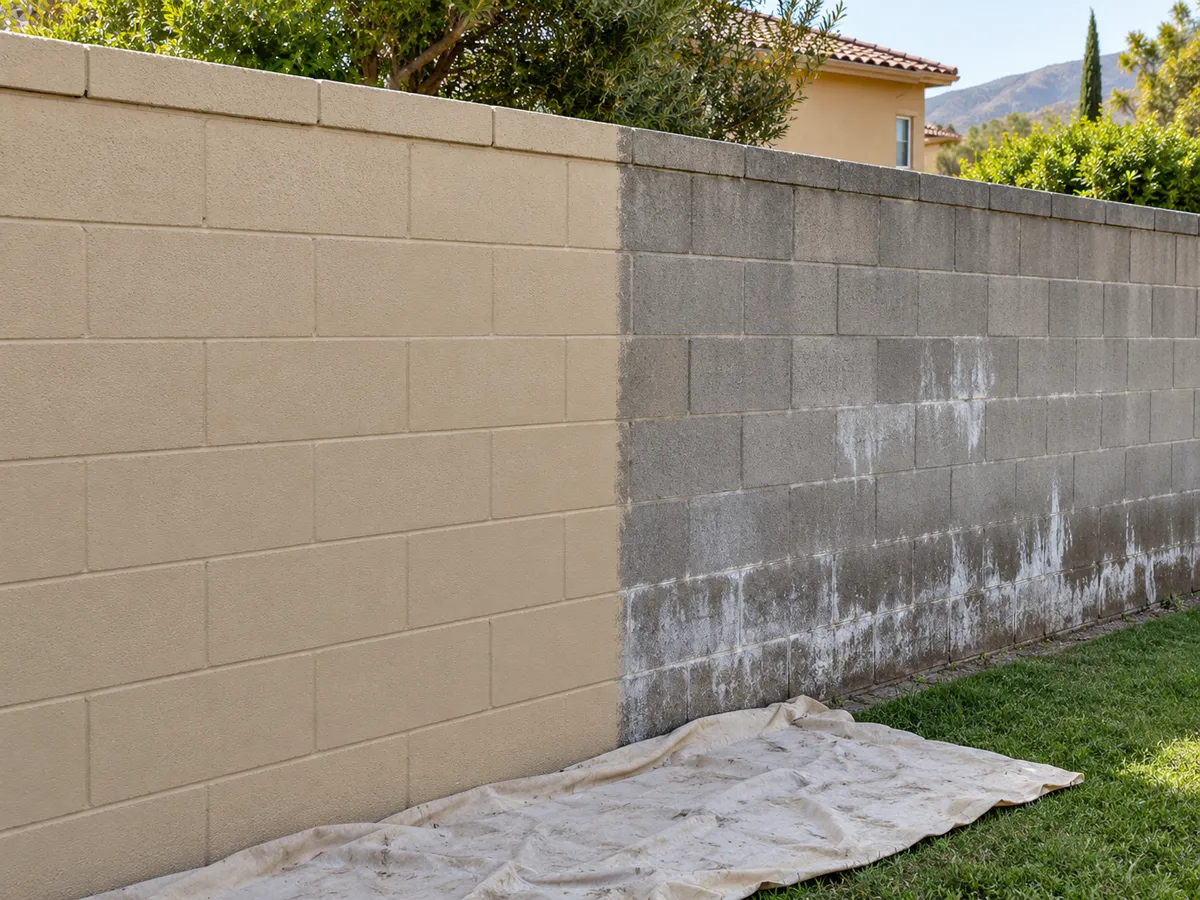
A stucco repaint in Riverside is typically estimated at roughly $6,000 to $20,000 for a house, or about $2.50 to $6 per square foot of wall, with the amount of crack repair and the choice between paint and an elastomeric system moving it most.
Elastomeric work sits higher in that range because it is applied much thicker and usually in two coats. The other drivers are height and stories, access past planters, slopes and block walls, how chalky the old coating is, how much efflorescence must be treated, texture-matched patching, the number of colors, and the trim and fascia that go with the walls.
Every figure here is an estimate and subject to change once the walls have been walked and the coating chosen; the written quote is what sets the price.
In warmer states such as California, stucco is the predominant exterior for both homes and commercial buildings, and Riverside follows the pattern from the older streets near downtown to Arlington, La Sierra, Canyon Crest, Mission Grove and Orangecrest. The coating question is the same on all of them; what changes is how many walls are asking it at once.
An association or property manager gets a bid built by building and elevation, with crack repair counted per wall, the coating system named for each, and color samples and product data sheets ready for the board. Commercial stucco on offices, clinics and shopping centers is phased around tenants and opening hours.
Every coating specified carries its data sheet showing it meets the South Coast AQMD's Rule 1113 limits on volatile organic content, which is a question an architectural committee or a facilities manager is entitled to ask before approving the work.

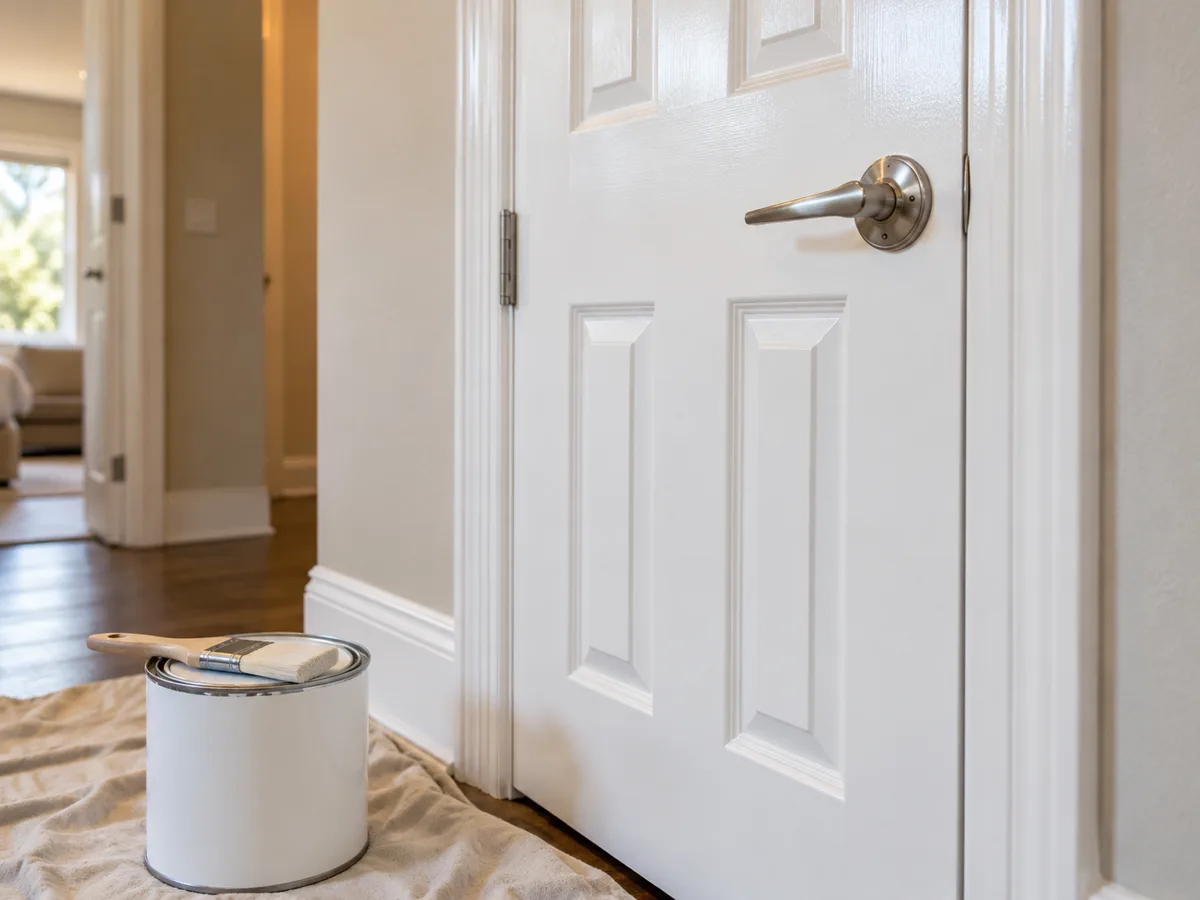


The process
Four steps, and nothing is painted until you have approved the scope and the colors.
We walk the house or property with you, look at the stucco, the trim and the old coating, and note what the afternoon sun, the dry wind and the sprinklers have done to each side.
You get the prep, the products, the colors and the dates in writing. For an association or a building, the scope is phased so residents and tenants know which day is theirs.
Washing, scraping, patching and caulking come first, because that is what the paint holds on to. Then primer where it is needed and the finish coats.
We walk it again with you before we call it done, and touch up anything you point at.
Questions
Yes, after it is washed and any cracks are patched. Bare stucco usually carries its color in the finish coat, so painting it for the first time commits the house to repainting from then on. We talk that through before the first sample goes on.
No. It bridges hairline cracks and flexes as the wall moves, so fine cracks stay covered, but it does not stop the movement that causes them. Wider or growing cracks are repaired first, and a crack that keeps opening may need a building inspection rather than paint.
Usually because the patch texture does not match the wall. Paint copies whatever surface is under it, so a smooth patch in a sand finish stays visible. We texture each patch to match before primer, which is what makes repairs disappear.
Most likely efflorescence, salt carried out of the cement by water and left on the surface as the water evaporates. It is cleaned off before coating, and the source, often a sprinkler head or a downspout, needs fixing or it comes back through any paint.
Often, if the existing paint is sound and well bonded. Coating makers ask for the old coat to be tested for adhesion and the right primer chosen, so a test area is part of the walk, and loose or chalky paint is removed first.
Crack and patch repair is part of every stucco repaint we do. Re-plastering whole walls, water damage behind the stucco or structural movement is a job for a plastering contractor or an inspector, and we say so on the walk.
You can, but a dark color on a sun-facing wall absorbs more heat and may fade sooner. We paint samples on a sunny wall and a shaded one so you see both, and many owners keep the deeper shade for the trim and shaded walls.
Yes. Boards and property managers can request a bid by building and phase, with crack repair counted per elevation, the coating system named and product data included. Send the reserve study or a building list and we will walk the property.
Homeowners get a free on-site estimate. Boards, managers and contractors can send a scope for a bid.
Licensed, insured and bonded · License #585047. Calls only, we do not receive text messages.