Skip to content
Call (951) 631-9482Licensed, insured and bonded · License #585047

Limewash and Mineral Coatings in Riverside: Breathable Color for Masonry and Stucco

Riverside Expert Painting specializes in limewash and mineral coatings in Riverside, CA, for stucco, brick, block and plaster. These finishes bond with the masonry instead of sitting on top of it, so they breathe, age softly and do not peel. We test the wall first, because the right coating depends on what the wall is made of.

  • Free on-site estimate
  • Wall tested before we quote
  • Sample patch on your wall

Get a free painting estimate

About our limewash and mineral coatings

Limewash and mineral paint are for walls that need to breathe. Limewash is a slaked lime wash that cures into a soft, cloudy, chalky color. Mineral coatings, usually potassium silicate, chemically bond to masonry and cement plaster and form a very hard, vapor-open surface. Both let moisture pass through, which is the opposite of a film-forming acrylic.

Serving Riverside, Claremont and Yorba Linda, we use them on old brick, historic plaster, unpainted stucco and block walls, and on interior feature walls where the look matters more than the wipeability. We say plainly when a wall should get a different coating instead.

Why Riverside Expert Painting

How We Work

No salesperson hands you to a stranger. The person who measures the job answers for it.

Written scopePrep, primer and finish coats listed surface by surface
Colors firstSamples on your wall, and association submittals prepared for review
One crewThe crew that quotes the job is the crew that paints it
CA License #585047Licensed, insured and bonded

Two Coatings, Two Different Jobs

Limewash and mineral paint are often mentioned together, but they behave differently and suit different walls.

Limewash

A lime-based wash that soaks in and carbonates into the surface. It gives a soft, mottled, matte look and suits porous brick, old plaster and unpainted lime or cement stucco. It is not scrubbable and it will show wear and rain marks over time.

Mineral (silicate) paint

A potassium silicate coating that reacts with mineral surfaces and locks in. It is very durable, vapor-open and fade resistant, and suits cement stucco, concrete, block and masonry. It cannot bond properly over a sealed or acrylic-painted wall.

Lime-based plaster coats

A thin skim of lime plaster, tinted and burnished or left matte. It suits interior feature walls and fireplaces where you want depth and a hand-finished feel.

Mineral-based primers

Where a wall carries old paint that we cannot strip, a mineral-compatible primer sometimes gives a bonded base for a lime or silicate finish, but only on the right substrate.

What the Wall Has to Be Before We Start

A limewash or mineral coating goes on bare masonry, and the previous paint decides whether the job is possible. Unpainted brick, raw block, bare cement stucco and old lime plaster take these coatings well, because the surface is porous and mineral. A wall that has been sealed or painted with acrylic usually does not, because the new coating cannot reach the masonry underneath.

We run a simple test before quoting: we wet a small area and watch whether the water soaks in or beads. Soaking in means the wall is open and ready. Beading means there is a film on it that has to come off, and that is the real price of the job, not the limewash.

When the existing paint has to be removed, we tell you in advance whether a coating can be stripped, whether the wall can take a different mineral-compatible primer, or whether you are better off with a good breathable masonry paint. We would rather change the product than watch a limewash peel off a sealed wall.

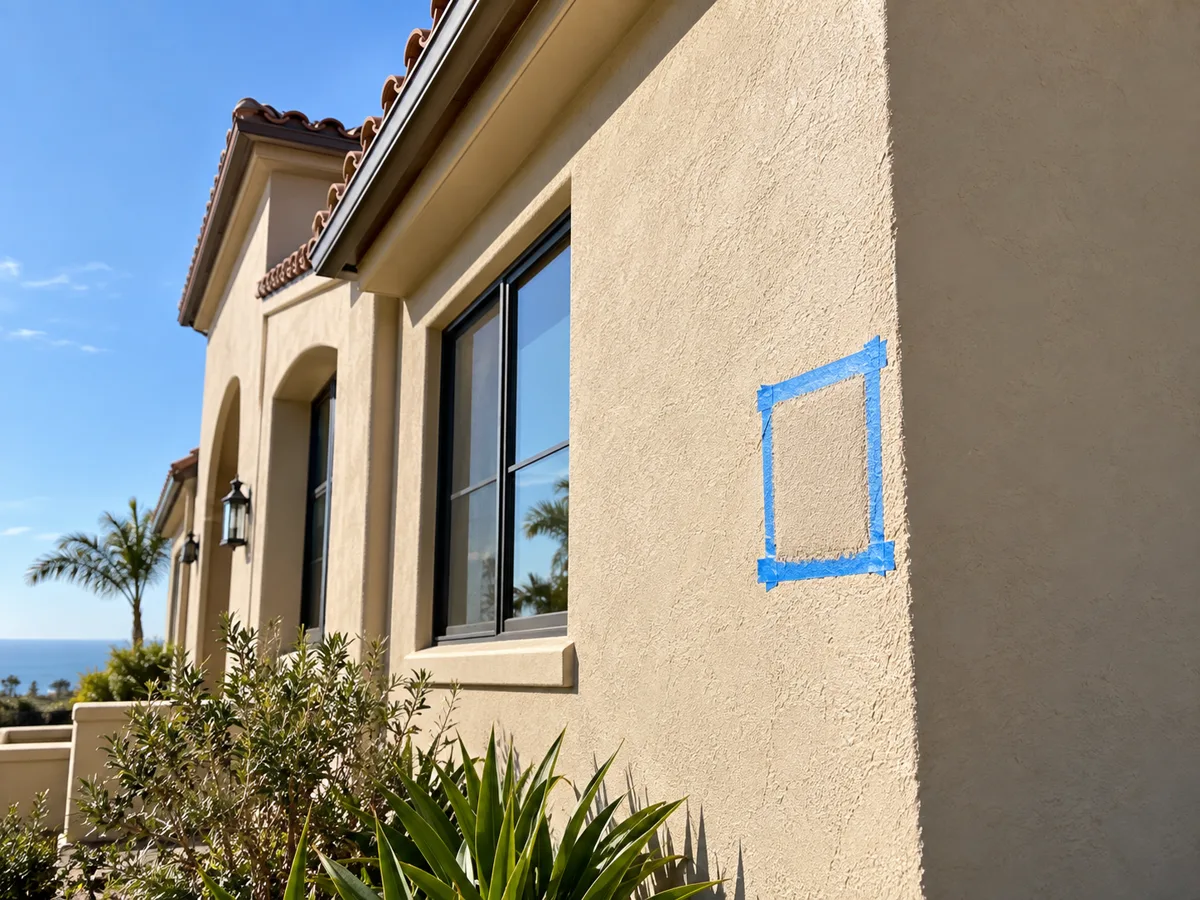
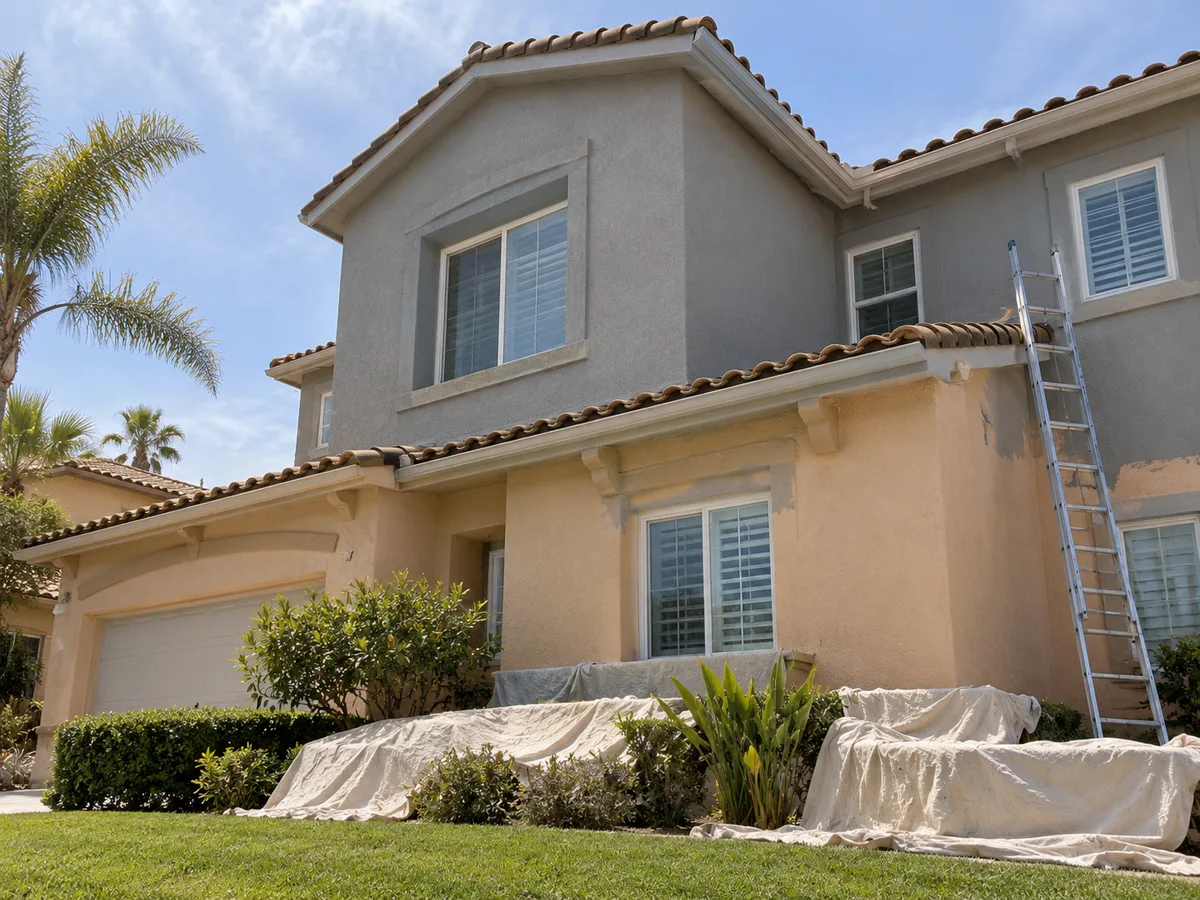
Freshly painted sand-beige stucco wall of a tile-roofed house with a small rectangle of blue painter's tape marking a repair patch beside a dark-framed window.

Prep, Application and Curing

Limewash is a patient finish. The wall is cleaned, repaired and dampened, and the coating goes on in thin coats that need time between them, so a limewash job takes longer than a standard repaint of the same wall.

  • Cleaning: dirt, efflorescence, moss and loose material are brushed or washed off so the coating bonds to the masonry itself.
  • Repairs: cracks and spalls are patched with a compatible material, because a hard cement patch can show through as a different shade.
  • Dampening: the wall is wetted before application so it does not pull water out of the wash too quickly and leave streaks.
  • Thin coats: two or three light coats go on with a masonry brush, with the brush marks and the soft mottling being the look.
  • Curing: lime cures slowly by taking carbon dioxide from the air, so the color lightens as it dries and we judge the final shade only after it has cured.

Mineral coatings follow a similar order but are rolled or sprayed in even coats, then left to react with the surface. We do not rush either one, because the whole advantage of these coatings is the bond, and the bond needs time.

Color and Finish Expectations

Limewash is never perfectly uniform, and that is the point. The finish shows soft clouds, brush strokes and slight variations that change with the light. If you want a flat, even wall, a mineral paint or a standard masonry coating will serve you better, and we will say so at the walk.

Color range is also narrower than with ordinary paint. Limewash pigments are natural and alkali-stable, so you get earthy whites, creams, warm grays, soft terracottas and muted greens rather than bright or deep saturated colors. Wet limewash looks darker than it will cure, so we always test a sample patch and judge it after it dries.

Mineral paints hold color very well in hard sun, which matters on Riverside walls that take direct afternoon light for most of the year. We also look at the adjacent trim, the roof and the landscaping before you choose, because a limewashed wall changes how everything beside it looks.

For a polished, burnished wall instead of a matte one, see Venetian plaster.

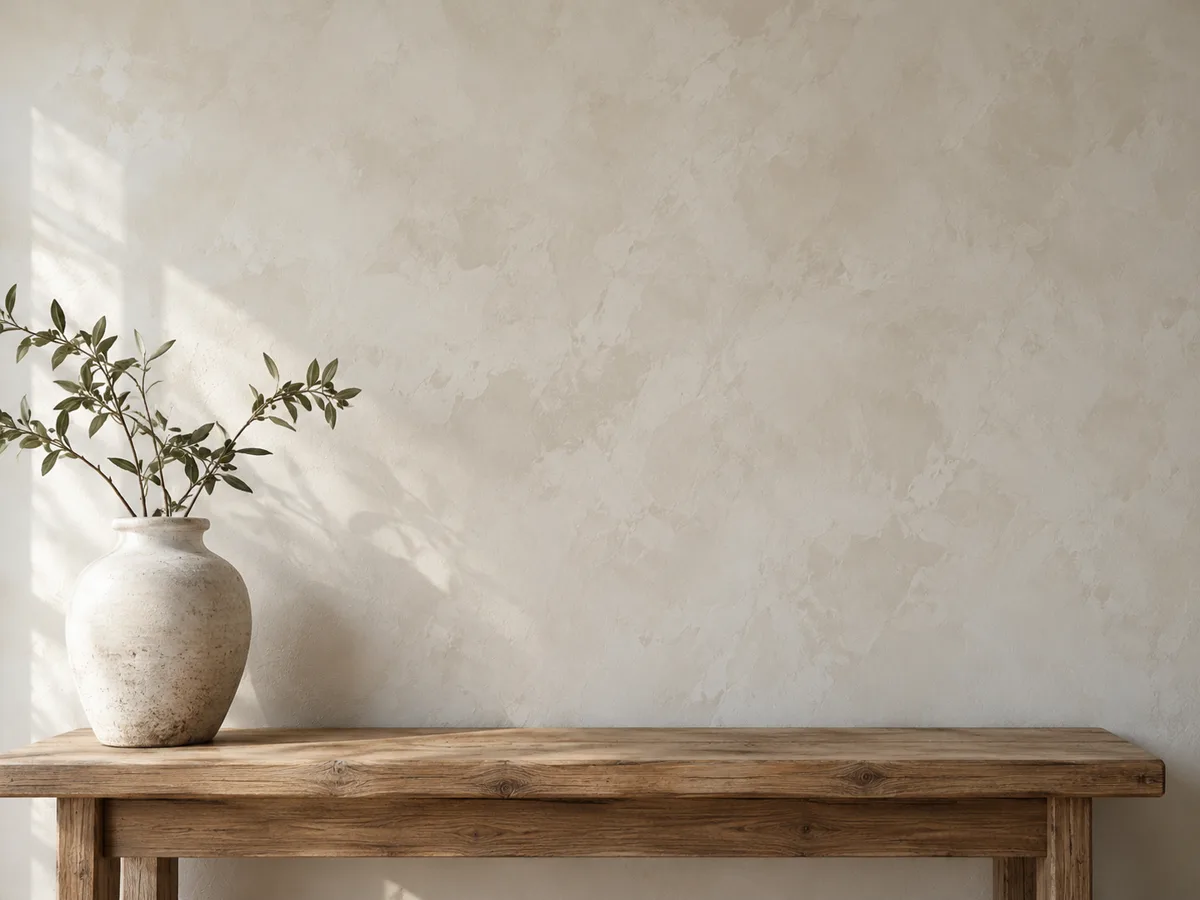
Interior wall with a soft cloudy limewash finish in warm off-white, a wooden console table and a stone-coloured vase of olive branches in window light.

Where These Coatings Work in Riverside

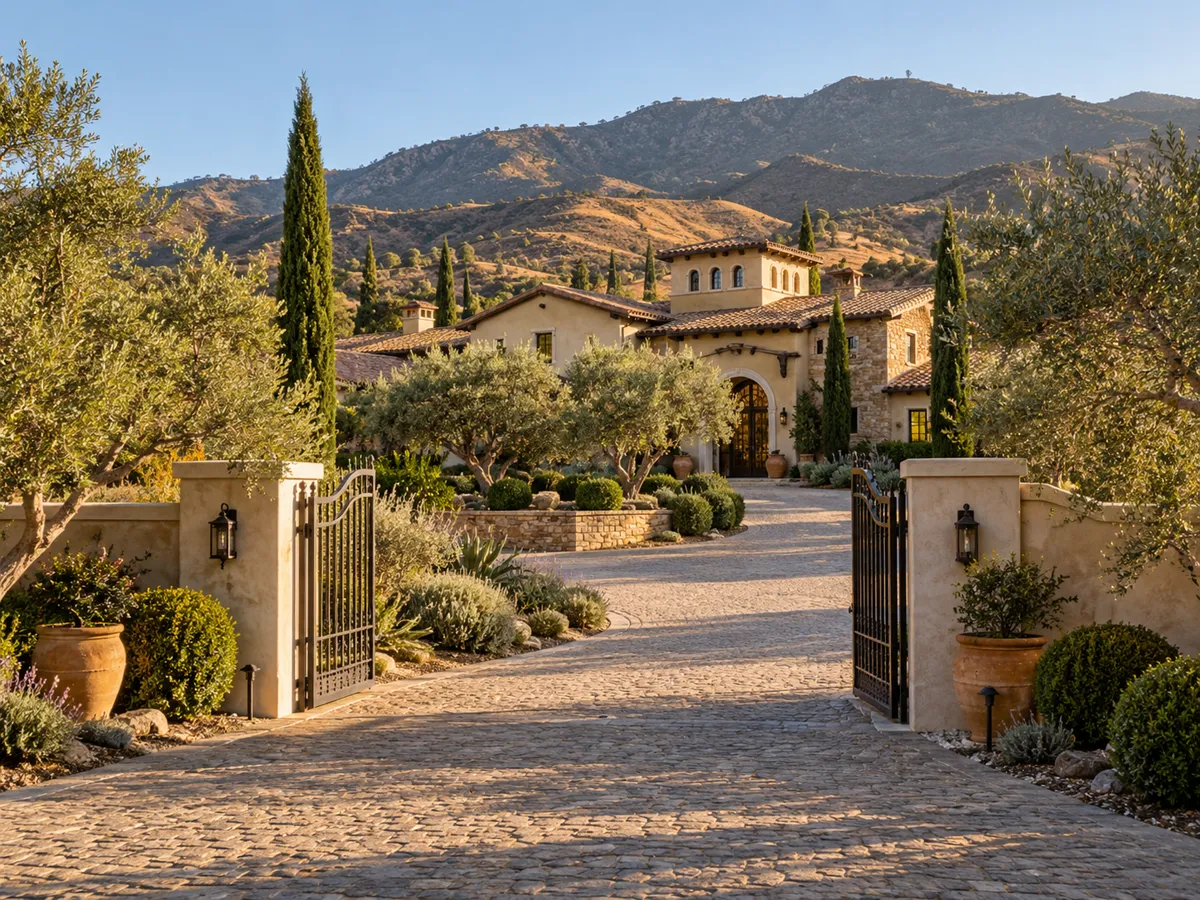
Riverside has the kind of walls these coatings were made for, but not every older wall qualifies. Mission Revival and Spanish Colonial homes near downtown and in Arlington Heights, along with the older neighborhoods around the Mission Inn, often have original plaster or stucco that was never sealed, and a breathable coating suits them well.

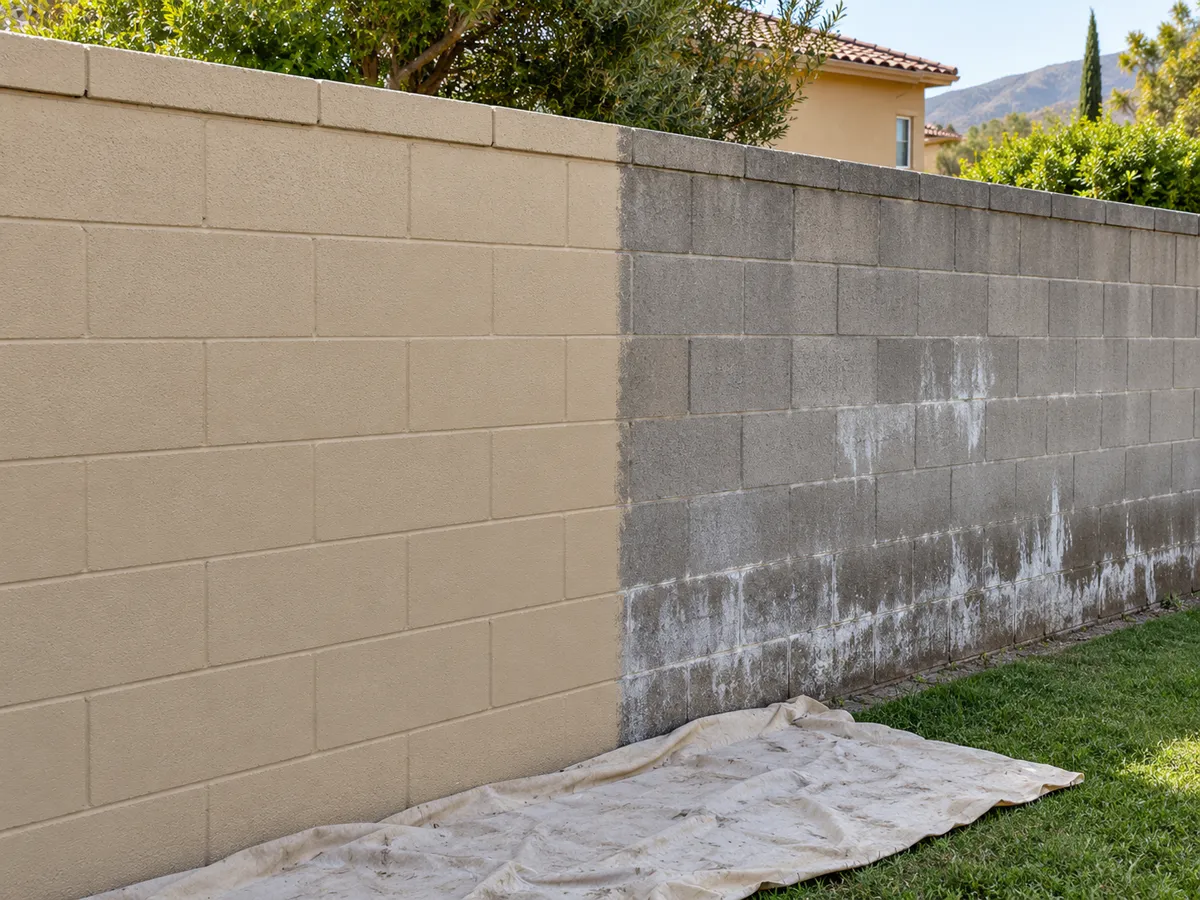
Older brick fireplaces, garden walls, planters and block walls in Canyon Crest and Alessandro Heights are another good match, since they are porous and have usually been bare or lightly painted. Newer tract houses with acrylic-painted stucco are usually not a fit for limewash, because the acrylic film blocks the wall from reacting.

Inland heat also matters. Riverside walls swing between hot afternoons and cool nights, and a breathable coating lets trapped moisture escape instead of blistering behind a film. In a few places where irrigation or a planter keeps a wall damp, we point out the moisture source first, because no coating will fix a wall that is always wet.

Colors and Finishes

The process

How a Limewash Job Runs

Four steps, and a sample on your own wall comes before any full coat.

  1. Test the wall

    We wet-test the surface, check the old coating and decide whether limewash or a mineral paint can bond.

  2. Sample patch

    A test patch goes on your wall so you can judge the color after it has cured, not while it is wet.

  3. Prep and repair

    We clean, patch with compatible materials and dampen the wall before the first coat.

  4. Coat and cure

    Thin coats go on with time between them, and we walk the finished wall with you once it has cured.

Questions

Limewash and Mineral Coatings: Common Questions

Can you limewash over painted stucco?

Usually not. Limewash needs a porous mineral surface to bond with, and a painted film blocks it. We wet-test the wall first, and if the paint has to come off we tell you what that involves or suggest a breathable masonry paint instead.

How is mineral paint different from limewash?

Mineral paint, usually potassium silicate, chemically bonds to masonry and forms a hard, even, durable surface. Limewash soaks in and cures into a softer, cloudy finish that is more natural looking but less durable and not scrubbable.

Will limewash peel?

It does not peel the way a film paint does, because it is part of the wall rather than a layer on it. It does wear and weather, and it may need a refresh coat as it ages.

Why does the color change as it dries?

Limewash is darker when wet and lightens as it cures. That is why we put a sample patch on your wall and judge the color only after it has dried completely.

Can I use these coatings inside the house?

Yes. Limewash and lime plaster suit fireplaces, feature walls and plastered rooms where you want a soft, matte, mottled finish. They are not the right choice in a kitchen or hallway where the wall needs scrubbing.

Do they work on brick?

Unpainted brick takes limewash and mineral coatings very well. Brick that was painted with a film coating first needs that coating removed or a different system.

How long does a job take?

Most jobs take longer than a standard repaint because coats need drying and curing time between them. We give you the sequence and dates in writing after the walk.

Do you serve my neighborhood?

We work across Riverside, Claremont, Yorba Linda, Norco, Eastvale and the surrounding communities listed on this page.

Free on-site estimate

Talk to us about limewash and mineral coatings

Send photos of the wall or book a walk. We test the surface and tell you which coating will hold.

Call (951) 631-9482

Licensed, insured and bonded · License #585047. Calls only, we do not receive text messages.

Call (951) 631-9482Licensed, insured and bonded · License #585047