Wallpaper Removal and Repainting in Riverside: Stripped Clean, Repaired, Repainted
Riverside Expert Painting offers wallpaper removal and repainting in Riverside, CA, with both done in the same job. We strip the paper, wash off every trace of adhesive, repair the wall underneath and prime it before paint, because the quality of the repainted wall depends on what is done after the paper comes off.
- Free on-site estimate
- Glue fully removed
- Repair, prime and paint in one job
Get a free painting estimate
About our wallpaper removal and repainting
Wallpaper removal is a wall repair job that happens to start with paper. How hard it is depends on the paper, the glue and above all the wall behind it. Unprimed drywall can tear when paper is pulled, while a properly primed or plastered wall lets paper come away cleanly.
Serving Riverside, Norco and Corona-area homes, we handle everything from a single powder-room wall to a whole house of older paper. Before we start we test a small area so we can tell you what to expect and avoid surprises halfway through the job.
Why Riverside Expert Painting
How We Work
No salesperson hands you to a stranger. The person who measures the job answers for it.
What We Find Under the Paper
The wall behind the paper decides the job. We test a corner before quoting, and these are the conditions we see most often.
- Peelable paper: modern strippable paper lifts off in sheets and leaves little behind, which is the easiest case.
- Paper over primed drywall: the surface face comes off, the backing and paste are washed off, and the wall is intact.
- Paper on unprimed drywall: the paper bonded to the board can pull the face paper with it, so the wall needs repair and sealing afterward.
- Multiple layers: older homes sometimes carry two or three layers, and each one adds time and mess.
- Vinyl or foil paper: the surface layer peels off, and the paper backing has to be soaked and scraped.
- Paper over plaster: removal is gentler on solid plaster, but the old paste still has to be washed fully away.
How We Remove It Without Wrecking the Wall
Good removal is slow, wet and careful. We lift the face layer, then soften the backing and the paste with the right solution, and scrape with a wide knife held at a low angle so it does not gouge the board. Steam is used only where the wall can take it, and never on bare drywall seams.
The paste is the real problem. If any adhesive is left on the wall, new paint will not bond properly and the residue shows through the finish as blotches or bubbles. We wash the wall until it is clean to the touch, then let it dry fully before we repair anything.
We protect floors, baseboards and outlets before the wet work starts, and we turn off power to any outlet near a wet wall. When a wall has a moisture issue behind it, we stop and say so, because paint is not the right fix for that.
Repair, Prime and Paint
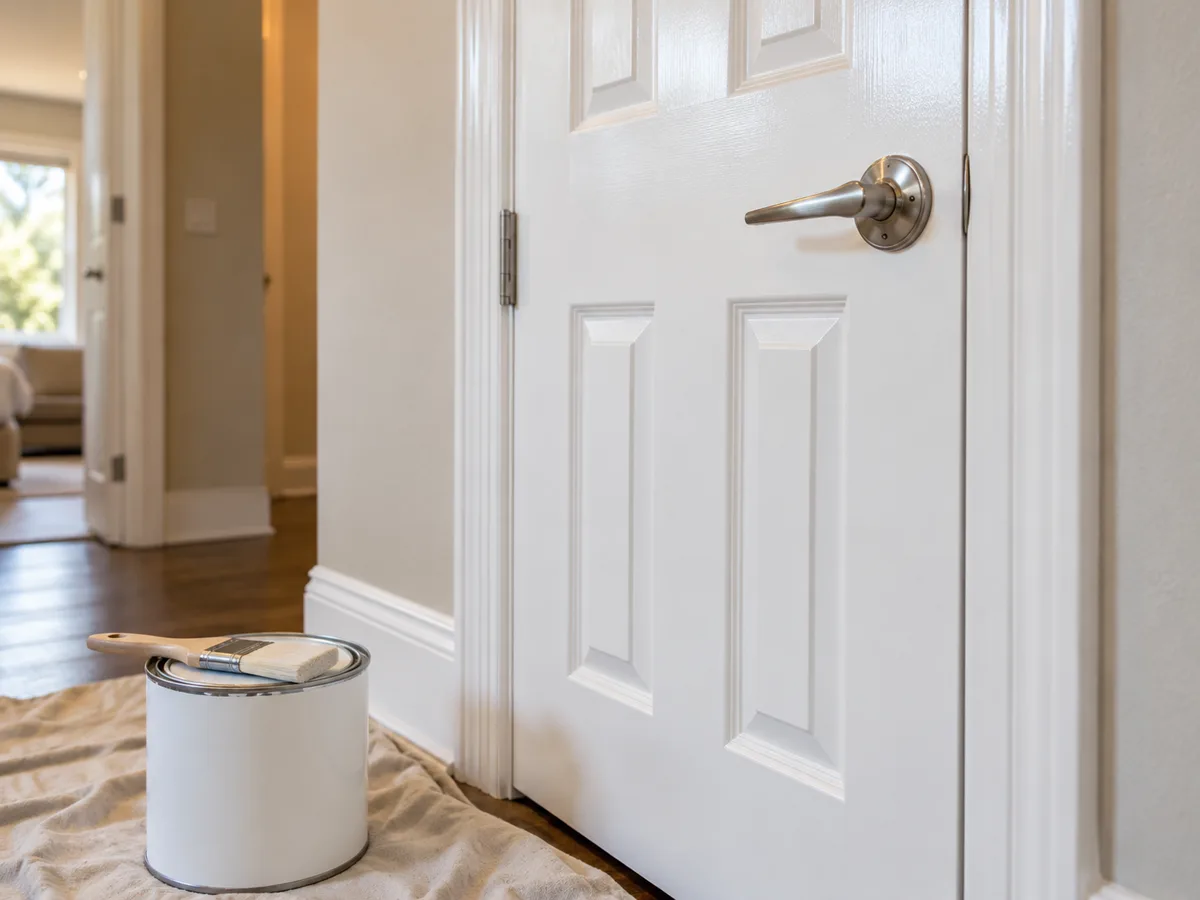
Removal is half the job, and the repair afterward decides how the wall looks. Once the paper and paste are gone, we inspect the wall in raking light and fix what the paper was hiding.
Repair
Torn paper face, gouges, old nail holes and seams are filled and sanded, and any damaged board is patched. Skim coating the whole wall is sometimes the better answer when the surface is rough or patchy.
Prime
A sealing primer goes on next. It locks in any leftover residue, evens out the porosity of repaired spots and gives the paint something to grip. Skipping the primer is the most common reason repainted walls look blotchy.
Paint
Two coats of finish go on in the sheen you choose, cut in cleanly at the ceiling, trim and corners. We check each wall in daylight and lamplight before we call the room finished.
What Shapes the Scope and the Schedule
The size of the room matters less than the condition of the paper and the wall. Two rooms of the same size can differ by days depending on the glue and the layers. The scope depends on the number of walls, the number of paper layers, the type of paper, the state of the wall underneath and how much repair the wall needs.
Ceiling height and the amount of cutting around windows, built-ins and trim also add time. Rooms with a lot of detail, such as a powder room with a pedestal sink and a mirror, are often slower than a plain bedroom wall.
We walk the rooms, test a corner and put the scope in writing before we start. If we find a second layer or a damaged wall once the work begins, we show you what we found and talk through the change before we go on.
After the paper comes off, walls often need drywall repair, and smooth walls can take specialty finishes.
Wallpaper Removal in Riverside Homes
Riverside has plenty of homes with paper that dates from the 1980s through the early 2000s, especially in the older tracts and in houses that have not been remodeled since they were built. Kitchens, powder rooms, dining rooms and entries are the usual places, often with heavy vinyl or a border that was glued on and painted over.
Older homes near downtown and in Arlington Heights sometimes carry paper over plaster, and a few have layers that were hung over each other across decades. These walls respond well to patient removal, though the plaster needs care so the surface is not damaged.
The dry inland air helps here, because walls dry fast after washing, but it also means we have to work in sections so the solution does not dry on the wall before we scrape it. Home sellers in Orangecrest and Mission Grove often ask for removal before listing, since dated paper is one of the first things buyers notice.
Colors and Finishes
The process
How a Wallpaper Removal Job Runs
Four steps, and the wall is clean and sealed before any paint goes on.
Test and quote
We test a corner, count the layers and note the wall condition so the scope is honest from the start.
Strip and wash
We remove the paper, soften and scrape the backing and wash off every trace of adhesive.
Repair and prime
We fill, sand and, where needed, skim the wall, then seal it with a primer.
Paint and final look
Two finish coats go on, and we walk each room with you in daylight before we leave.
Questions
Wallpaper Removal and Repainting: Common Questions
Can you remove wallpaper without damaging the wall?
In most cases, yes, though it depends on how the wall was prepared before the paper went up. We test a small area first and tell you what to expect before we quote.
Do you have to remove all the glue?
Yes. Leftover adhesive stops paint from bonding and shows through as blotches. We wash the wall until it is clean and let it dry before any repair or primer.
What if the wall is damaged under the paper?
We repair it. Torn board face, gouges and seams are filled and sanded, and when the wall is rough we skim coat it for an even surface.
Do you remove wallpaper borders?
Yes. Borders are often glued harder than the paper and sometimes painted over, so we score and soften them before removal.
Can you paint over wallpaper instead of removing it?
We usually advise against it. Seams, texture and the paper's edges tend to show through, and the paint can peel when the paste softens. Removal gives a better, longer-lasting result.
How long does removal take?
It varies with the layers and the glue. A powder room can be quick, and a whole house of old paper takes longer. We give you a written schedule after the test.
Will you work around my furniture?
We move and cover what is in the way, protect floors and outlets, and clean the room at the end of each day.
Do you also paint the ceilings and trim?
Yes. We can paint the walls only, or the ceiling, trim and doors as well, so the finished room looks consistent.
Talk to us about wallpaper removal and repainting
Send us a photo of the paper or book a walk. We test a corner and give you the scope in writing.
Licensed, insured and bonded · License #585047. Calls only, we do not receive text messages.