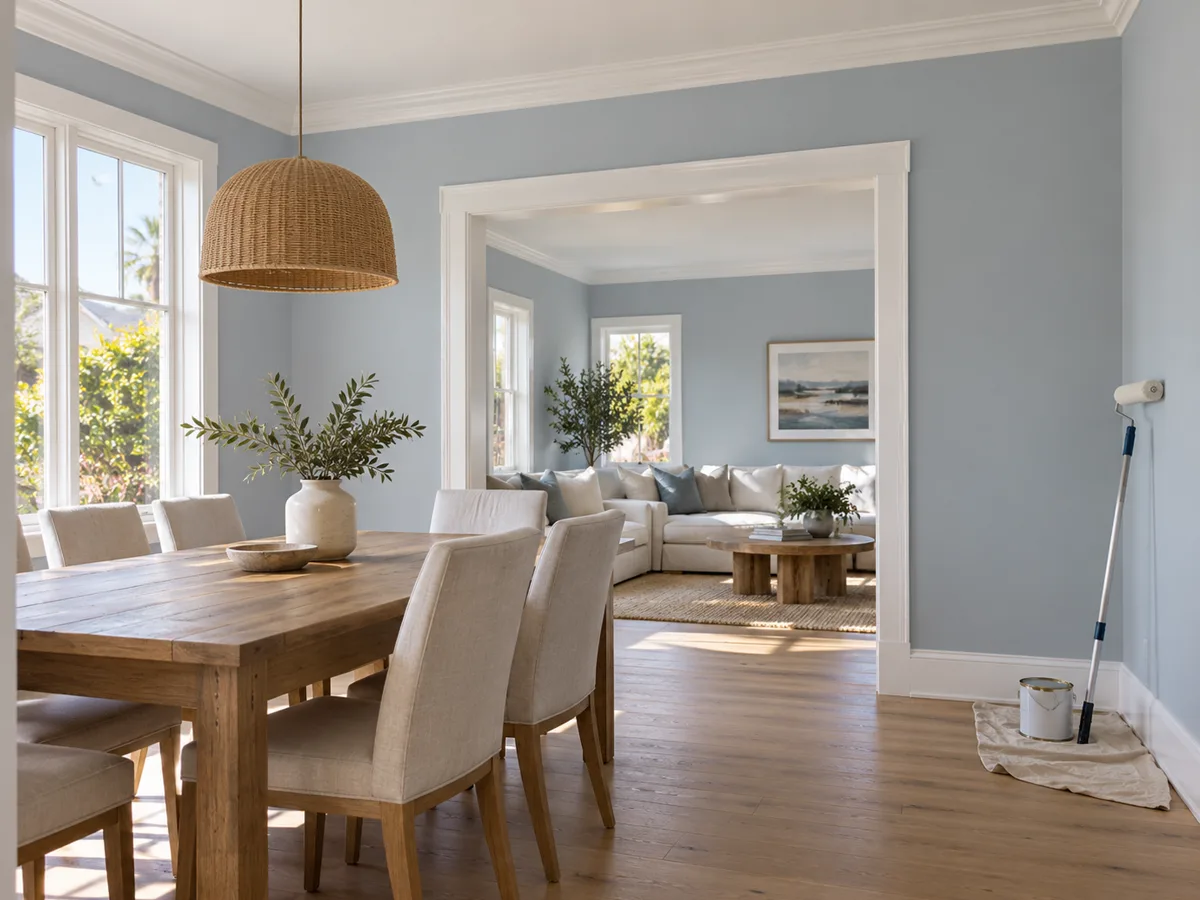
Standard concrete block
A concrete masonry unit is a standard-size block of cast concrete laid in staggered courses with mortar joints, and its open, porous face soaks up paint unless it is filled first.

Riverside Expert Painting handles block wall painting in Riverside, CA as a specialist Riverside County painting crew for yard and property-line masonry, specializing in concrete block perimeter walls, slumpstone garden walls and painted brick. We offer efflorescence cleanup and acrylic block filler.
Get a free painting estimate
Or call (951) 631-9482. Calls only, we do not receive text messages.
Our team provides a masonry primer under every new finish, delivering smooth, even color on porous block for both residential and commercial projects. We test a section of each wall for staining and absorption first, then put the cleaning, the filler or primer and every finish coat for each face of the wall into a written scope before painting starts.
From scrubbing hard-water rings off the lowest courses to coating the cap and both faces of a long property-line run, our team handles every detail. Serving Riverside, Norco, Woodcrest and El Sobrante, we settle who owns which side before the bid is written.
Why Riverside Expert Painting
No salesperson hands you to a stranger. The person who measures the job answers for it.
A block wall job in Riverside usually covers the walls that bound the lot rather than the house itself: the rear perimeter wall, the side walls shared with neighbors, and the low garden walls around planters and patios. Each kind of masonry takes a coating a little differently, so the scope names the type.
A concrete masonry unit is a standard-size block of cast concrete laid in staggered courses with mortar joints, and its open, porous face soaks up paint unless it is filled first.
Split-face units are made by splitting a block so its face is rough and stone-like, and that texture needs back-rolling or brushing to push coating into every pocket.
Slumpstone has an irregular, rounded and bulged face made to look rustic, and its maker sells it for walls that need no stucco or paint. Many owners leave it bare, so painting it is a deliberate change that takes longer to coat evenly.
Brick planters and garden walls are cleaned, checked for loose mortar and given a primer suited to the brick before any color goes on.
White crust and rust-colored rings on the lower courses of a block wall are cleaned and treated before any coating, because paint laid over them lets go. Two different things cause them. Efflorescence is salt dissolved out of the block by water and left behind when the water evaporates at the face. Hard-water staining comes from the irrigation water itself: water with a high mineral content leaves calcium carbonate scale where it dries, and traces of iron can turn those deposits rust-orange.
Both are at their worst where sprinklers hit the wall every morning. The cleanup is a scrub and a rinse, a masonry cleaner on heavy scale, and enough dry time for the block to give up its water. The heads spraying the wall are then pointed out so they can be turned, because new paint on a wall soaked every day will stain again.
Coating makers state that efflorescence is neither caused nor prevented by their coatings, so the cure is about water, not paint. A penetrating water-repellent sealer can reduce it on bare masonry, but it cannot stop it permanently.
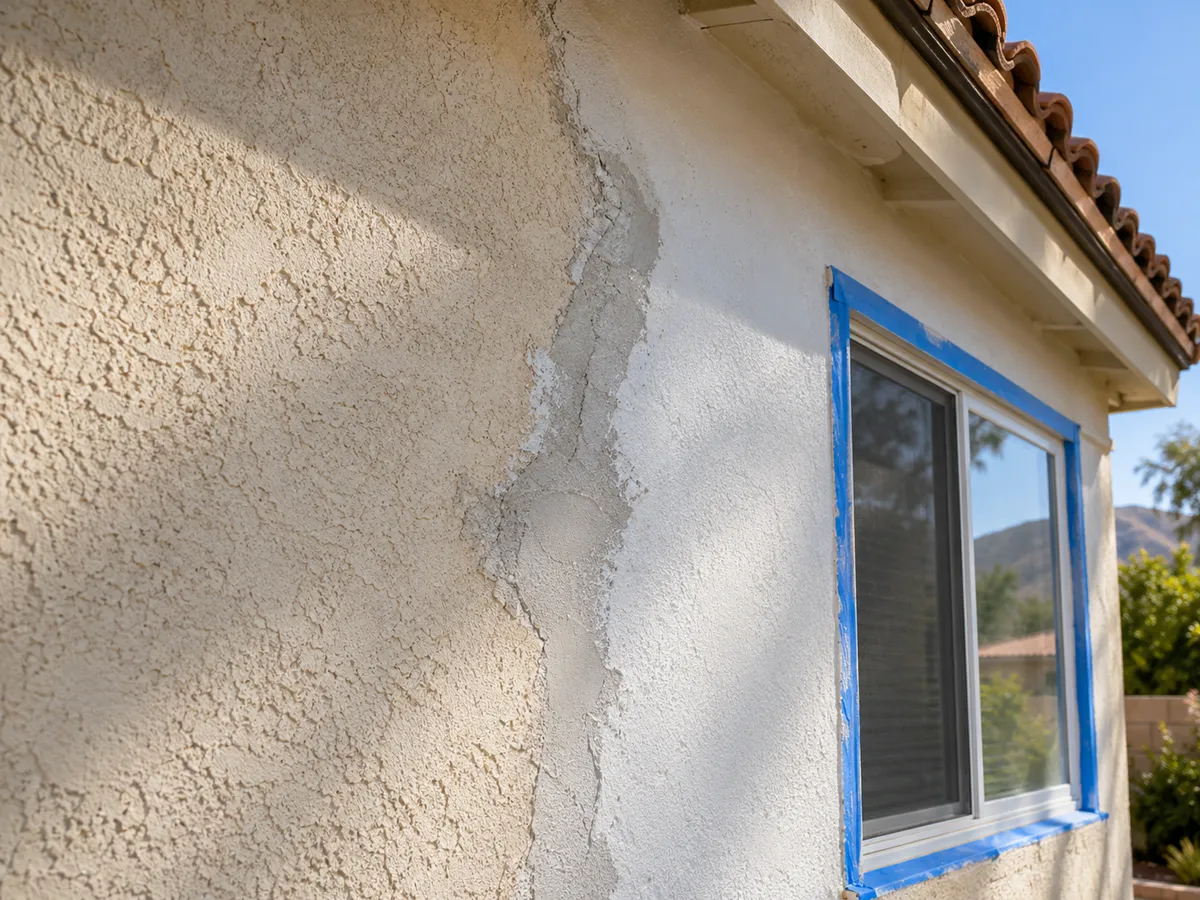
A wall on the property line has an owner on each side, so who pays for which face, and how the crew reaches the far side, is settled before the bid. California's Civil Code presumes that neighbors share equally in the reasonable cost of maintaining a fence that divides their properties, and asks a landowner planning that spending to give the neighbor 30 days' written notice. Whether the statute reaches a masonry wall is a question for you and your neighbor, not for a painter, but the conversation it describes is the right one to have.
In practice there are three usual outcomes. We paint your face only and stop at the cap; the neighbors split the cost of both faces and the cap; or the neighbor gives access so a matching color goes on their side as well. The scope says which, and where the color stops at each end of the run.
Walls along an association's perimeter or common areas may be the association's to maintain, so a board or community manager can bid the whole run by length, phase and approved color.
Bare block needs a block filler or masonry primer before its finish, and it uses more material than a smooth wall because its face is full of pores and pinholes. Acrylic block filler is made to prime and fill porous concrete block so the finish lies smooth, and it is applied at a heavy film build, which is why its data sheet's practical spread rate per gallon is low.
The same data sheets ask for masonry that is cured, clean and dry, with efflorescence, chalk and soluble salts removed and mortar spatters leveled. Previously painted block is washed, loose coating and rust stains are scraped back, and the bare spots are filled so they do not flash through the finish.
Finish coats are an exterior acrylic or a masonry-rated coating. The cap along the top needs its own call, because elastomeric makers exclude horizontal surfaces where water can sit, so the cap gets a coating rated for it and is brushed to shed water off both faces.
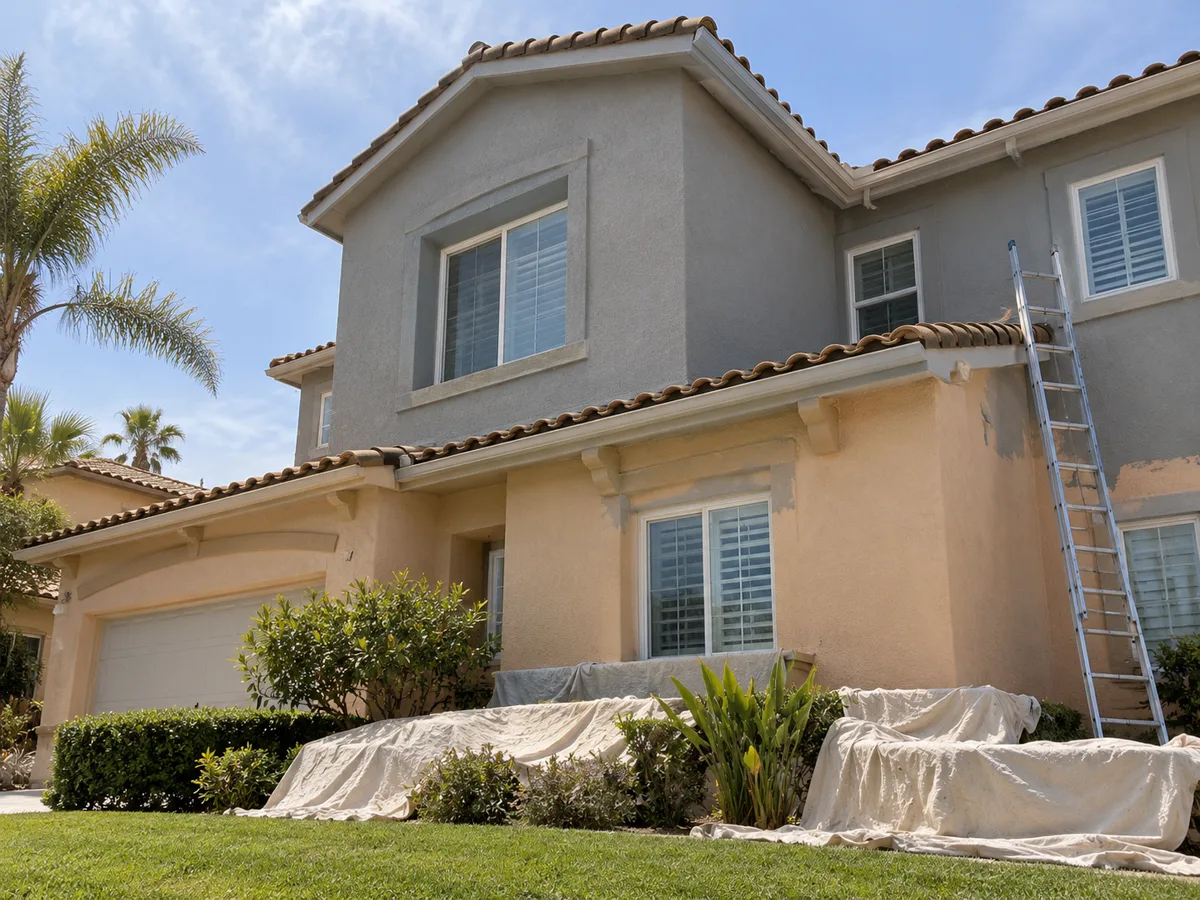
Many Riverside block walls carry metal: a side-yard gate, view panels between pilasters, or a decorative grille above the cap. Most of what is sold as wrought iron today is mild steel made to look hand-worked, and mild steel rusts wherever its coating breaks, usually at welds, hinges and the bottom rail where sprinklers reach it.
Metal is scraped and wire-brushed to remove loose rust and failed paint, spot-primed with a rust-inhibiting metal primer and then finished, usually in a color that ties the gate to the wall or the house trim. Rust that has run down onto the block is cleaned before the masonry is coated, or it bleeds through.
Gates and panels are listed on their own lines in the scope, so you can see what the metal adds and decide whether to include it now or later.
Block wall painting in Riverside is typically estimated at roughly $1,500 to $8,000, set mostly by the length and height of the wall and how many faces are coated. A short garden wall painted on one face sits near the low end; a long perimeter wall painted on both faces with heavy stain cleanup sits near the top.
Other drivers are bare block that needs filler versus previously painted block, texture (split-face and slumpstone take longer), efflorescence and hard-water cleanup, access past planters, pools and slopes, the cap, gates and iron panels, and whether the neighbor's side is included.
Treat these as estimates that are subject to change once the wall is measured and the coating chosen; the final price is set by the written quote after a free walk.
The process
Four steps, and nothing is painted until you have approved the scope and the colors.
We walk the house or property with you, look at the stucco, the trim and the old coating, and note what the afternoon sun, the dry wind and the sprinklers have done to each side.
You get the prep, the products, the colors and the dates in writing. For an association or a building, the scope is phased so residents and tenants know which day is theirs.
Washing, scraping, patching and caulking come first, because that is what the paint holds on to. Then primer where it is needed and the finish coats.
We walk it again with you before we call it done, and touch up anything you point at.
Questions
It depends on how it looks now and what you want. Bare block that is clean and evenly colored can be left or sealed with a clear water repellent; stained, patched or mismatched block usually looks best painted after filling. We show you both options on the walk.
Not for long if the stains are left under it. Efflorescence and hard-water scale are cleaned off first, and the sprinkler or drainage feeding them is pointed out, because paint over an active salt deposit loosens and the white comes back.
Yes. Your face is painted and the color stops cleanly at the cap or the end pilaster. If your neighbor agrees, both faces can be done together, which usually looks better from both yards and avoids a second visit later.
It is wise, and California law asks for written notice before shared costs are incurred on a boundary fence. Even if you are painting only your face, the crew may need to step onto their side or protect their plants, so agreeing access first saves a delay.
Yes. Both are filled or primed and then back-rolled or brushed so coating reaches every hollow in the face. They take more product and more time than flat block, which the scope reflects.
Yes. Many owners pick the house body color or the trim color for the wall so the yard reads as one design. We sample the color on the block itself, because the same paint looks different on porous masonry than on stucco.
Yes. Metal gates and panels are cleaned of rust, primed with a metal primer and finished, and they are priced as their own line so you can choose to include them.
Yes. A board or community manager can send a site map or the wall lengths, and we return a bid by run and phase in the approved color, with product data for the architectural committee.
Homeowners get a free on-site estimate. Boards, managers and contractors can send a scope for a bid.
Licensed, insured and bonded · License #585047. Calls only, we do not receive text messages.