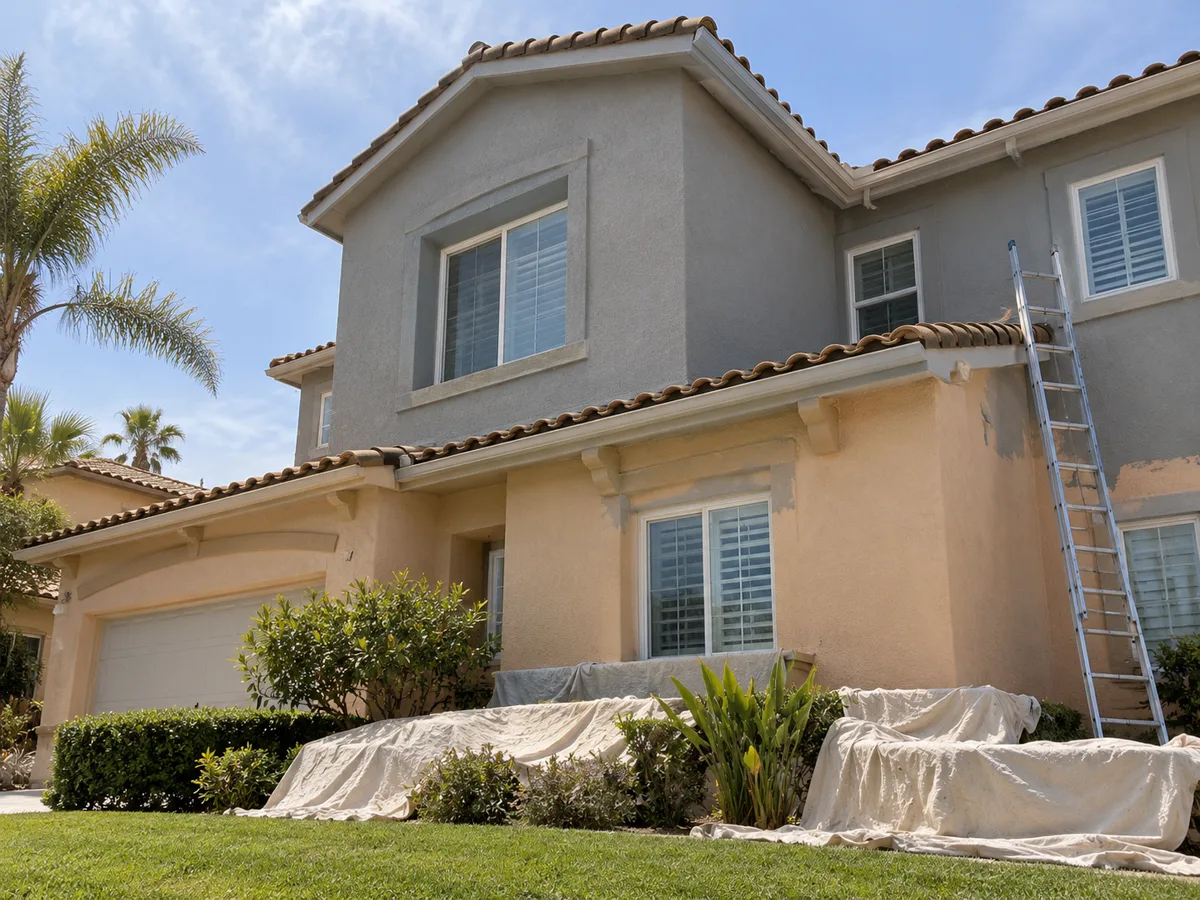
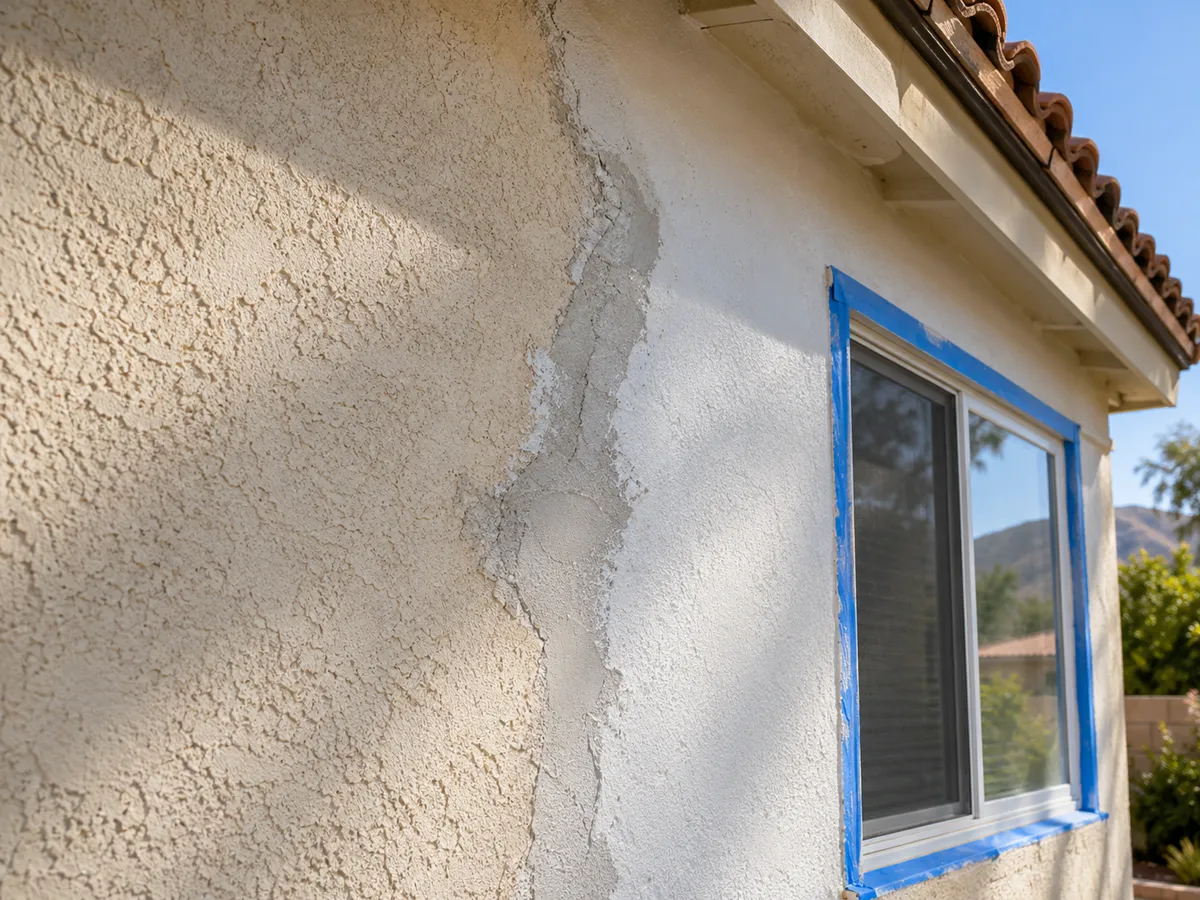
Nail pops and hairline cracks
Nail pops, where a fastener has backed out of the drywall, are reset and filled. Hairline cracks at corners and above door frames are opened slightly, filled and sanded flat.

Riverside Expert Painting provides interior painting in Riverside, CA, as a trusted Riverside County residential painting specialist, specializing in wall and ceiling repaints, baseboard and casing enamel, and room-by-room color changes. We offer whole-house interiors and single-room repaints.
Get a free painting estimate
Or call (951) 631-9482. Calls only, we do not receive text messages.
Our team provides patching, caulking and spot priming ahead of the finish coats, delivering clean cut lines and even color for both residential and commercial projects. We walk every room with you, then the written scope lists the repairs, the primer, the sheen and the number of coats for each wall, ceiling and door, and color samples are painted on your wall for approval before any painting begins.
From setting a popped drywall nail and caulking a split baseboard seam to repainting every room, hallway and stairwell in the house, our team handles every detail. Serving Riverside, Eastvale, Norco and Diamond Bar, we also repaint offices, rental units and common hallways for owners and managers who need the work done around the people using them.
Why Riverside Expert Painting
No salesperson hands you to a stranger. The person who measures the job answers for it.
Interior painting in Riverside is usually done with the family still living at home, so the job is planned around your rooms rather than around ours. We agree an order at the start, and bedrooms and the kitchen go back into use at the end of each working day wherever the scope allows.
Furniture is moved to the middle of each room and covered, floors are protected with drop cloths, and outlet covers, switch plates and vent grilles come off and are kept together by room. Artwork, electronics and anything fragile are best moved by you before the start date, and we list what needs clearing at the walk.
Children and pets stay out of rooms being painted, and rooms are ventilated while coats go on. Paint used inside the South Coast AQMD, whose area takes in large parts of Riverside County, is held to the VOC limits in Rule 1113, which matters most inside a closed house where VOC levels run higher than outdoors.
The start date, the room order and the expected length of the job are written on the estimate.
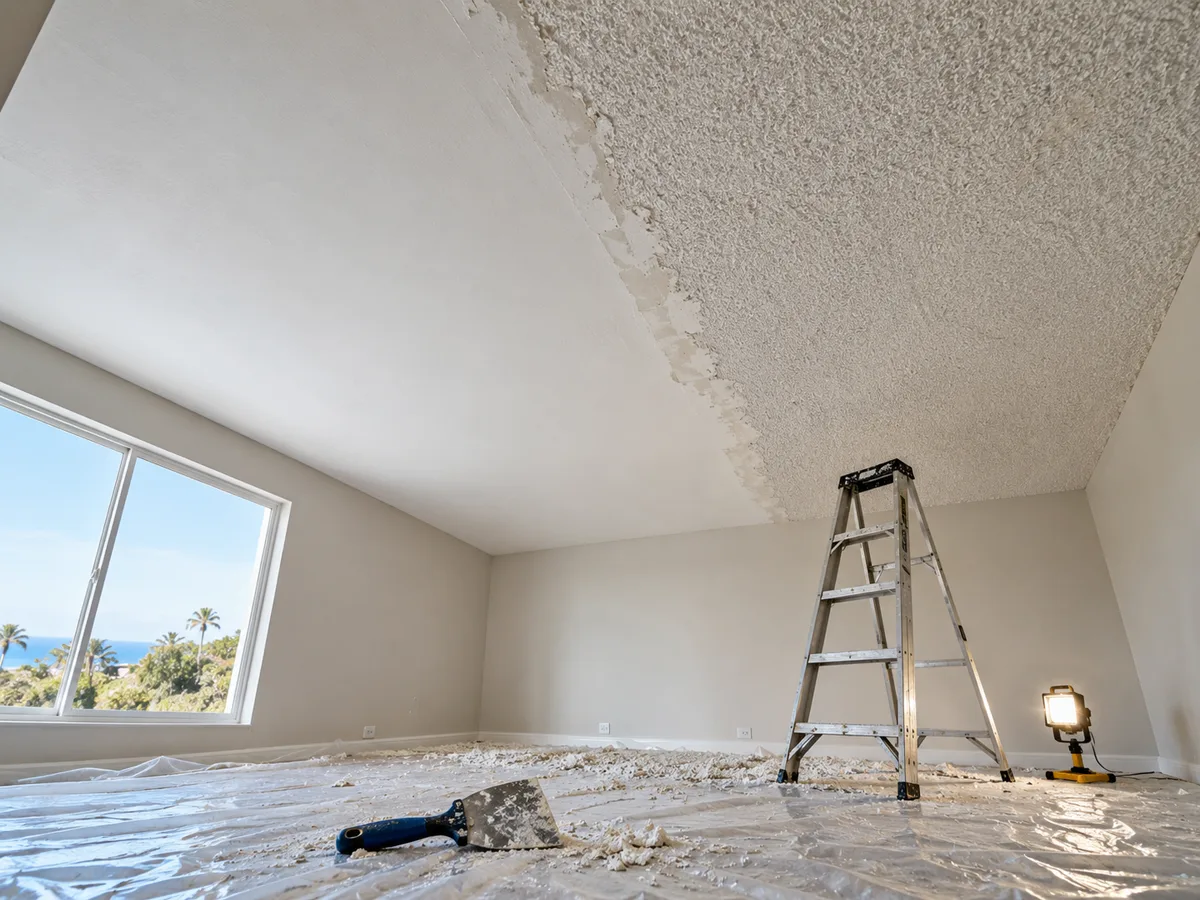
New paint shows every flaw underneath it, so repairs come before the first coat, never after. A fresh, even color makes a dent or a crack easier to see, not harder.
Nail pops, where a fastener has backed out of the drywall, are reset and filled. Hairline cracks at corners and above door frames are opened slightly, filled and sanded flat.
Picture hooks, wall anchors and doorknob dents are filled and spot primed so the patch does not flash through the finish as a dull spot. Larger damage, such as a sagging section of ceiling or a hole the size of a hand, is noted at the walk, because it has to be repaired before any coat can go on.
Gaps where baseboards and casings meet the wall are caulked so the line reads straight. Water stains, smoke and marker are sealed with a stain-blocking primer, because they bleed through ordinary wall paint.
Sheen is chosen for how each room is used, because a finish that suits a bedroom wall is wrong for a bathroom. The more a surface gets touched, splashed or wiped, the more sheen it needs.
Higher gloss is easier to clean but reflects light and accentuates blemishes, so a glossy wall needs a smoother surface first. That is one more reason the repairs come before paint.
The sheen for each room goes into the written scope, so you know what every wall will look like and how it will clean.
A full room repaint follows the same order every time: ceiling first, then walls, then the trim and doors. Working from the top down keeps drips and roller spatter off finished surfaces.
Painting the ceiling with the walls is usually worth it. A fresh wall beside an old ceiling makes the ceiling look gray by comparison. Ceilings get a flat ceiling paint, which hides the small waves and seams that window light shows across a broad surface.
Walls get two finish coats over the repairs and any primer, with cut lines brushed straight at the ceiling and the trim. Where a color changes a long way, from a deep red to a light gray, a primer or an extra coat is written into the scope at the walk rather than added later.
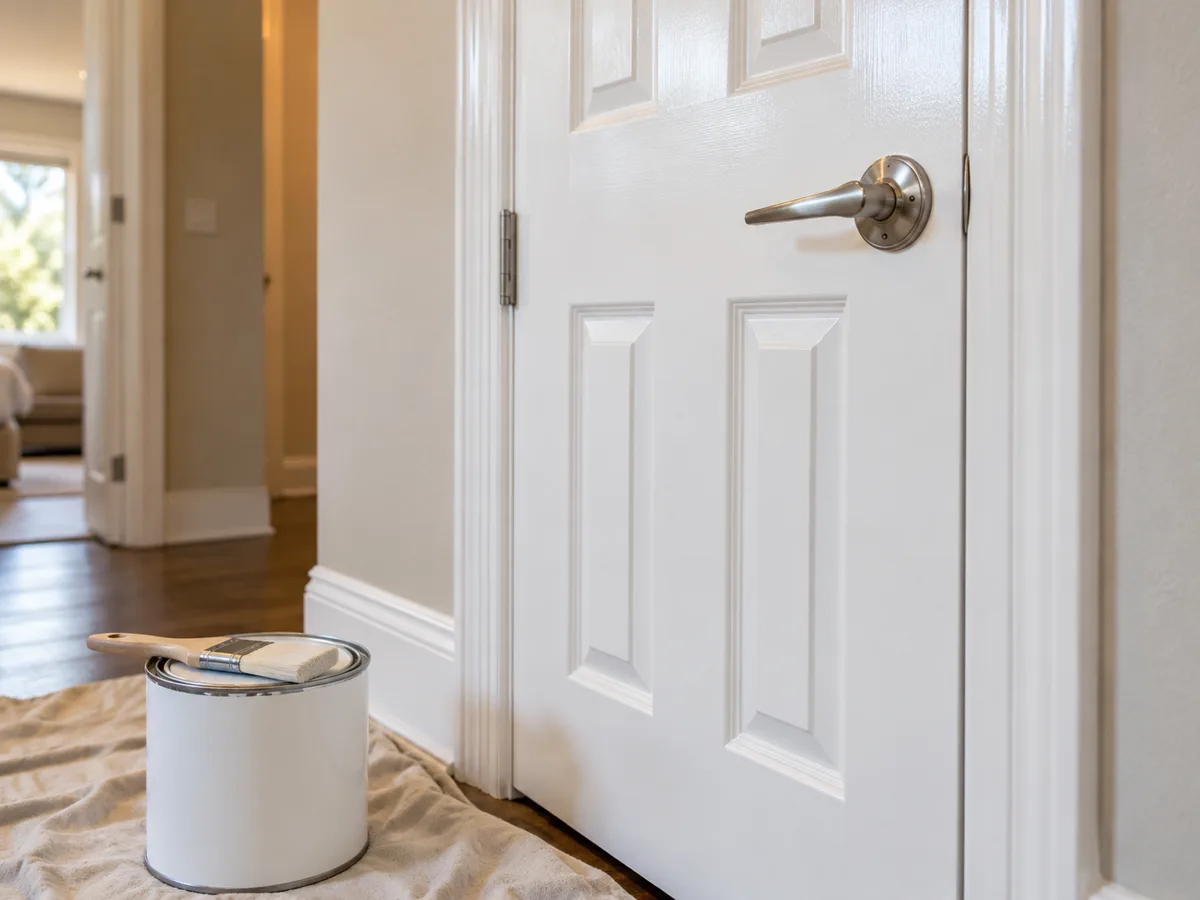
Baseboards, casings and doors are painted last in enamel. When only the trim and doors need attention, that is a smaller job with its own quote; here they are part of finishing a whole room.
The age of a Riverside house changes how its interior is prepared. Lead was banned from household paint in the United States in 1978, so a home built before then may still carry lead-based paint under its newer coats, and the EPA says roughly three-quarters of American homes built before that year still contain some.
On those houses, sanding and scraping are handled with lead-safe work practices: the room is contained with plastic, surfaces are wet scraped and wet sanded instead of dry sanded, dust is collected with HEPA-filtered vacuums, and the area is cleaned before the plastic comes down. Torching, heat guns at high temperature and machine sanding without HEPA collection are not used.
Newer homes bring their own access work. Two-story entries, open stairwells and vaulted living rooms need taller ladders, planks or scaffolding, and that access is counted at the walk rather than discovered on the day.
Either way, the prep for your house is described in the written scope before the first room is touched.
The same interior work covers buildings that people use every day. Owners and managers of offices, rental units, medical suites and apartment common hallways can have rooms repainted in phases, so a floor or a wing stays open while the next one is worked.
For a property manager we price by room, by unit or by floor plan, and the schedule names which areas are closed on which days so tenants can be told in advance. Product data for the wall and trim paints can be supplied for approval before the start.
Vacant units are the quickest to turn, since furniture and occupants are out, while an occupied office is usually painted after hours or in sections around the working day.
Interior painting in Riverside is typically estimated at roughly $1,000 to $12,000, from a couple of rooms at the low end to the walls, ceilings and trim of a whole house at the high end. A whole-home interior of about 2,000 square feet is commonly estimated at roughly $4,000 to $12,000, depending on how much of it is included.
What moves the number:
All of these figures are estimates, subject to change once the rooms are walked and measured, and your written quote sets the final price.
The process
Four steps, and nothing is painted until you have approved the scope and the colors.
We walk the house or property with you, look at the stucco, the trim and the old coating, and note what the afternoon sun, the dry wind and the sprinklers have done to each side.
You get the prep, the products, the colors and the dates in writing. For an association or a building, the scope is phased so residents and tenants know which day is theirs.
Washing, scraping, patching and caulking come first, because that is what the paint holds on to. Then primer where it is needed and the finish coats.
We walk it again with you before we call it done, and touch up anything you point at.
Questions
No. Most families stay home. Rooms are painted in an agreed order and put back each evening where the scope allows, and you only need to clear small items, artwork and electronics before the start date.
Yes. Furniture is moved to the middle of each room and covered, and floors are protected. Very heavy pieces such as pianos, safes and loaded bookcases are discussed at the walk.
There is some smell while paint dries. The wall paints we use are waterborne and held to the South Coast AQMD's VOC limits, and each room is ventilated as it is painted.
Yes, usually along with the walls. Ceilings get a flat paint that hides small imperfections, and they are painted first so nothing drips onto finished walls.
Yes. A big color change can need a primer or an extra coat, and that is written into the scope at the walk so it is part of the estimate from the beginning.
It can be if it was built before 1978, when lead was banned from household paint. Those rooms are prepared with lead-safe work practices: plastic containment, wet scraping and sanding, HEPA vacuums and a full cleanup before the room is handed back.
Small repairs, yes: nail pops, cracks, dents and anchor holes are filled and spot primed as part of the prep. Larger damage is noted at the walk because it must be repaired before paint can go on.
Two finish coats over repaired and primed areas is the standard in our scope, with an extra coat or a primer where the color change calls for it. The number is written down room by room.
Yes. Owners and managers can send a room count, a floor plan or a unit list, and occupied offices or apartments are scheduled in phases around the people using them.
Yes, and an empty house makes the job simpler, since furniture can be grouped once and rooms do not need to be put back each evening. Access, alarm codes and pets are agreed at the walk.
Homeowners get a free on-site estimate. Boards, managers and contractors can send a scope for a bid.
Licensed, insured and bonded · License #585047. Calls only, we do not receive text messages.