Gable ends
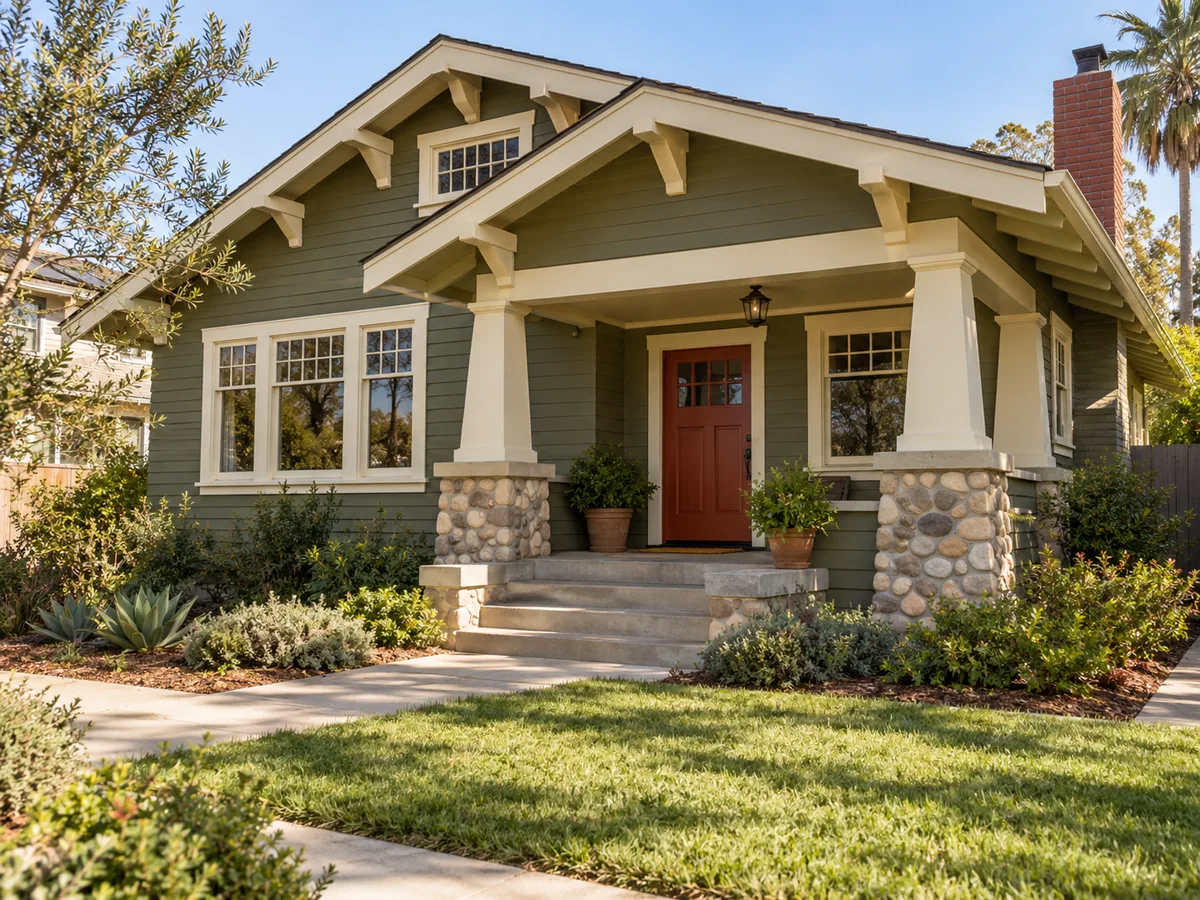
On many Craftsman houses the shingles sit high in the gables above board siding below. That is ladder and lift work over roofs and porches, so access and protection are planned on the walk.

Riverside Expert Painting provides shingle siding painting in Riverside, CA, as a specialist Riverside County painting crew for cedar walls, specializing in shingle staining, painted shake gables and split shingle replacement. We offer solid-stain refinishing and full shingle-wall repaints.
Get a free painting estimate
Or call (951) 631-9482. Calls only, we do not receive text messages.
Our team provides hand work on every course and edge, delivering an even, weather-sealed finish for both residential and commercial projects. We sample the stain or paint on a section of your own shingles first, then write a written scope that names the cleaning, the replacements, the primer and the coat count, so the stain-or-paint decision is settled before any painting starts.
From swapping a cracked shingle under a window to restaining a whole Craftsman gable and the porch walls beneath it, our team handles every detail. Serving Riverside, Claremont, North Tustin and Villa Park, we finish shingles the way the wood needs, not the quickest way.
Why Riverside Expert Painting
No salesperson hands you to a stranger. The person who measures the job answers for it.
The first question on a shingle wall is whether it should be stained or painted, and the answer usually depends on what is on it now.
Wood shingles are thin, tapered pieces of wood, and historically shakes were split from straight-grained, knot-free wood rather than sawn. Bare or previously stained cedar can take a penetrating stain, which soaks into the wood and lets the grain and texture show. Stain weathers gradually rather than peeling, so a later recoat is a clean and a fresh coat rather than a strip.
Shingles that already carry paint are a different case. Paint forms a film on the surface, and once a shingle has been painted it cannot go back to a transparent or semi-transparent stain without stripping every shingle, which is rarely practical. Those walls are repainted, or finished with a solid stain over a primer, which looks like paint but stays thinner on the wood.
We sample both options on your wall when there is a real choice, so you can see the difference in daylight before deciding.
Shingles turn up in different places on different houses, and where they are changes how the job is done.
On many Craftsman houses the shingles sit high in the gables above board siding below. That is ladder and lift work over roofs and porches, so access and protection are planned on the walk.
Some bungalows and Shingle-influenced houses are covered in shingles on every wall. Those jobs are mostly about the sheer amount of surface and edge to cover evenly.
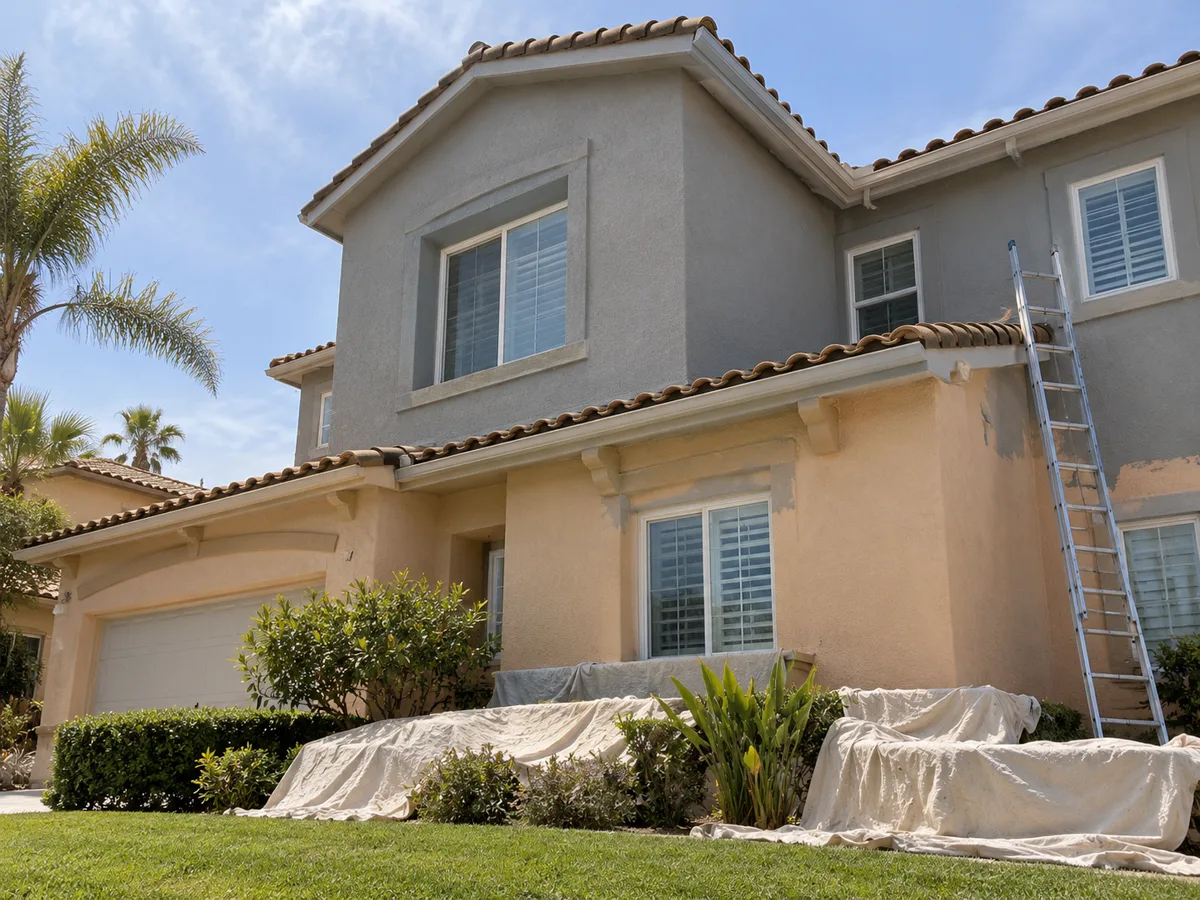
Newer houses often use shake or shingle panels as accents on bays, dormers and porch walls, set against stucco. The joint between shingle and stucco is masked and cut in by hand, because the two take different products.
Shingle skirts near the ground and on porch walls take the most splash and sprinkler water, so they are checked first for rot and split shingles.
Cedar shingles split along the grain, cup and work loose over the years, especially on walls that take full sun. A finish over a split or missing shingle looks patchy and lets water reach the sheathing behind.
Before any finish goes on, the walls are checked course by course. Split shingles are slipped out and replaced with matching cedar of the same width and exposure, cut to fit and fastened so the nails are hidden by the course above. Loose shingles are re-fastened, and cupped shingles that will not lie flat are replaced.
New cedar is a light, bright color next to weathered wood, so on a stained wall the replacements are blended in with the stain, and on a painted wall they are primed on all faces before they go up. Corner boards, window trim and the edges where shingles meet trim are checked for soft wood at the same time.
Shingles have far more surface than flat siding. Every shingle has a face, two edges and a butt at the bottom, and each course overlaps the one below, so there are many small gaps where a coating has to reach.
The usual method is to spray the product onto the wall and back-brush it straight away, working the stain or paint into the butts, edges and the shadow lines between courses so nothing is left bare. Spraying alone tends to leave dry edges, and brushing alone is slow on a large wall. Gable work high up may be brushed and rolled by hand where spray would drift onto a roof.
The edges and bottom butts are where water gets in, so they are given extra attention, and the coating is kept off the bottom edges of the lowest course where it would bridge to trim and trap water.
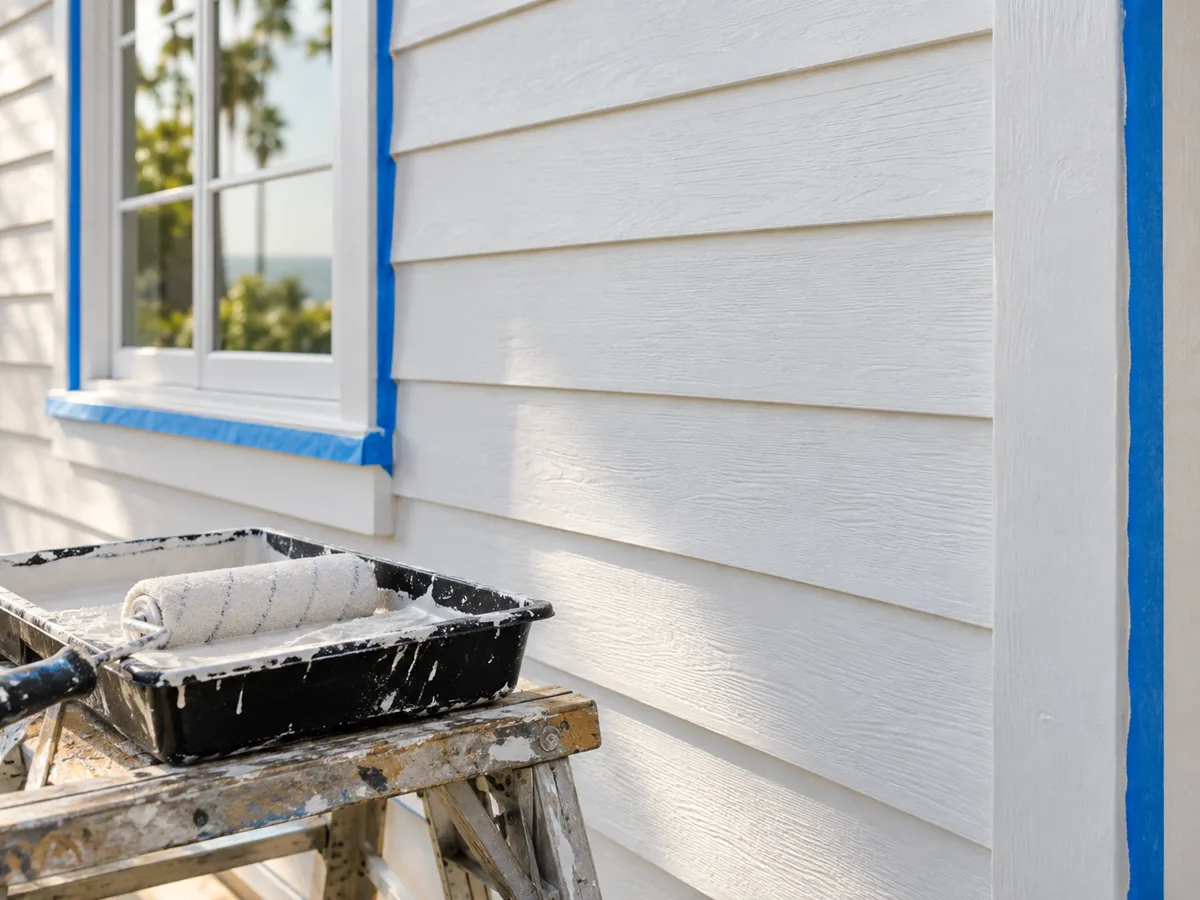
Inland sun is hard on cedar. The wall that faces south or west greys and splits sooner than the shaded side, and on a stained wall it is usually the first to need a recoat. Many exterior stains include ultraviolet absorbers and water repellents to slow that weathering, which is part of why the product is chosen for the wall's exposure.
Stain and paint should not go onto shingles that are hot from direct sun, because the coating skins over before it soaks into the wood. The crew follows the shade around the house, and the sunniest walls are done early or late in the day.
Wind matters too. The Santa Ana winds bring hot, dry weather in autumn and carry dust and spray drift, so spraying stops on wind days and the work continues by brush where it can.
Shingle work usually costs more per square foot than painting flat siding. There is more surface and edge to coat, the back-brushing is hand work, and replacements and gable access add time. Other drivers are the height of the walls, the number of split or loose shingles, whether the wall is being stained or painted, the color change and the amount of trim.
As a guide, shingle and shake siding is typically estimated at roughly $1.50 to $4 per square foot of wall, depending on height, condition and the finish chosen, with replacements counted on the walk.
These are estimates, they are subject to change once the walls have been checked course by course, and the written quote sets the final price.
The process
Four steps, and nothing is painted until you have approved the scope and the colors.
We walk the house or property with you, look at the stucco, the trim and the old coating, and note what the afternoon sun, the dry wind and the sprinklers have done to each side.
You get the prep, the products, the colors and the dates in writing. For an association or a building, the scope is phased so residents and tenants know which day is theirs.
Washing, scraping, patching and caulking come first, because that is what the paint holds on to. Then primer where it is needed and the finish coats.
We walk it again with you before we call it done, and touch up anything you point at.
Questions
Not without stripping every shingle, which is rarely worth it. Painted shingles are repainted or finished with a solid stain, which looks like paint but stays thinner on the wood.
On bare or previously stained cedar, a penetrating stain is usually better because it lets the wood breathe and weathers away instead of peeling. On shingles that are already painted, paint or solid stain is the practical choice.
Yes. Split, cupped and loose shingles are replaced individually with matching cedar, and the new ones are blended into the finish so they do not stand out.
Shingles have much more surface and edge than flat boards, and they need back-brushing by hand so every butt and gap is covered. Gables add access time as well.
Yes. The joint between the shingle panels and the stucco is masked and cut in by hand, and each surface gets its own product.
With extension ladders or a lift, depending on the roof and ground below. Roofs, porches and landscaping are protected before the work starts.
New cedar starts lighter than weathered wood. On stained walls the replacements are blended in with the stain, and on painted walls they are primed and painted with the rest, so the wall reads as one surface.
Yes. On houses built before 1978 any older paint on the shingles or trim is treated as if it may contain lead, and the prep follows lead-safe practice.
Gray, dry-looking wood on the sunny walls, shingles that have split or cupped, and stain that has worn through to bare cedar are the usual signs. On a painted wall, peeling at the butts and edges is the first warning.
Yes, within limits. A darker or more opaque stain can cover an old one, and a solid stain can change the color completely. Going lighter with a transparent stain over a darker one usually is not possible without stripping.
Homeowners get a free on-site estimate. Boards, managers and contractors can send a scope for a bid.
Licensed, insured and bonded · License #585047. Calls only, we do not receive text messages.