Tenant notices and sequencing
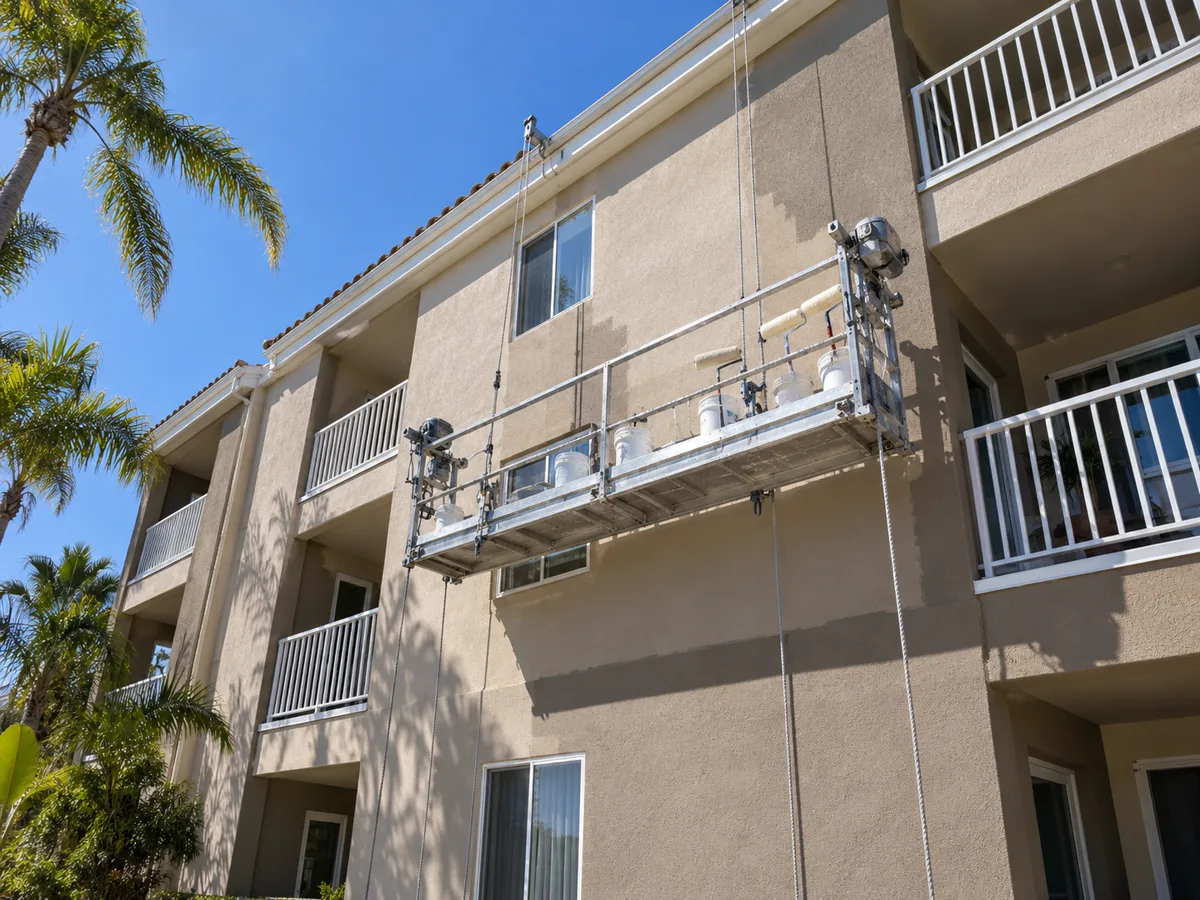
The center manager issues tenant notices before work reaches each storefront. Our schedule names the storefronts for each day, so a tenant knows when the lift will be outside its door and for which hours.

Riverside Expert Painting delivers retail and restaurant painting in Riverside, CA, as a leading Riverside County contractor for center owners, restaurant groups and franchise operators, specializing in shopping center facade repaints, tenant storefront painting and dining room refreshes. We offer canopy and walkway coating and franchise brand color matching.
Get a free painting estimate
Or call (951) 631-9482. Calls only, we do not receive text messages.
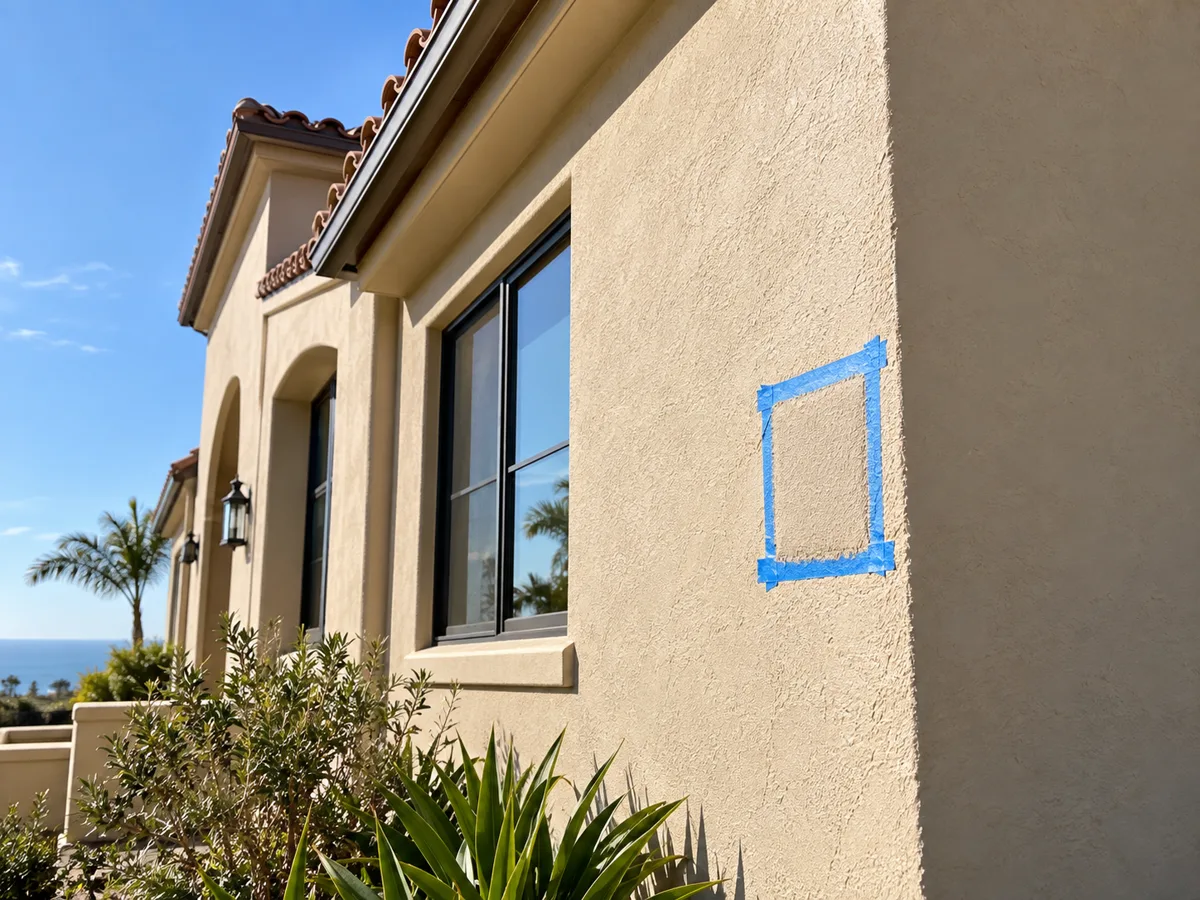
Our team provides store-by-store sequencing, delivering open entrances throughout facade work for both residential and commercial projects. On every center, we submit product data for each brand color and roll out a mockup section of the facade for the property manager to approve, so the painting crew never has to guess at a franchise standard.
From cutting in around a tenant's sign band to recoating an entire center's elevations in phases, our team handles every detail. Serving Riverside, Eastvale and Yorba Linda, we time the work with the most odour and noise to the hours your doors are closed.
Why Riverside Expert Painting
No salesperson hands you to a stranger. The person who measures the job answers for it.
Retail center painting in Riverside is sequenced store by store, so every tenant keeps its entrance open while the facade is repainted. A shopping center is a group of shops built together, and its owner or manager controls the things every tenant shares: the layout, the signs, the exterior lighting and the parking. That is who the bid is written for, and who sends the notices. Riverside's retail runs from open-air centers such as Riverside Plaza to an enclosed mall in the Galleria at Tyler and the shops along the Main Street Pedestrian Mall downtown. Each is a different job: a strip center is a run of storefronts under one canopy line, a larger center has anchor stores whose own frontage may sit outside the landlord's scope, and an enclosed mall moves most of the work to the exterior elevations and service areas.
The center manager issues tenant notices before work reaches each storefront. Our schedule names the storefronts for each day, so a tenant knows when the lift will be outside its door and for which hours.
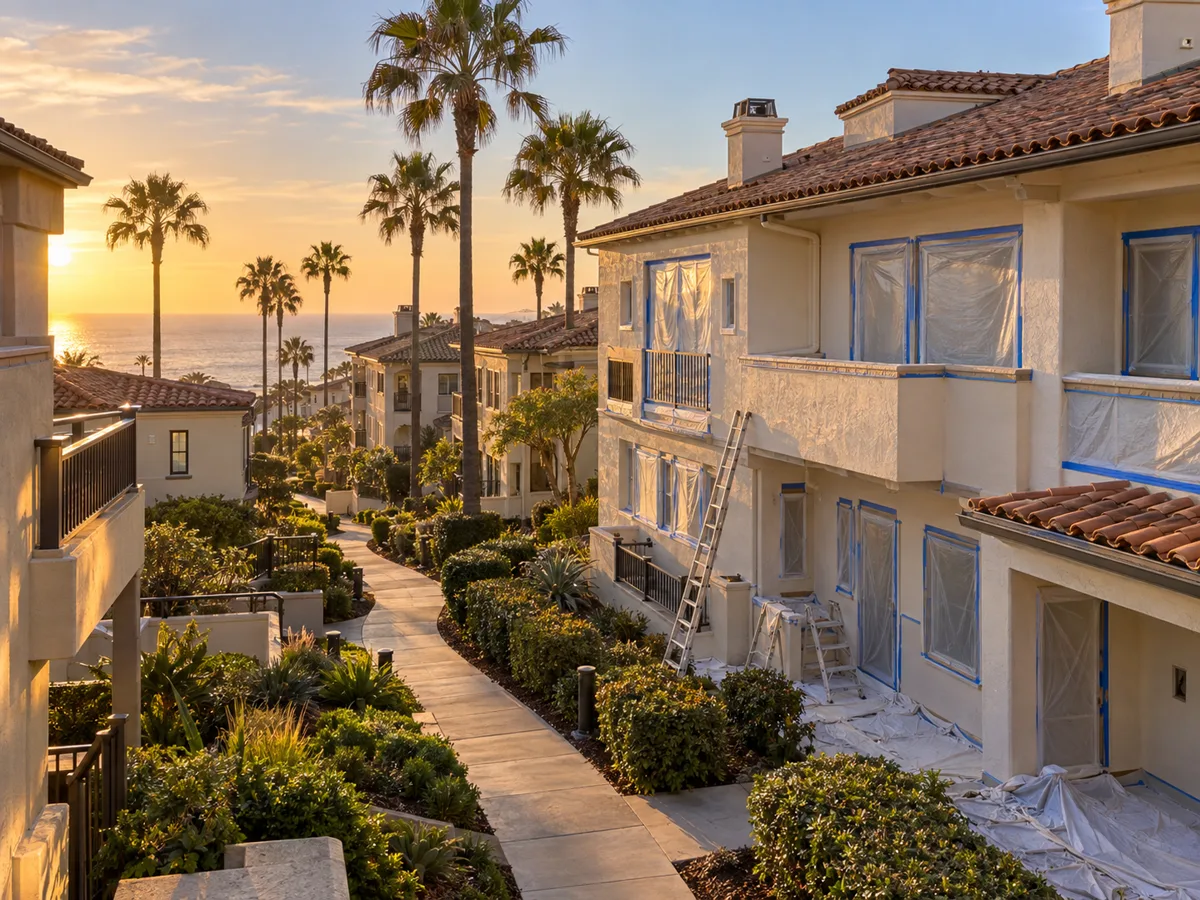
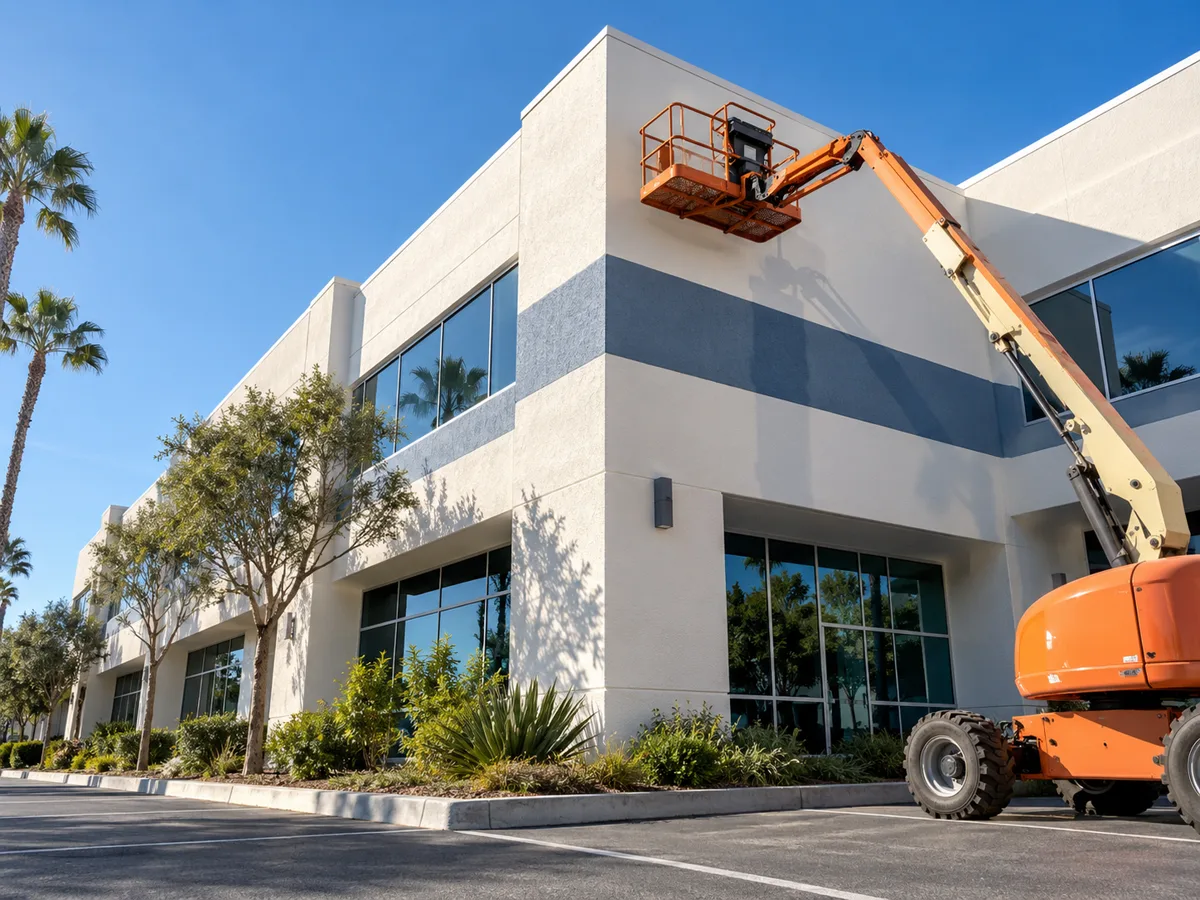
Work at an entrance happens before opening or after closing, and walkway barriers keep shoppers on a clear path past the lift and drop cloths.
Under hot, dry summers and strong sun, the sunny elevations of a center fade and chalk first, so a repaint program can start where the wear is worst and leave the shaded walls for a later phase.
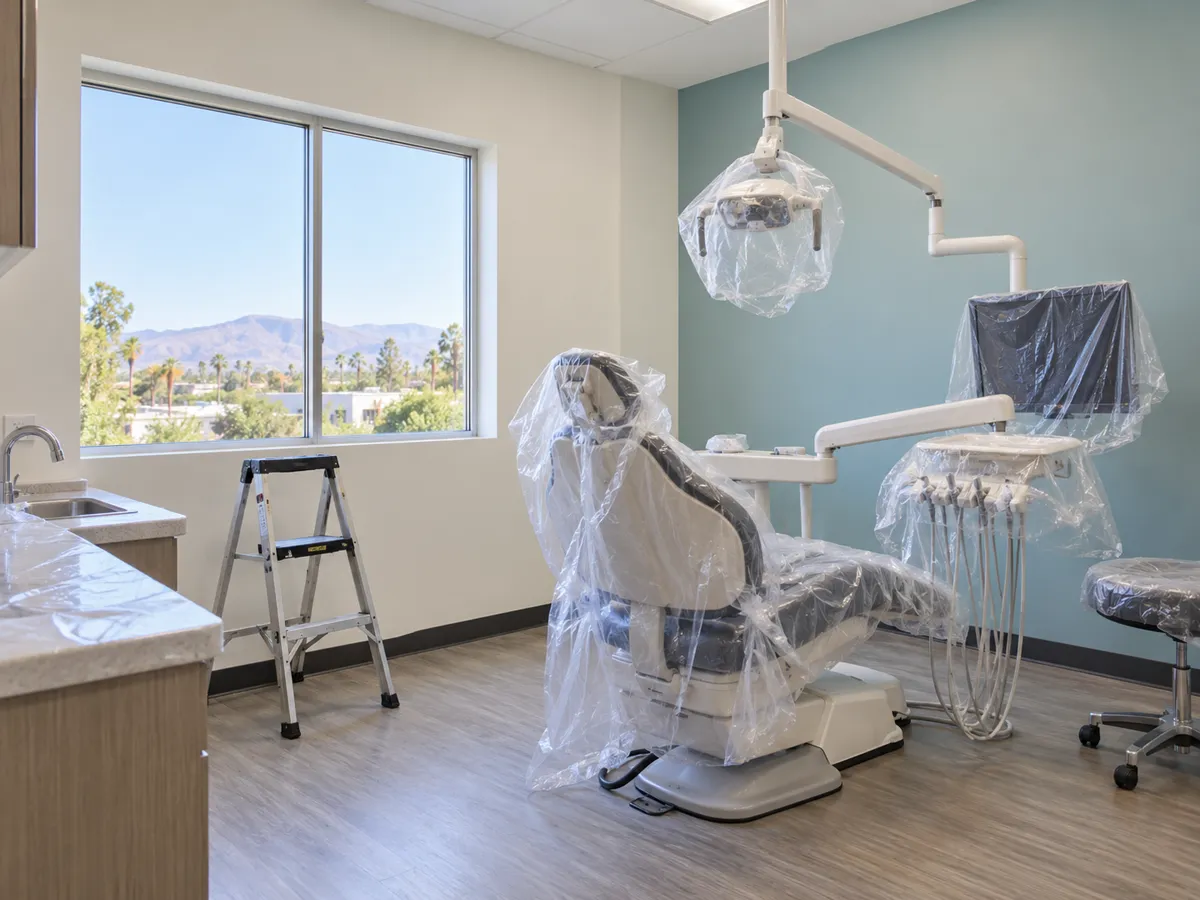
Restaurant interiors are painted overnight or on the day the restaurant is closed, with clean-up finished before the next service. The kitchen and the dining room are two different jobs, and California law treats them differently.
Under the California Retail Food Code, the walls and ceilings of the rooms in a food facility must be durable, smooth, nonabsorbent and easily cleanable, while dining and sales areas are exempt from that rule. So a dining room can take a decorative texture, a matte finish or a deep accent color, and the kitchen, prep areas and dish room take a smooth, washable coating that can be cleaned the way your health inspector expects.
Odour is worth planning for. Studies have found retail spaces carry higher indoor concentrations of volatile organic compounds than offices or homes, and fresh paint adds to them, so we ventilate after each night's work and choose low-odour lines that meet South Coast AQMD Rule 1113.
Franchise brand colors and center-wide schemes are matched from the specification, not from memory or a phone photo. A franchise location has to carry its franchisor's signs, logos and trademarks in a prominent place, and most brand standards also name the paint colors and finishes for the storefront and the dining room.
We work from that document. Each color is drawn down from the specified product, checked against the brand sample in daylight and under the store's lighting, and sent for approval before a wall is painted. Deep brand reds, oranges and blues need more colorant and often a tinted primer to cover evenly, and the bid says so.
At the center level the landlord's color scheme governs the facade, so a tenant's brand color usually lives inside the storefront or on an approved accent area, and we confirm that line with the center manager before anything is ordered.
The details around a storefront are what customers look at, and each is priced as its own line.
Sign bands are painted around the installed letters, which stay in place unless the sign company removes them, and the edges are cut in by hand.
Canopy fascias and soffits over walkways are done from lifts at night, when the walkway below can be closed.
Steel columns, rails and door frames are cleaned, spot primed where rust shows and finished in the center's trim color.
Back-of-house doors, trash enclosures and rear walls are often the worst kept part of a center, and they can be added to the same mobilization at a lower unit rate than a separate visit.
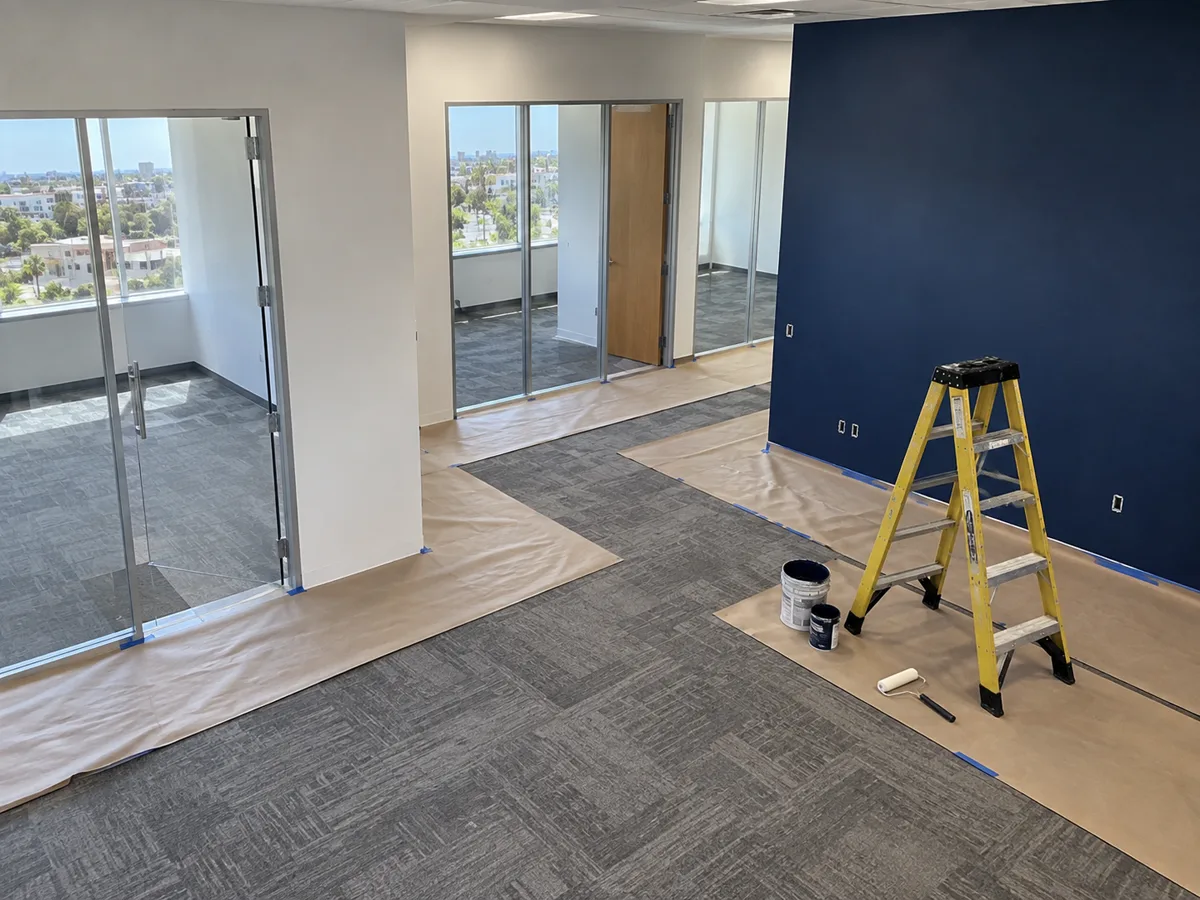
A store interior is repainted after closing or in sections behind the fixtures, so the sales floor stays open during trading hours. The work starts with a walk of the floor with the store manager to agree which bays move each night and where stock is kept covered.
Gondolas and wall fixtures are pulled back a bay at a time, stock is covered rather than moved off the floor, and every bay is reset before the doors open.
These are scheduled for the same nights as the floor they serve, and stockrooms are often left for last because they hold the covered stock while the floor is painted.
Exposed ceilings and high feature walls are reached with a small lift that fits through the store entrance, booked for the nights the floor below can be cleared. Each morning the store manager walks the night's area before opening, and anything missed goes on the list for the next night rather than waiting for the end of the job.
A retail or restaurant painting bid is built from a takeoff: facade square footage by elevation, storefront and canopy linear feet, sign bands, columns and steel for a center, and wall, ceiling and trim area by room for a restaurant. For budgeting, retail and shopping center painting is typically estimated at roughly $25,000 to $200,000 per project, and restaurant painting at roughly $10,000 to $60,000, ranges from industry ticket data rather than from a bid on your property.
Send the site plan, the brand specification or a room list for a bid. All of these numbers are estimates and subject to change; your written bid, prepared after the site visit, sets the final price.
The process
Four steps, and nothing is painted until you have approved the scope and the colors.
We walk the house or property with you, look at the stucco, the trim and the old coating, and note what the afternoon sun, the dry wind and the sprinklers have done to each side.
You get the prep, the products, the colors and the dates in writing. For an association or a building, the scope is phased so residents and tenants know which day is theirs.
Washing, scraping, patching and caulking come first, because that is what the paint holds on to. Then primer where it is needed and the finish coats.
We walk it again with you before we call it done, and touch up anything you point at.
Questions
Yes. Facade work is sequenced store by store, with entrance work before opening or after closing and a clear walkway past every lift, so each tenant keeps trading.
Yes. Dining rooms and kitchens are painted after the last service or on your closed day, with food and equipment covered and the space cleaned before staff come back in.
A smooth, washable, nonabsorbent finish, because the California Retail Food Code requires food facility walls and ceilings to be easily cleanable. Dining areas are exempt, so they can carry a decorative finish.
Yes. Send the brand standard and we draw down each color in the specified product for approval, then hold that standard at every location in your group.
The center manager, using the dates in our schedule. We give the manager a storefront-by-storefront plan so each tenant knows which day and which hours work reaches its door.
Yes. A multi-location program is bid per location from one specification, so each store gets the same colors, products and finish, scheduled around its own closed hours.
We paint around installed letters and cabinets. If a sign must come down, the sign company removes and reinstalls it, and the band behind it is painted while it is off.
A site plan or storefront count for a center, or a room list and photos for a restaurant, plus the brand specification, your opening hours and any landlord rules for after-hours access.
Yes. Sales floors are painted after closing a section at a time, with fixtures pulled back and stock covered, and the floor is reset and clean before opening.
That depends on the product, so we follow its data sheet and ventilate the room after each night. The schedule names the reopening time agreed with you before work starts.
Homeowners get a free on-site estimate. Boards, managers and contractors can send a scope for a bid.
Licensed, insured and bonded · License #585047. Calls only, we do not receive text messages.