What paints well
Solid wood frames and doors take primer and enamel well, and so do MDF doors. Maple and MDF are the surfaces cabinet makers usually paint themselves, with a spray gun rather than a brush or roller.

Riverside Expert Painting offers cabinet painting in Riverside, CA, as a trusted Riverside County painting specialist for kitchens and baths, specializing in sprayed door and drawer fronts, oak grain filling and in-place box refinishing. We offer bathroom vanity painting and laundry and built-in cabinet painting.
Get a free painting estimate
Or call (951) 631-9482. Calls only, we do not receive text messages.
Our team provides bonding primers matched to the old finish, delivering a smooth, factory-like enamel for both residential and commercial projects. We test adhesion on a hidden door before any price is written, and the written scope lists the cleaning, the scuff sand, the primer and the number of enamel coats on every door, drawer and box.
From degreasing the doors above the range and filling open oak grain to refinishing every box, door and drawer in a full kitchen, our team handles every detail. Serving Riverside, Norco, Claremont and Villa Park, we also quote rental kitchens, office break rooms and clinic casework for building owners and property managers.
Why Riverside Expert Painting
No salesperson hands you to a stranger. The person who measures the job answers for it.
Most kitchen cabinets can be painted instead of replaced when the boxes are sound, the doors are solid wood or MDF, and the old finish passes an adhesion test. When a box has swollen from a leak or a door is shedding its plastic skin, new doors or new cabinets are the honest answer, and we say so at the walk rather than after the job. An owner with tired cabinets has three routes: buy new, reface the existing boxes with new doors and veneer, or strip and refinish what is already there. Refinishing keeps the layout, the countertop and the plumbing exactly where they are, which is why it is worth checking first.
Solid wood frames and doors take primer and enamel well, and so do MDF doors. Maple and MDF are the surfaces cabinet makers usually paint themselves, with a spray gun rather than a brush or roller.
Thermofoil is a PVC film heat-formed over MDF, and once it lifts or bubbles near an oven or a dishwasher it cannot be repaired. Particleboard that water has reached swells for good. Painting either one only hides the problem for a while, so we recommend new doors or a new box there and paint the rest to match.
Doors and drawer fronts come off the boxes, are labelled to their openings, and are sprayed lying flat, which is what gives a painted kitchen the even look of a factory finish. Brushing a hanging door leaves marks in the enamel and lets paint sag on the vertical edges.
Most newer cabinets hang their doors on European cup hinges, which have a quick-release mechanism and adjust in several directions, so the doors come off cleanly and go back square. Older face-frame cabinets with surface-mounted hinges take longer to take apart, and that difference is noted on the estimate.
The doors are sprayed off site or in a protected space set up for the job, away from the dust and foot traffic of a working house. Pulls and knobs are removed and bagged by door. If you are changing hardware, the new holes are marked and drilled before the finish goes on, and old holes are filled so they disappear under the paint.
When the doors come back, each one is rehung on its own opening and the hinges are adjusted so the gaps line up along the whole run.
Oak has an open grain, and that grain shows straight through paint unless the pores are filled first. Some owners like the texture under a solid color; others want a smooth door that reads like MDF. The choice is made before the quote, because filling every door is added labour.
Cabinet doors carry years of cooking grease, worst around the range and the handles. Every surface is degreased, then scuff sanded so the primer has something to grip.
The adhesion test decides the primer. A cross-cut test scores a small lattice through the old finish on a hidden spot, presses tape over it and pulls the tape off, and how much finish lifts tells us whether a standard bonding primer will hold or a stronger one is needed.
The topcoat is a cabinet-grade enamel, such as a waterborne alkyd, which flows and levels like an old oil paint and cures to a hard, furniture-quality finish. Semi-gloss is one of the most recommended sheens for kitchen cabinets because it wipes clean, and satin suits owners who want a little less shine.
The cabinet boxes stay where they are. Face frames, end panels and toe kicks are cleaned, sanded and primed in place, with the countertop, backsplash, floor and appliances masked first.
Most factory-built cabinets have sides, backs and bottoms of plywood or particle board, and some are faced with melamine, a hard coating used on furniture board. Those slick surfaces get a bonding primer made for them before the enamel goes on, so the ends match the doors instead of peeling away from them.
Cabinet interiors are normally left in their factory finish, because shelves take the hardest wear and paint inside them can stick to dishes. Painting the inside of glass-front uppers or an open shelf unit is quoted as its own line when you want it.
The same method covers bathroom vanities, laundry cabinets, built-in bookcases and a wet bar. Adding them while the spray setup is in place is usually the most efficient moment, and each one is listed separately on the estimate so you can choose.
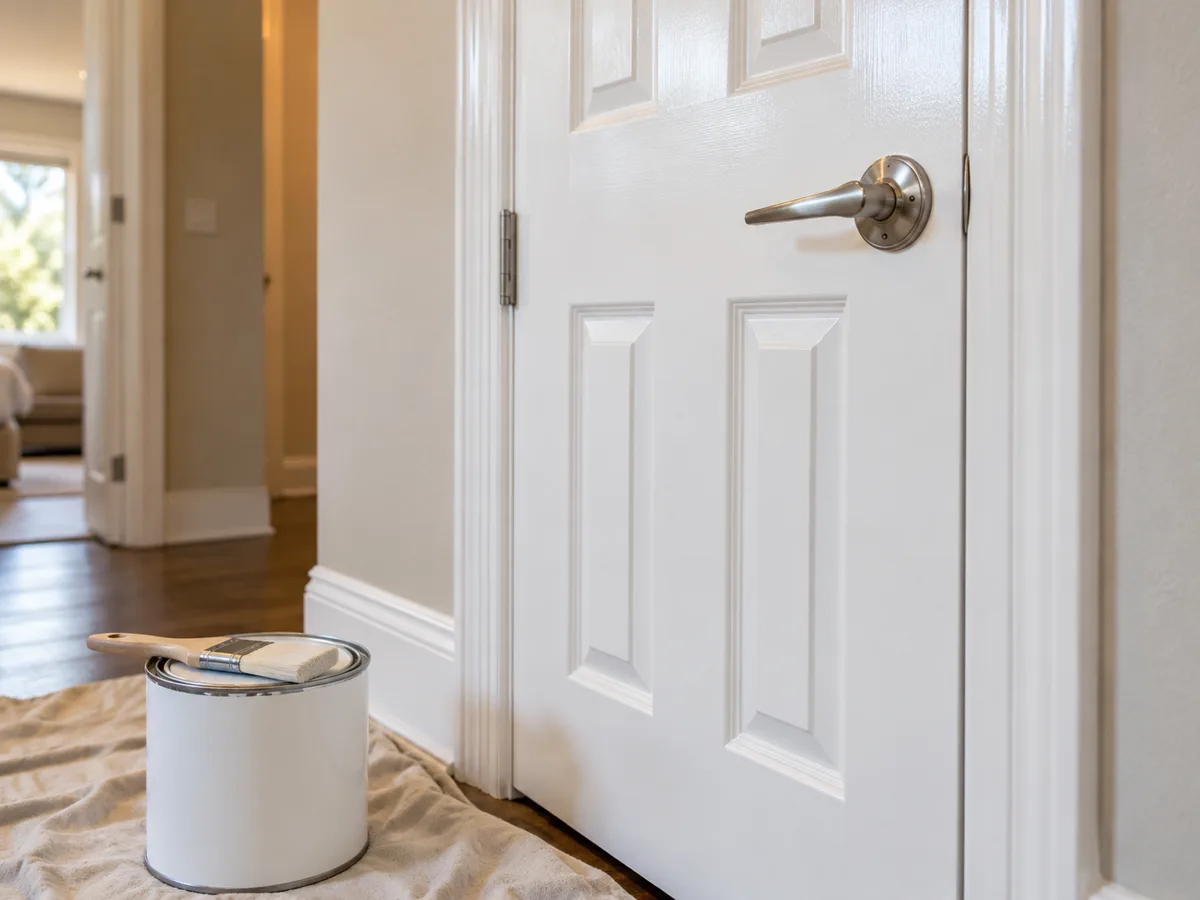
You can keep living in the house while the cabinets are refinished, though the kitchen works differently while the doors are out. The boxes stand open, the counters are covered, and the area around them is closed off with plastic while primer and enamel go on the frames.
We help you plan for that before the start date: empty the cabinets into labelled boxes, set up a coffee maker and a microwave in another room, and keep the refrigerator reachable. Where the sink can stay in use between coats, we say so at the walk.
Spraying happens away from the kitchen, and the coats brushed and rolled on the boxes are low-VOC waterborne products. Architectural coatings used within the South Coast AQMD, the air district covering large parts of Riverside County, are held to VOC limits under its Rule 1113, so the products on your frames are chosen with that rule in mind.
The start date, how long the kitchen is out of use and the day the doors go back on are all written on the estimate.
Refinishing is not only for owner-occupied homes. A landlord with a dated rental kitchen, an office manager with a worn break room, or a practice with tired reception casework can usually refresh the cabinets for far less disruption than a tear-out, because the boxes, the counters and the plumbing stay connected.
For a building owner or property manager the job is scoped by door and drawer count per unit or per room, so several kitchens in one building can be priced on a single sheet. Doors from a vacant unit can be pulled and sprayed while the rest of the building carries on, then rehung before the next tenant moves in.
Occupied offices and clinics are scheduled around opening hours, with the in-place coats on boxes done when the room is closed. Product data for the primer and enamel can be supplied to the manager before work starts.
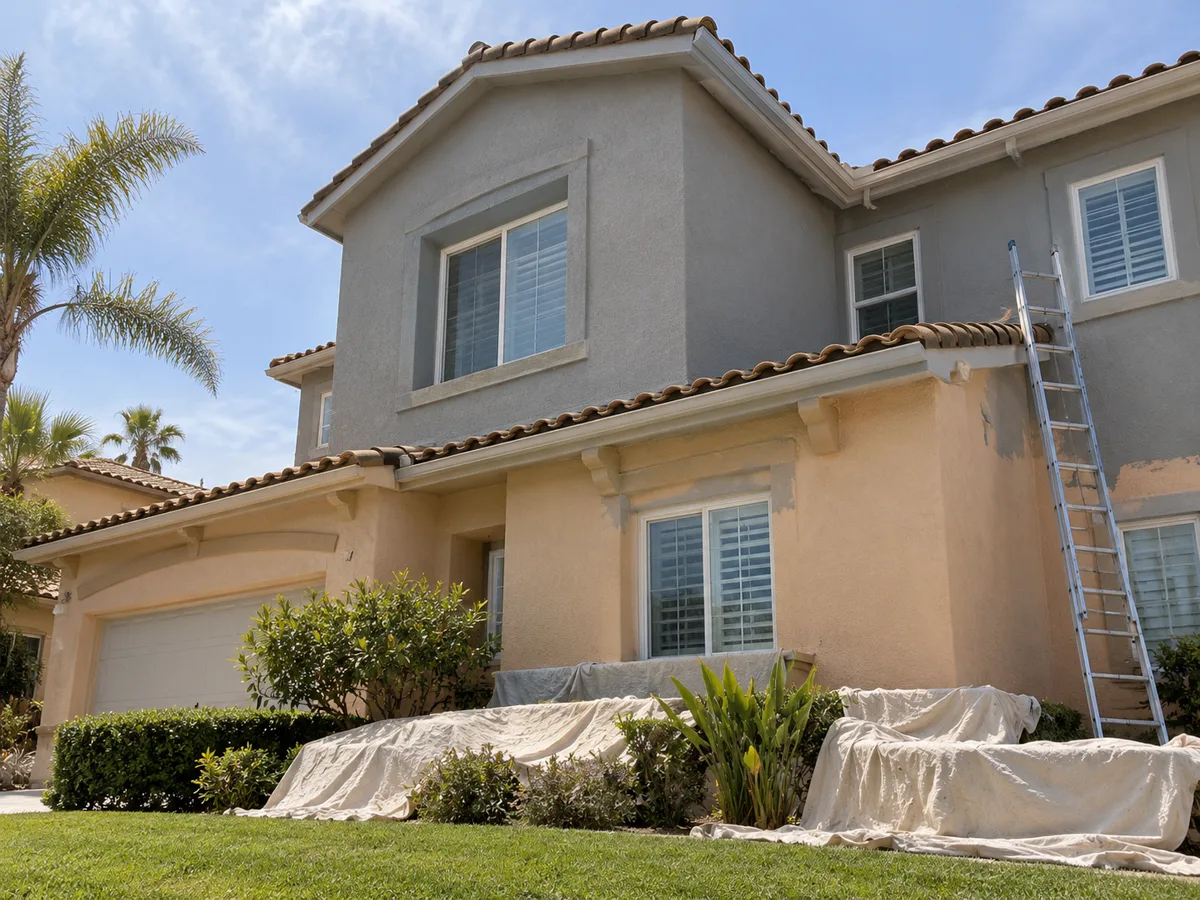
Cabinet painting in Riverside is typically estimated at roughly $3,000 to $12,000 per kitchen, with the number of doors and drawer fronts moving the price more than anything else. A small kitchen with flat MDF doors sits at the low end; a large kitchen with an island, tall pantry units and oak grain filled on every door sits near the top.
What changes the number:
Every figure here is an estimate, the price is subject to change once the doors are counted and the old finish is tested, and the written quote sets the final price.
The process
Four steps, and nothing is painted until you have approved the scope and the colors.
We walk the house or property with you, look at the stucco, the trim and the old coating, and note what the afternoon sun, the dry wind and the sprinklers have done to each side.
You get the prep, the products, the colors and the dates in writing. For an association or a building, the scope is phased so residents and tenants know which day is theirs.
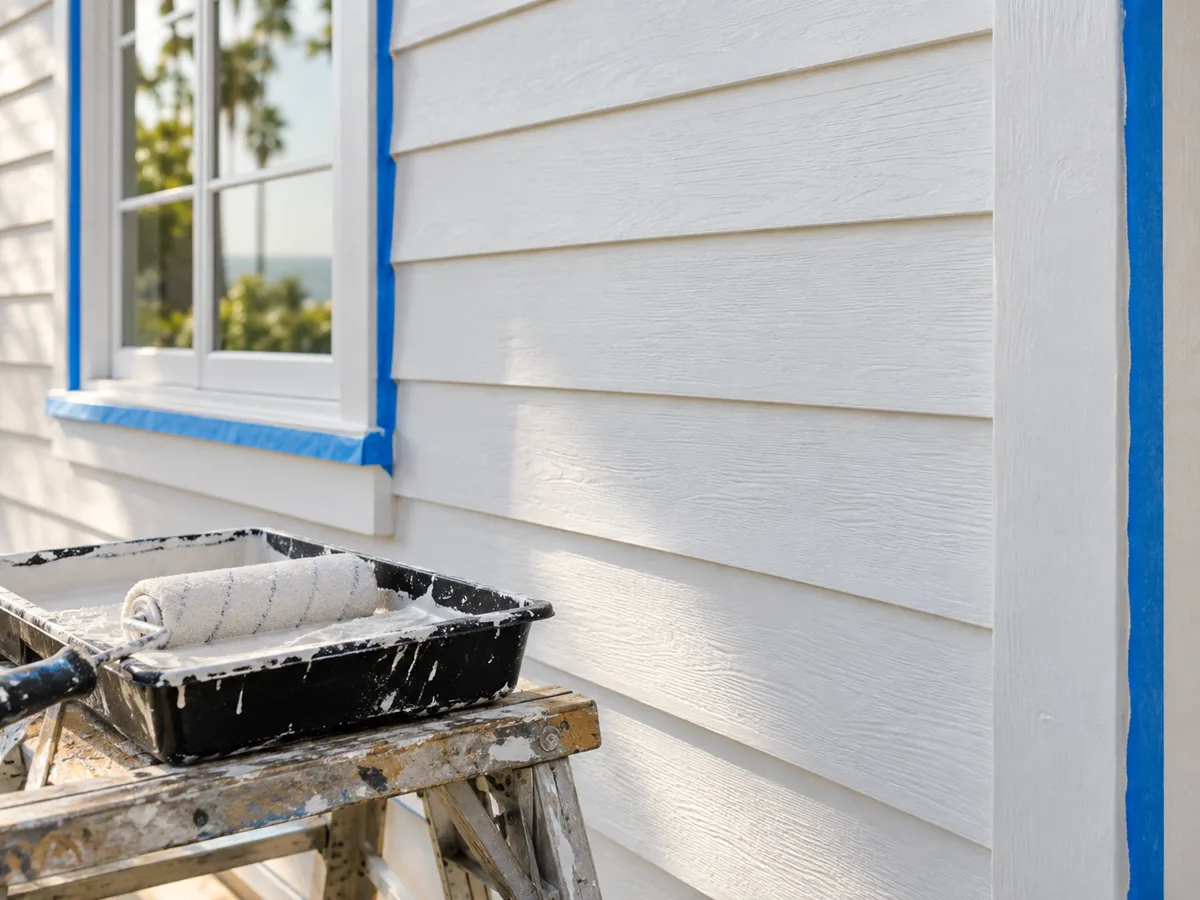
Washing, scraping, patching and caulking come first, because that is what the paint holds on to. Then primer where it is needed and the finish coats.
We walk it again with you before we call it done, and touch up anything you point at.
Questions
Painted cabinets hold up when the old finish is degreased, sanded and primed with a primer the adhesion test supports, and a hard enamel goes on top. Chips usually start where grease was left under the primer or the doors went back into use too soon. Edges near the sink and the trash pull see the most wear.
Laminate and melamine boxes can take a bonding primer and enamel. Thermofoil doors that are already peeling cannot be repaired, so for those we recommend new doors and paint the boxes to match them.
Yes. Doors and drawer fronts are removed, labelled to their openings and sprayed flat, then rehung and adjusted. Spraying them flat is what gives the smooth finish people expect from a factory cabinet.
It will unless the grain is filled. Filling adds labour on every door, so you decide at the walk whether you want the texture to show under the color or a smooth, flat door.
Yes. A contrasting island or lower run is a common request, and the second color is priced as its own line. Color samples are painted on a door and approved before any spraying starts.
Refinishing is usually the least expensive route because the boxes, countertops and plumbing all stay put. Refacing with new doors and veneer sits in the middle, and buying new cabinets costs the most.
Yes. Vanities, laundry cabinets, built-in shelving and wet bars can join the same job, and doing them while the spray setup is running keeps the cost per door down.
Yes. Property managers and building owners can send a unit list or a room count, and rental kitchens, break rooms and clinic casework are quoted by door count with a schedule that works around tenants and staff.
Homeowners get a free on-site estimate. Boards, managers and contractors can send a scope for a bid.
Licensed, insured and bonded · License #585047. Calls only, we do not receive text messages.