Wood fences
Fences gray and split first at the tops of the pickets and along the bottom rail where sprinklers hit, and long fence lines are priced by length and height.

Riverside Expert Painting offers deck and fence staining in Riverside, CA, as a specialist Riverside County painting and staining crew for outdoor wood, specializing in fence restaining, deck refinishing and pergola and patio cover coatings. We offer cleaning and brightening of sun-greyed boards and solid stain where a painted look is wanted.
Get a free painting estimate
Or call (951) 631-9482. Calls only, we do not receive text messages.
Our team provides board-by-board repair before any stain goes on, delivering even color and water-repellent protection for both residential and commercial projects. We test a sample board of each stain on your own fence or deck and list the cleaning, the repairs and the coats in a written scope, so the painting and staining plan is agreed before work starts.
From replacing a split fence picket and resetting loose deck screws to restaining a long property-line fence and an overhead patio cover, our team handles every detail. Serving Riverside, Woodcrest, Norco and Yorba Linda, we time the work around sprinklers, wind and the hottest part of the day.
Why Riverside Expert Painting
No salesperson hands you to a stranger. The person who measures the job answers for it.
Outdoor wood takes the hardest exposure on an inland property. It faces the sun all day, it is soaked by sprinklers, and much of it is horizontal, so water sits on it. Each structure has its own page in the scope because each fails in its own way.
Fences gray and split first at the tops of the pickets and along the bottom rail where sprinklers hit, and long fence lines are priced by length and height.
Deck boards take foot traffic as well as sun, so they need a penetrating product that can be cleaned and recoated rather than a thick film that peels.
A pergola is a garden structure of vertical posts supporting crossbeams and an open lattice, and its many end grains and joints drink stain unevenly.
Solid or slatted patio covers are overhead work, so the patio, the furniture and the wall of the house beneath are protected before anything is applied.
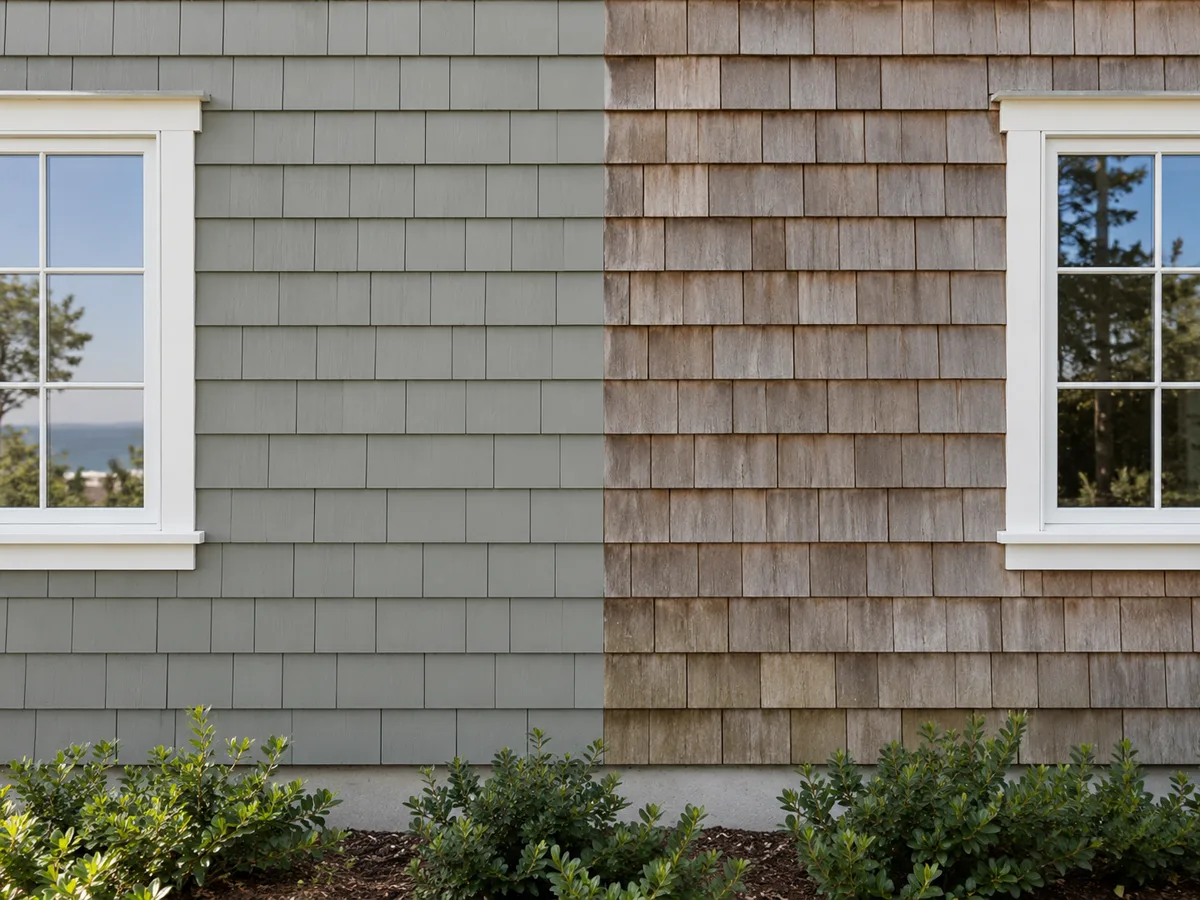
Gray wood is not dirty wood. The gray layer is surface fibers broken down by sunlight, and stain applied over it bonds to those loose fibers rather than to sound wood, so it fails early. Cleaning comes first for that reason.
The usual sequence is a wood cleaner and a gentle wash to lift the gray layer, mildew and dirt, then a brightener to even out the color of the fresh wood, then a full drying period before any stain. Pressure is kept low, because a high-pressure wand can raise the grain and cut grooves into soft boards. Old film-forming coatings that are peeling are stripped where they are failing, because new stain cannot soak through an old surface film.
Drying time depends on the wood, the weather and the shade, and the product's data sheet sets the minimum, so the stain day is decided after the wood has been checked rather than fixed in advance.
Stains with mostly dye are called transparent, stains with more pigment are called solid, and semi-transparent sits in between. The choice changes both the look and the upkeep.
It shows the grain most clearly and suits new or well-kept wood, but with little pigment it gives the least sun protection and needs recoating soonest.
It shows the grain while adding color and more pigment, and it is the usual choice for fences and decks in good condition.
It hides the grain and much of the wood's color variation, looks close to paint, and suits older or mismatched boards, including fences with replacement pickets. Many exterior stains also carry water repellents, ultraviolet absorbers and mildewcides. Penetrating stains tend to weather away gradually rather than peel, which is why they suit decks: maintenance is a clean and a fresh coat, not a full strip.
Stain makes wood look better, but it does not hold a fence up. Before any finish goes on, the structure is checked.
On fences we look for loose and split pickets, rails that have pulled away from posts and posts leaning or rotted at the ground line. Pickets and rails are replaced or refastened as part of the scope, and a rotted post is called out separately because setting a new one is carpentry rather than staining. On decks we check for raised nails and loose screws, boards that are cupped or soft, and railings that move. On pergolas and patio covers we check the joints and fasteners overhead before anyone works beneath them.
A fence on a property line belongs to two neighbors. California's Good Neighbor Fence Act presumes adjoining owners share the reasonable cost of maintaining a boundary fence, so it helps to talk to the neighbor about their side before a long fence is scoped.
Stain behaves differently on hot wood. Applied to boards baking in full afternoon sun, it can flash dry on the surface before it soaks in, which leaves lap marks and a thinner film of protection. So the crew works the shaded side of a fence in the afternoon and the sunny side early, and decks are stained in the cooler part of the day.
Wind matters as much as heat. The Santa Ana winds are strong, very dry winds that bring hot weather in autumn, and they carry dust onto wet stain and spray mist across a property line. On wind days, spraying stops and any work that continues is brushed or rolled by hand.
Irrigation is the third factor. Sprinklers that hit a fence or deck every morning keep the wood wet, which delays staining and shortens the life of the finish afterwards. We ask for the system to be off for a set period before and after the job, and we point out heads that are spraying straight onto wood so they can be adjusted.
Fences are priced mainly by length, height and how many sides are stained. Decks are priced by area, the condition of the boards and how much old coating has to come off. Pergolas and patio covers are priced by size and how much end grain and lattice there is. Repairs, stripping and the choice of product all move the number.
As a guide, staining work is typically estimated at roughly $700 to $7,000, from a short run of fence or a small deck at the low end to a long fence line together with a deck and a patio cover at the high end. Larger properties with very long fence runs can sit above that range.
These are estimates only, they are subject to change once the wood has been checked and the product chosen, and the written quote sets the final price.
The process
Four steps, and nothing is painted until you have approved the scope and the colors.
We walk the house or property with you, look at the stucco, the trim and the old coating, and note what the afternoon sun, the dry wind and the sprinklers have done to each side.
You get the prep, the products, the colors and the dates in writing. For an association or a building, the scope is phased so residents and tenants know which day is theirs.
Washing, scraping, patching and caulking come first, because that is what the paint holds on to. Then primer where it is needed and the finish coats.
We walk it again with you before we call it done, and touch up anything you point at.
Questions
Stain is usually better on fences and decks because it soaks in and wears away gradually instead of peeling. Solid stain gives a painted look while behaving like a stain, and it is a good choice for older or patched fences.
Sunlight breaks down the wood fibers at the surface, and water from rain and sprinklers washes the broken fibers into a gray layer. Cleaning and brightening remove that layer so new stain can bond to sound wood.
We can, with the neighbor's agreement and access. Under California law adjoining owners are presumed to share the reasonable cost of maintaining a boundary fence, so many owners agree a plan with the neighbor before the work is booked.
Yes. Loose and split pickets and rails are replaced or refastened as part of the job. New wood takes stain differently from old, so a semi-solid or solid stain is often recommended when many boards are new.
Yes. The patio, furniture and the wall of the house below are covered first, and the cover is worked from ladders or a platform. Where the cover meets the house, the edge is cut in by hand.
They do. Water hitting the bottom of a fence every day shortens the life of any finish, so we ask you to turn irrigation off before and after the job and, where possible, to redirect heads away from the wood.
Yes, with a product rated for wet foot traffic. The pool area is protected during cleaning, and the coating and its slip resistance are chosen from the manufacturer's data for pool-side use.
Yes. Associations with long perimeter or common-area fences can request a bid priced by length and phase, matched to the community's approved stain color.
Homeowners get a free on-site estimate. Boards, managers and contractors can send a scope for a bid.
Licensed, insured and bonded · License #585047. Calls only, we do not receive text messages.