Prep
Patching holes in drywall, filling nail and anchor holes, sanding patches flush and spot-priming stains are part of the painter's prep, not a separate trade. Larger wall damage is noted and priced as its own line before it is touched.

Riverside Expert Painting is a trusted Riverside County provider of apartment turnover painting in Riverside, CA, working with on-site managers and maintenance supervisors and specializing in vacant unit repaints, nail-hole and patch prep, and door and trim enamel. We offer per-floor-plan painting prices and one documented color standard per property.
Get a free painting estimate
Or call (951) 631-9482. Calls only, we do not receive text messages.
Our team provides make-ready painting booked from your move-out notice, delivering a unit that is ready to show for both residential and commercial projects. The crew that paints each unit does a walkthrough with your maintenance lead before the keys go back, so any missed patch or drip is fixed that visit.
From filling anchor holes and spot-priming water stains to repainting the ceilings, doors and trim of a whole unit, our team handles every detail. Serving Riverside, Eastvale and Claremont, we book each turn from the date your notice list says the unit will be empty.
Why Riverside Expert Painting
No salesperson hands you to a stranger. The person who measures the job answers for it.
A make-ready repaint returns a vacant Riverside apartment to the property's standard finish so it can be shown and leased again. It is an interior job on an empty unit, and it is the same job every time, which is what lets it be priced and scheduled like a routine.
Patching holes in drywall, filling nail and anchor holes, sanding patches flush and spot-priming stains are part of the painter's prep, not a separate trade. Larger wall damage is noted and priced as its own line before it is touched.
Walls are repainted in the property's standard color and sheen, with kitchens and baths in a more scrubbable sheen where the standard calls for it. Ceilings are included when the floor plan price says so, or added per unit.
Interior doors, door frames and baseboards take enamel, since those are the surfaces that show scuffs first between tenants.
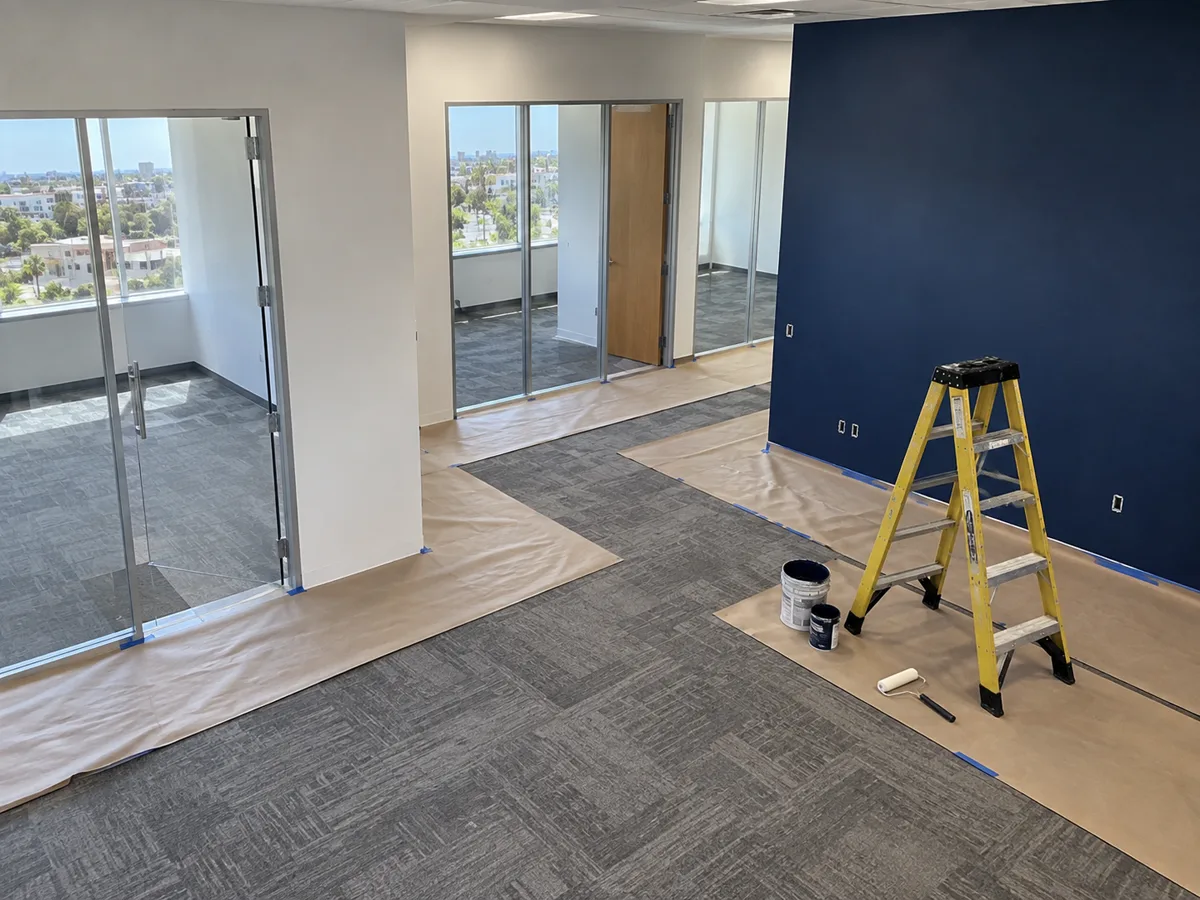
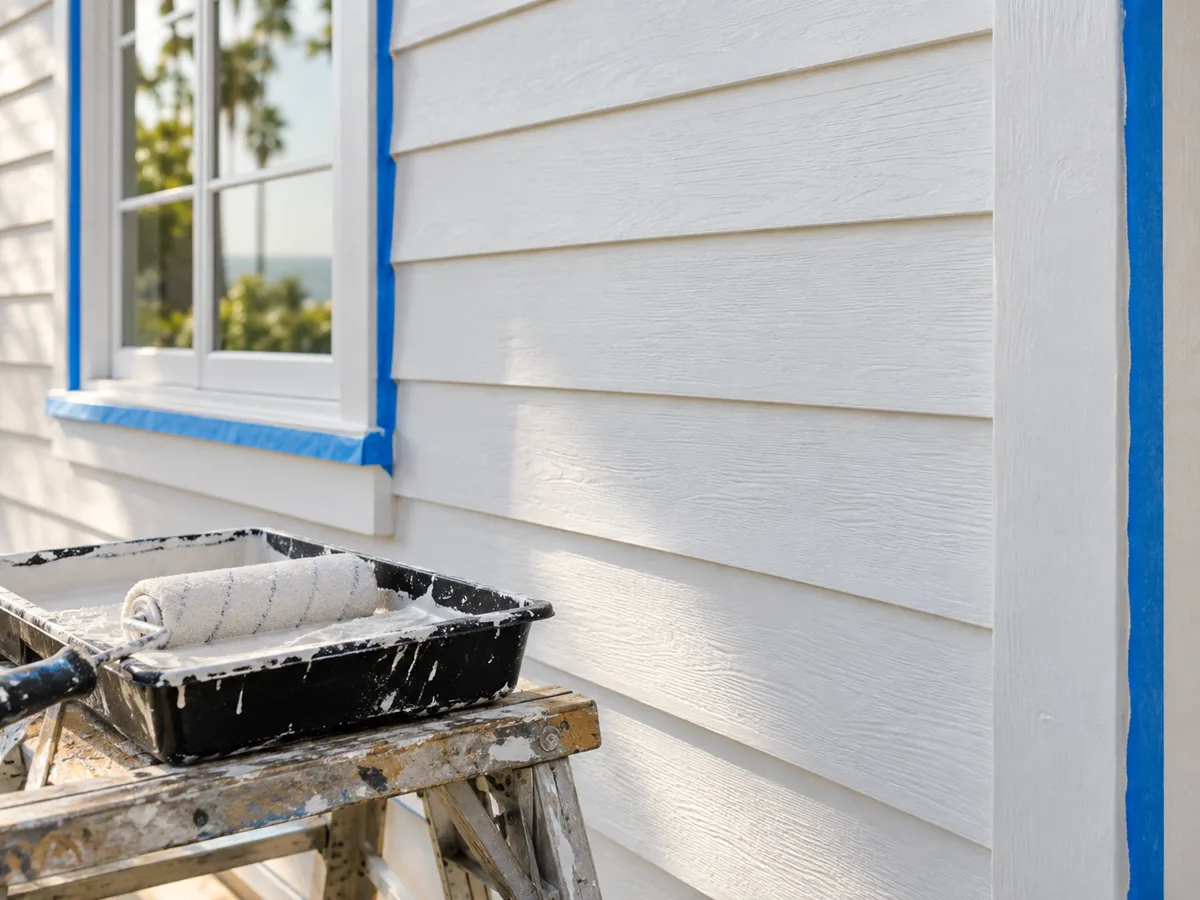
Floors, counters, fixtures and outlets are covered or masked, and the unit is left broom clean so the cleaning crew or the flooring crew can follow straight away.
The process
Every turn on a property runs through the same five steps, so the office always knows where a unit stands and what comes next.
The manager sends the unit number, floor plan and move-out date, and the turn goes onto the schedule against the property price list.
Keys, a lockbox code or a maintenance escort is agreed for that unit, along with the day the repairs will be finished.
Holes are filled, stains are primed, and the walls, ceilings, doors and trim on the price list are painted to the color standard.
Our lead and your maintenance lead walk the unit together, and any missed patch, holiday or drip is corrected before the crew leaves the building.
The invoice names the unit, the plan price and any extra lines, with notes on damage the office may need for the deposit statement, and the unit is released to cleaning or flooring.
Turnover painting is priced per unit by floor plan, so a manager knows what a studio, a one-bedroom or a two-bedroom turn will cost before the notice arrives. The price list is written once for the property, and each turn is billed against it.
What moves a plan's price is the wall and ceiling area, ceiling height, whether ceilings and doors are included, and the usual amount of patching. What moves an individual turn off its plan price is written down as a line item: a color change back from an accent wall, smoke or water staining that needs a stain-blocking primer, or wall damage well beyond nail holes.
As a budgeting guide, a standard make-ready repaint in this market is typically estimated at roughly $300 to $900 per unit, depending on the floor plan and the scope, and a property that turns units all year is generally estimated at roughly $50,000 to $300,000 a year in turnover painting. These are estimates, they are subject to change with the floor plans and the condition units are left in, and the written price list for your property sets the final per-plan price.
To get one, send the floor plan list with unit counts, the current color and sheen if you have it, and how many turns you expect in a typical month.
One documented color standard is what makes turnover work fast and invisible. Every unit on the property is painted with the same products, colors and sheens, so a later touch-up blends in and nobody has to guess which white is on which wall.
The standard is a one-page spec kept by the manager: the wall color and sheen, the ceiling product, the door and trim enamel, the kitchen and bath sheen, and the stain-blocking primer used over water marks. Every product on it is chosen from lines that meet the South Coast AQMD's Rule 1113 limits on volatile organic content, which also keeps the smell down when the unit is shown the next day.
If a property has no standard yet, the first turn sets it. We sample the existing wall color, match it or agree a new one with the manager, and write the spec from that unit forward.
Properties near the University of California, Riverside can see many move-outs land close together. UCR runs on a quarter system and its spring quarter ends in mid-June, and the campus plans to grow to 35,000 students by 2035, so a community that rents to students may find its turns stacking up in the weeks after classes end.
That peak is handled from the notice list, not from the calendar. Once a manager sends the expected move-out dates, turns are booked against them in order, and the schedule shows which units are painted on which day. Units the leasing team needs first, such as those already pre-leased, can be moved to the front.
Outside the peak, the same price list and color standard apply to a single turn sent in midweek. The process does not change with the volume, which is the point of having one.
A turn goes fastest when everybody works in the same order. Maintenance finishes repairs first, painting follows, and cleaning and any flooring work come after, so nothing freshly painted gets scraped by a ladder or a water heater swap.
Security deposit rules make the paperwork matter too. Under California's deposit law a landlord may deduct for damage beyond ordinary wear and tear and for cleaning, but not for ordinary wear and tear, must photograph the unit after it is returned and before repairs, and again after repairs, and must send an itemized statement with supporting documents within 21 calendar days. So each turn's invoice lists what was patched or primed separately from the routine repaint, and the crew waits for the office's before photos when asked.
For older buildings built before 1978, the EPA's Renovation, Repair and Painting rule applies to rented homes, so sanding on original painted surfaces uses lead-safe work practices.

Also from our crews
Questions
It depends on the floor plan and the scope, and the start date and expected length for each turn are written on the schedule we send back. Booking from the notice list means the crew is lined up before the unit is empty.
Yes, for a full make-ready repaint. A unit with furniture or belongings left behind is reported to the manager and painted once it has been cleared.
Yes. When the color standard is on file and the walls are in good shape, a touch-up turn covering patches and scuffs only is priced as its own line on the price list.
We sample a wall in the first unit and match it, or agree a new standard with the manager, and that becomes the spec for every turn after.
Small holes, anchor holes and dents are part of the prep. Larger damage is photographed and priced as a separate line so the office can decide whether to charge it against the deposit.
Only if the price list includes them for that floor plan. Many properties include doors and trim on every turn because they show scuffs first, while others add them per unit when needed.
Yes. Turns are scheduled from the move-out list in order, and a manager can flag the units that must be ready first, such as pre-leased ones near the end of the school year.
Send the unit number, floor plan, move-out date and any notes on damage through the form or by phone, and the turn is added to the schedule against your property's price list.
Whatever the property prefers. Most managers use a lockbox or hand keys to our lead for the day, and the keys or code go back to the office at the walkthrough, with the unit locked.
Homeowners get a free on-site estimate. Boards, managers and contractors can send a scope for a bid.
Licensed, insured and bonded · License #585047. Calls only, we do not receive text messages.