Skip to content
Call (951) 631-9482Licensed, insured and bonded · License #585047

Warehouse and Tilt-Up Building Painting in Riverside

Riverside Expert Painting handles warehouse painting in Riverside, CA, as a specialist Riverside County coatings contractor for industrial owners and logistics tenants, specializing in tilt-up concrete panel walls, joint sealant replacement and dock door painting. We offer bollard and exposed steel coating and full building repaints from lifts.

  • Free on-site estimate
  • Written scope, coat by coat
  • Colors you approve first

Get a free painting estimate

Or call (951) 631-9482. Calls only, we do not receive text messages.

About our warehouse & tilt-up building painting

Our team provides elevation-by-elevation surface preparation, delivering coatings that bond to properly cleaned concrete for both residential and commercial projects. Before any wall is sprayed, we submit the product data sheets for the owner's approval and roll out a mockup on one panel the facility manager signs off, so the painting system on the high walls matches what was approved at ground level.

From washing old bondbreaker residue off a panel face to resealing every vertical joint and recoating the full building envelope, our team handles every detail. Serving Riverside, Eastvale and Norco, we set the lift plan and the dock sequence with your yard manager before the first mobilization.

Why Riverside Expert Painting

How We Work

No salesperson hands you to a stranger. The person who measures the job answers for it.

Written scopePrep, primer and finish coats listed surface by surface
Colors firstSamples on your wall, and association submittals prepared for review
One crewThe crew that quotes the job is the crew that paints it
CA License #585047Licensed, insured and bonded

Painting Concrete Tilt-Up Panels in Riverside

Warehouse painting in Riverside is mostly tilt-up work: concrete wall panels cast flat on the floor slab, tilted upright by a crane and braced until the roof ties them together. Most early tilt-up buildings were warehouses, and the Inland Empire grew into a major shipping hub as warehousing and logistics expanded, so the panel wall is the surface this page is about.

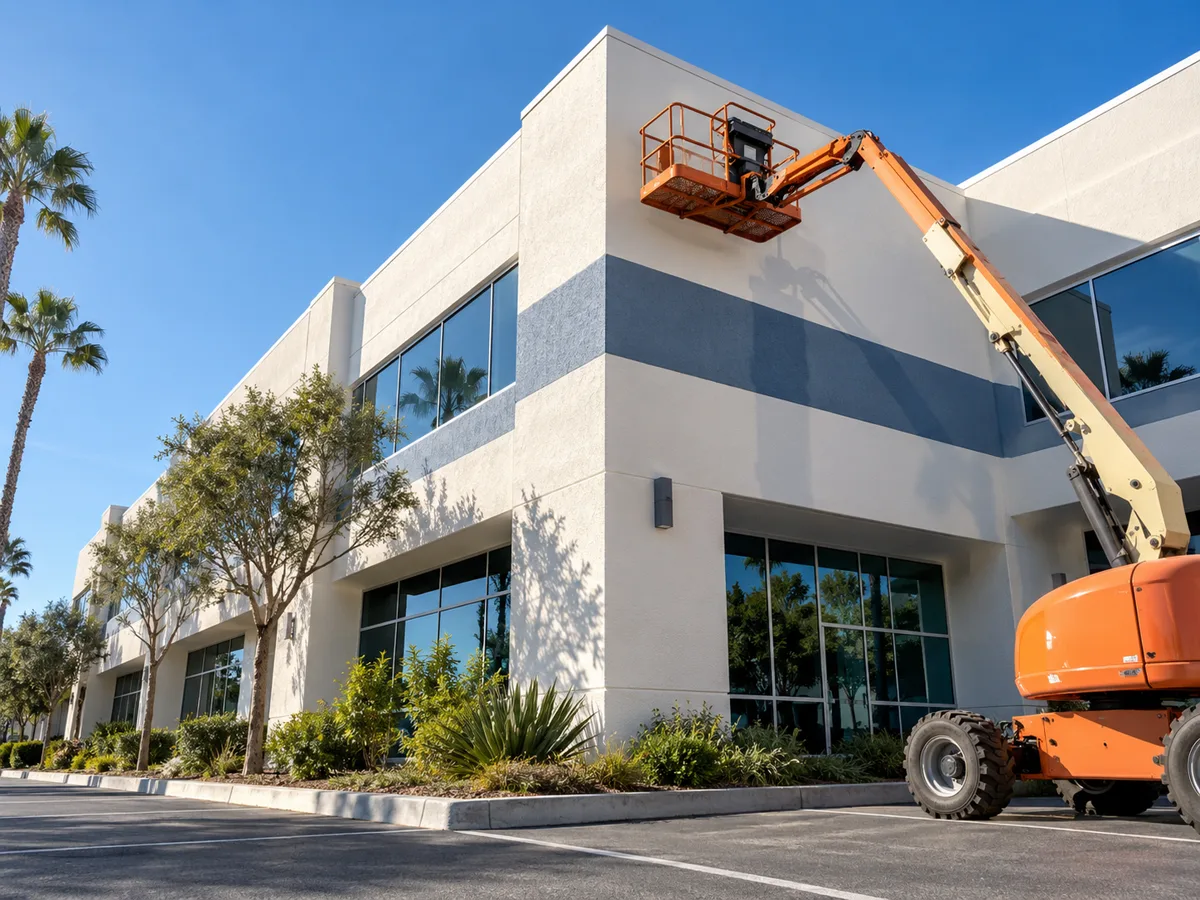
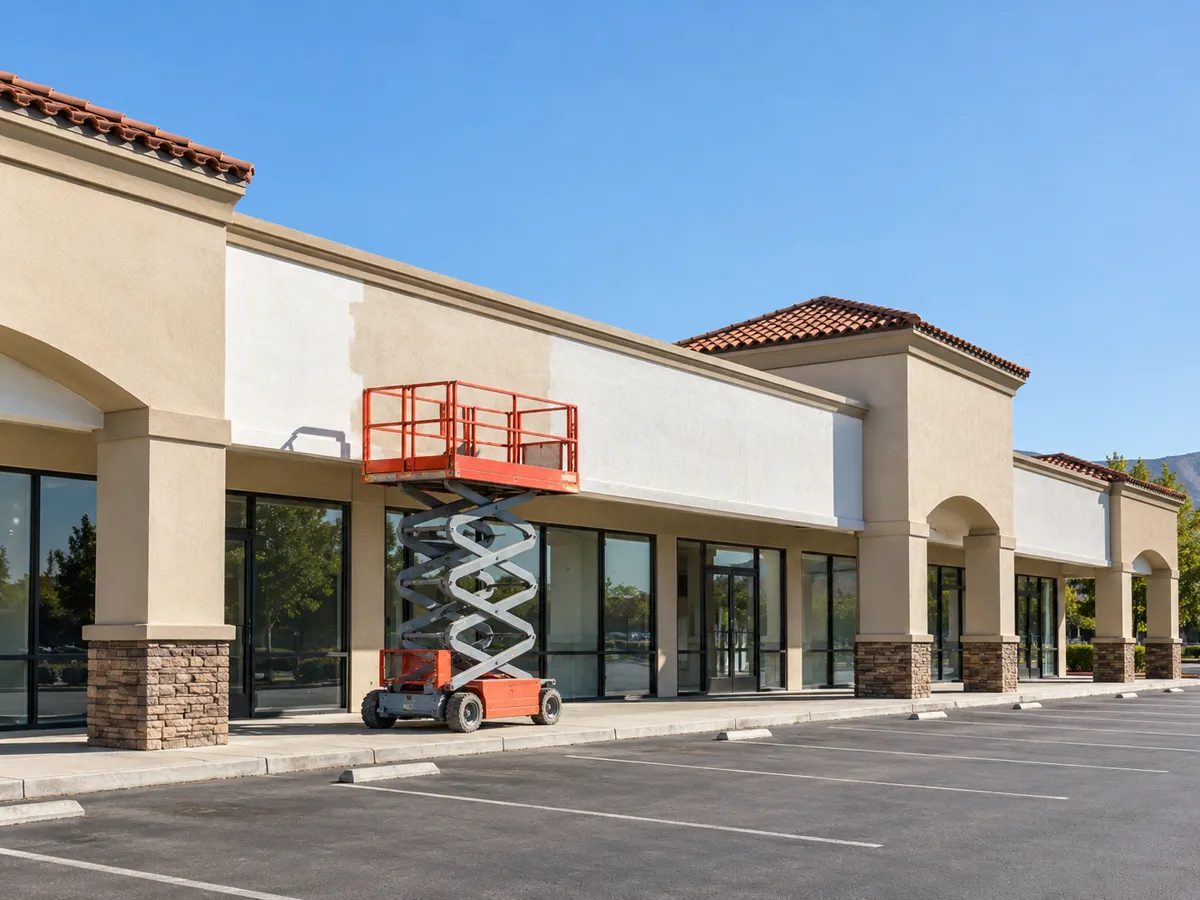
Panels on large buildings can stand more than 96 feet tall, which is why the coating goes on from boom lifts and scissor lifts rather than ladders. The schedule is set by where a lift can park and when a dock can close, not by the calendar alone.

The panel face is the first thing we read on a site walk. A chemical bondbreaker is sprayed on the casting surface before each panel is poured so it lifts free, and that residue can sit on the concrete for years beside form release agents and curing compounds. Coating manufacturers state these treatments must be compatible with the coating or be removed, and that tilt-up concrete may need commercial detergents or abrasive blasting before primer. Laitance, efflorescence and chalk from the last coat come off at the same stage.

On an inland site under hot, dry summers and blowing dust, the sunny elevations usually chalk harder than the shaded ones, so wash method and primer quantity are set per elevation, never as one number for the building.

Joint Sealant, Cracks and Patching Before Paint

A tilt-up wall is a row of separate panels, and the vertical joints between them carry a flexible sealant that closes the gap against water, air and dust. Paint does not repair a failed joint. Where sealant has split, pulled off one panel edge or gone hard, the new coat cracks along that line and the joint telegraphs through the finish, so every joint is checked before any paint is ordered.

Joint replacement

Failed sealant is cut out and the joint faces cleaned. Backer rod goes in behind the new sealant, because it sets the sealant depth and keeps it bonded to the two sides only, so the bead can flex as the panels move. Sound joints stay, and are coated with a product the sealant maker lists as compatible.

Cracks and spalled edges

Hairline cracks in the panel face are filled with a concrete patching compound. Spalled corners at the base, where pallet jacks and forklifts rub the wall, are rebuilt before primer so the new finish is not laid over a broken edge.

Moisture checks

Where a panel shows damp staining near grade or under a downspout, we tape a plastic sheet to the bare concrete and inspect underneath for condensation before coating, the test manufacturers publish for concrete and masonry.

Dock Doors, Bollards and Exposed Steel

Steel is priced as its own line, because concrete and steel take different primers, and a coating that grips a panel will not protect a door frame from rust.

Dock doors and overhead doors

A loading dock is where goods vehicles are loaded and unloaded, so its overhead doors, frames and the panel around them take the hardest wear on the building. Doors are cleaned, rust spots ground back and spot primed, and the finish is matched to the building's color schedule.

Bumpers and dock levelers

Dock bumpers protect the wall from truck impact and are masked rather than painted. The steel edges around dock levelers are cleaned and coated where the owner wants them marked.

Bollards and guard posts

Bollards at doors, meters and building corners are scraped, primed and finished in whatever color the site safety plan specifies.

Galvanized rails, stairs and canopies

Galvanized steel is solvent cleaned and then primed, following the manufacturer's preparation guidance for galvanized metal, rather than painted straight over a slick surface.

The process

How a Repaint Runs on a Working Distribution Site

A distribution building rarely stops for paint, so the job follows the yard. Riverside sits where Interstate 215, State Route 60 and State Route 91 meet, and its industrial areas, Hunter Industrial Park, Sycamore Canyon Industrial Park and the Airport Industrial Areas among them, move trucks through the day.

  1. Site walk with the facility manager

    We walk each elevation and note dock positions, truck lanes, fire lanes and where a lift can set up safely, then photograph the joints and steel that need repair.

  2. Lift and dock plan

    Boom lifts reach over landscaping to the parapets, and rough-terrain scissor lifts work the long flat walls. The plan shows which doors close while a lift sits in front of them, so the tenant can route trucks to other doors.

  3. Wash, seal and repair

    Panels are washed, failed joints replaced and cracks patched one elevation at a time, so no wall is left open to the weather.

  4. Prime and finish

    Coats go on to the approved system. Spraying stops near parked trucks and cars when the Santa Ana winds blow, the strong, dry autumn winds this region knows, and resumes once overspray can be controlled.

  5. Punch list and closeout

    We walk the finished building with the manager, close every touch-up and hand over the color schedule and product list for future maintenance.

Coating Systems and Local Air Quality Rules

Every coating applied here must meet South Coast AQMD Rule 1113, which limits the volatile organic content of architectural coatings supplied, sold or used in the district. The products named in your scope come from compliant lines, and the submittal data sheets show it.

The system depends on the panel. Sound concrete takes a masonry primer and an acrylic finish. A panel with hairline cracking spread across its face may suit a thicker elastomeric coating, a rubber-like film that stretches as the crack moves. Steel takes a rust-inhibiting primer under its finish. Where an owner wants the concrete texture to show, a penetrating stain is an option, since paints and stains are both among the finishes tilt-up panels were designed to accept.

How a Warehouse Painting Bid Is Priced

A warehouse repaint is bid from a takeoff: square feet of panel face per elevation, linear feet of sealant to replace, and counts of dock doors, man doors, bollards, stairs and canopies, each on its own line. For budgeting, a full exterior repaint of a warehouse or industrial building is typically estimated at roughly $40,000 to $300,000, a range drawn from industry ticket data rather than from a bid on your building.

  • Panel height and the lift types the site needs
  • Residue, efflorescence and old coating removal, including any abrasive blasting
  • Joints to replace versus joints that only need coating
  • The primer and finish system specified for concrete and for steel
  • Phasing around docks, shifts and weekend or night work
  • The number of mobilizations if work is split by building or budget year
  • Tenant notices and the closeout punch list

Send the site plan, the building square footage or the last coating specification for a bid. Every figure here is a budgetary estimate and subject to change; the written bid, built after the site walk, sets the final price.

Colors and Finishes

Questions

Warehouse & Tilt-Up Building Painting: Common Questions

Can you repaint a working warehouse while the docks stay open?

Yes, that is how most of these jobs run. The lift plan closes a small group of doors at a time and names them in advance, so trucks are routed to the rest of the dock while one bay is painted.

Do you replace the panel joint sealant or just paint over it?

Both, joint by joint. Failed sealant is cut out and replaced with new backer rod and sealant before coating, and sound joints are kept and painted with a compatible product. The bid lists the linear feet in each group.

Who supplies the boom and scissor lifts?

Access is part of the bid. The lift types, the count and the rental period are listed on their own line, so you can see exactly what reaching the top of the panels costs.

Can the work happen at night or on weekends?

Where the site runs shifts, yes. Night or weekend lift work is scheduled around your quietest hours, and the bid prices it separately so you can compare it with daytime phasing.

Can you match our corporate color standard across several buildings?

Yes. Send the color standard or the existing color schedule, and we draw down the specified products for approval before the first elevation, then hold that schedule on every building in the program.

Do you bid new tilt-up buildings from plans?

Yes. Send the drawings and the coating specification, and the bid comes back as a takeoff by elevation with the submittals the general contractor needs, timed to panel erection and the roof being on.

What do you do about rust on dock doors and steel frames?

Loose rust is ground or wire brushed back to sound metal, the bare spots are primed with a rust-inhibiting primer, and the whole door or frame is then finished. Heavily corroded steel is flagged in the bid as a repair item for the owner to decide.

What paperwork comes with a warehouse bid?

A takeoff by elevation, the product data sheets for each coating, a draft color schedule, a lift and dock phasing plan, and a certificate of insurance on request. Owners and property managers usually need all of it to approve the work.

Free on-site estimate

Talk to us about warehouse & tilt-up building painting

Homeowners get a free on-site estimate. Boards, managers and contractors can send a scope for a bid.

Call to Discuss Scope

Licensed, insured and bonded · License #585047. Calls only, we do not receive text messages.

Call (951) 631-9482Licensed, insured and bonded · License #585047