Skip to content
Call (951) 631-9482Licensed, insured and bonded · License #585047

Historic Victorian and Craftsman Home Painting in Riverside

Riverside Expert Painting provides historic home painting in Riverside, CA, as a specialist Riverside County painting team for older houses, specializing in Craftsman bungalow repaints, Victorian trim restoration and Mission Revival stucco work. We offer lead-safe exterior repaints and period interior painting.

  • Free on-site estimate
  • Written scope, coat by coat
  • Colors you approve first

Get a free painting estimate

Or call (951) 631-9482. Calls only, we do not receive text messages.

About our historic victorian & Craftsman home painting

Our team provides careful, documented prep on old layered paint, delivering finishes that respect the original detail for both residential and commercial projects. Before a price is set, we test the adhesion of the existing paint, list the lead-safe steps and the primer for each surface in a written scope, and sample the period colors on your own walls, so nothing about an old house is painting guesswork.

From re-gluing a split porch bracket and consolidating soft window sills to repainting a whole bungalow in a three-color scheme, our team handles every detail. Serving Riverside, Claremont, North Tustin and Villa Park, we treat the house as something to keep, not just something to cover.

Why Riverside Expert Painting

How We Work

No salesperson hands you to a stranger. The person who measures the job answers for it.

Written scopePrep, primer and finish coats listed surface by surface
Colors firstSamples on your wall, and association submittals prepared for review
One crewThe crew that quotes the job is the crew that paints it
CA License #585047Licensed, insured and bonded

Victorian, Craftsman and Mission Revival Homes

Riverside's older houses come from the years when the city grew on the citrus trade, and three styles account for most of the ones a painter sees.

Craftsman bungalows

The style grew out of the Arts and Crafts movement around the turn of the twentieth century, and its features are what take the time on a repaint: deeply overhanging eaves, exposed rafters or brackets, a wide front porch on tapered square columns, divided-light windows, and shingle or board siding. Craftsman houses from the 1910s still stand in the Wood Streets near downtown.
Victorian houses

Victorian homes carry far more trim, spindles and turned work than later styles, which is why they are often painted in several colors. Every piece of that trim is prepared and painted by hand.

Mission Revival and Spanish Colonial Revival

Mission Revival drew on the California missions, with broad plaster walls, arcades, wide eaves and clay tile roofs. The Mission Inn downtown is described as the nation's largest Mission Revival building. On these houses the work is mainly stucco and plaster rather than wood.

Lead-Safe Prep on Older Paint

Lead was banned from household paint in the United States in 1978, and houses built before then may still carry it under newer coats. The danger is not the paint on the wall but the dust and chips that come off it during scraping and sanding, which is why the prep on an older house is planned around containment.

In practice that means plastic sheeting on the ground and over openings, misting surfaces before scraping so dust stays down, no open-flame burning or uncontrolled dry sanding, collecting chips as the work goes, and a careful clean-up with HEPA vacuums and wet wiping at the end of each day. Windows and doors are a particular focus because friction surfaces wear old paint into dust.

Federal rules apply renovation, repair and painting requirements to work in pre-1978 homes that disturbs lead-based paint, and the lead-safe steps for your house are written into the scope so you can see exactly what will be done and where.

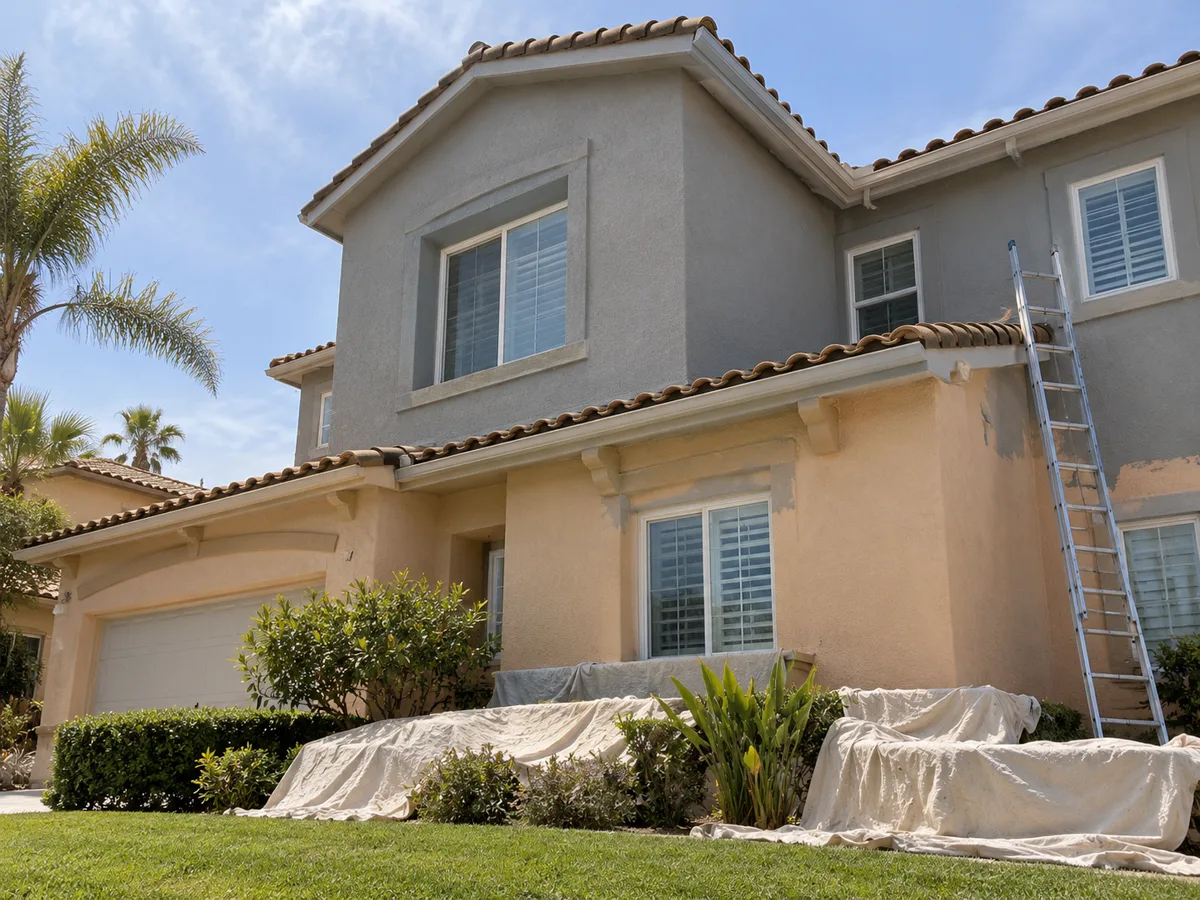
Two-story stucco house mid-repaint, the upper storey fresh warm grey and the lower storey still faded peach, an aluminium extension ladder against the wall and drop cloths over the shrubs.

Repairing Original Wood and Trim

The wood on an old house is usually better than anything you could buy to replace it. Old-growth lumber was denser, and the profiles of original casings, brackets and siding are rarely made today, so a replacement piece often looks wrong beside its neighbors.

Our approach is to repair where the wood is sound and replace only what has failed. Soft spots at sills, the bottoms of porch columns and the ends of rafter tails are dug out and consolidated, then filled with an exterior wood repair compound and shaped to the original profile. Split brackets and loose trim are re-glued and re-fastened. Where a board has rotted through, a new one is milled or matched as closely as possible and primed on every face before it goes up.

Open joints are caulked where caulk belongs, at trim and siding seams, and left open where wood needs to drain. Bare wood is primed the same day it is exposed, because unprimed old wood takes on moisture quickly.

Period Color Schemes and Historic Review

Older houses usually look best in colors that suit their style. Craftsman homes often wear earthy body colors with contrasting trim and a third color for window sash. Victorian houses suit several colors that pick out the trim, and Mission and Spanish Revival houses usually keep light plaster walls under dark wood and clay tile.

We sample the body, trim and accent colors together on the house so you see them in the light they will live in, and the final scheme is written into the scope by product and color name so it can be matched again in years to come.

Some older houses sit in designated historic districts or are individually listed, where exterior changes can need review. If your house is one of them, the color plan is prepared so it can be submitted, and the owner or their representative handles the filing. We do not assume a rule we have not seen for your address, so we ask you to check your property's status before the colors are final.

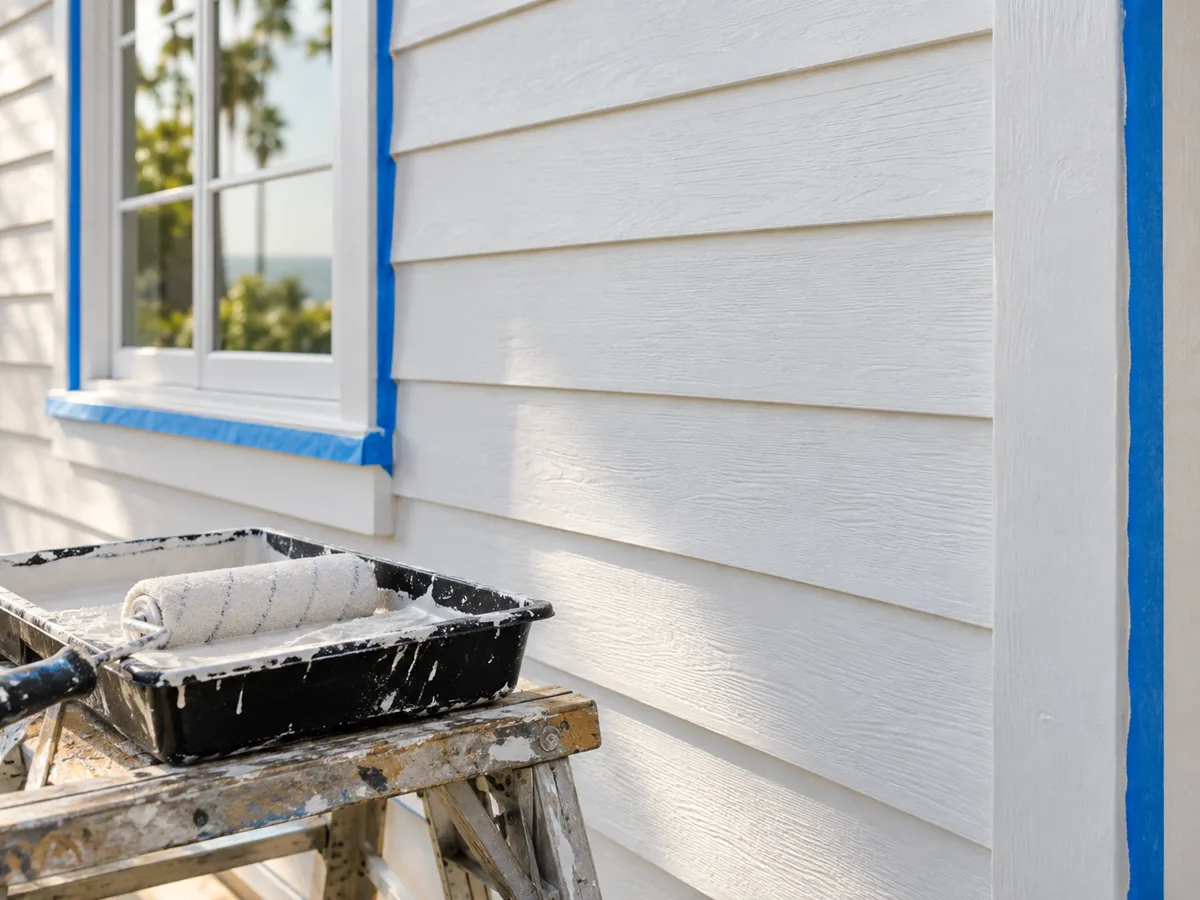
White lap siding with blue masking tape along the window and corner trim, and a paint tray with a loaded roller resting on a paint-spattered sawhorse.

Interiors of Older Homes

Inside, the same care applies. Plaster walls in older houses have hairline cracks and patches from a century of settling, and they are repaired with materials that bond to plaster rather than simply skimmed with modern joint compound.

Original woodwork is the biggest decision. Stained built-ins, beamed ceilings and fir trim that have never been painted are usually best left that way, and we will say so. Woodwork that has already been painted is cleaned, deglossed and repainted with a durable enamel. Old doors, picture rails and plate rails are worked by hand.

Lead-safe practices apply indoors too, with each room sealed, floors protected and dust collected as the work goes, so the rest of the house stays livable.

Pricing a Historic Repaint

Historic work is priced on condition more than size. The amount of old paint that has failed, the hours of wood repair, the lead-safe containment, the number of colors, the amount of trim and the access around porches and gables all move the number. A plain stucco Mission Revival house can be simpler than a smaller Victorian with heavy trim.

As a guide, a full historic exterior repaint is typically estimated at roughly $15,000 to $60,000, depending on size, condition and how much repair the wood needs. Interior work on an older house is estimated room by room.

These are estimates, they are subject to change once the paint and the wood have been examined, and the written quote sets the final price.

Colors and Finishes

The process

How a Painting Job Runs

Four steps, and nothing is painted until you have approved the scope and the colors.

  1. The walk

    We walk the house or property with you, look at the stucco, the trim and the old coating, and note what the afternoon sun, the dry wind and the sprinklers have done to each side.

  2. The written scope

    You get the prep, the products, the colors and the dates in writing. For an association or a building, the scope is phased so residents and tenants know which day is theirs.

  3. Prep, then paint

    Washing, scraping, patching and caulking come first, because that is what the paint holds on to. Then primer where it is needed and the finish coats.

  4. The final walk

    We walk it again with you before we call it done, and touch up anything you point at.

Questions

Historic Victorian & Craftsman Home Painting: Common Questions

Does my old house have lead paint?

If it was built before 1978 it may, usually in the older layers under newer paint. We treat those layers as if they contain lead and plan the prep accordingly. A certified inspector or risk assessor can test the paint if you want certainty.

Should original wood be replaced or repaired?

Repaired wherever the wood is sound. Original lumber is usually denser than new, and its profiles are hard to match. Only rotted or failed pieces are replaced, and the new piece is primed on every face.

Can you strip all the old paint off my house?

Full stripping is rarely needed and is the most disruptive and expensive option on an older house. Loose and failing paint is removed to a sound edge, and the rest is cleaned, sanded with dust control and primed.

How many colors should a Craftsman house have?

Most look right with three: a body color, a trim color and an accent for the sash or door. We sample combinations on the house so you can choose in real light.

Do I need permission to change the color of a historic house?

It depends on whether the house is in a designated district or individually listed. Check your property's status with the city before the colors are final, and we will prepare the color plan for any submittal.

Should stained woodwork inside be painted?

Usually not, if it has never been painted. Original stained trim and built-ins are part of the character of the house, and once painted they are very hard to return. We will tell you honestly when cleaning and refinishing is the better choice.

Can you paint a Mission Revival stucco house?

Yes. Those houses are mostly plaster and stucco, so the work is crack repair, patching to match the original texture and a breathable coating, with the dark wood and tile details protected.

Is historic painting slower than ordinary repaints?

It usually takes longer because of the repairs, the hand work on trim and the lead-safe steps. Your start date and the expected length are written on the estimate.

Free on-site estimate

Talk to us about historic victorian & Craftsman home painting

Homeowners get a free on-site estimate. Boards, managers and contractors can send a scope for a bid.

Call (951) 631-9482

Licensed, insured and bonded · License #585047. Calls only, we do not receive text messages.

Call (951) 631-9482Licensed, insured and bonded · License #585047